
YELLOWSTONE Ending Explained — Everything That Happened And How It Leads to DUTTON RANCH
YELLOWSTONE Ending Explained — Everything That Happened And How It Leads to DUTTON RANCH
By the time Yellowstone reaches its closing moments, it’s not the explosive confrontations or the sweeping Montana landscapes that linger most—it’s something far quieter, and far more devastating. The series, created by Taylor Sheridan, ends not with triumph, but with a deeply personal unraveling, centered on one of its most formidable characters: Beth Dutton.
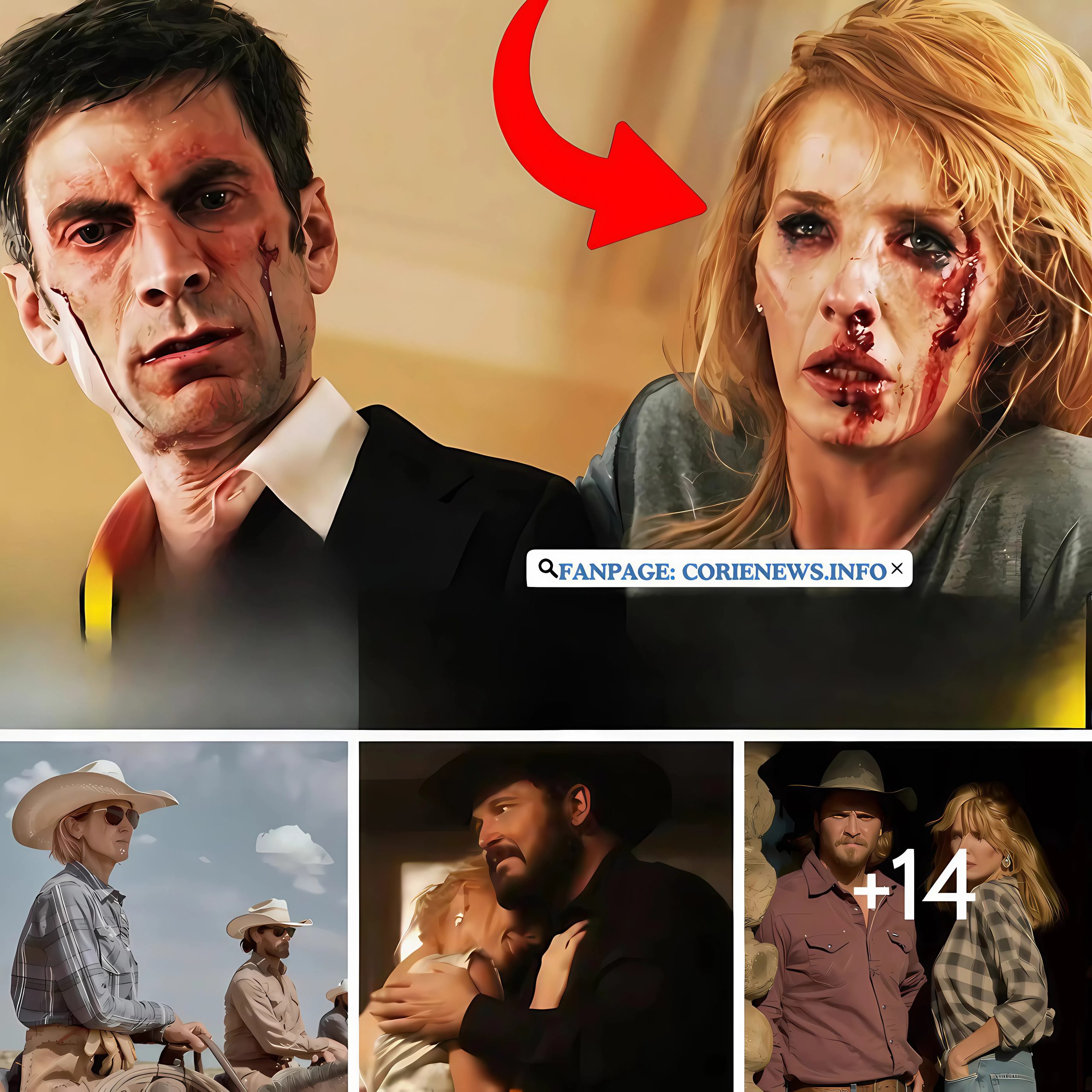
In a scene that redefines everything we thought we knew about her, Beth stands beside the coffin of her father, John Dutton. For five seasons, she has been a force of nature—sharp, merciless, and unshakably composed. She has torn through enemies with precision, wielded power like a weapon, and carried herself with a chilling certainty that nothing could break her. Yet here, none of that remains. There is no fury, no strategy, no calculated response. There is only grief—raw, exposed, and undeniable.
As she breaks down, Beth whispers a vow that quietly sets the entire future of the franchise into motion: she promises vengeance. Those few words don’t just close one chapter—they ignite the next. They become the emotional backbone of what follows in Dutton Ranch, the continuation that shifts the story into unfamiliar territory while carrying forward the weight of everything that came before.
But to understand how the story evolves, we have to look at what was lost.
The fate of the Yellowstone ranch itself is one of the most significant turning points in the finale. In a decision that echoes generations of promises, Kayce Dutton chooses to return the land to Thomas Rainwater and the reservation, honoring a commitment that dates all the way back to the era depicted in 1883. It’s a resolution that feels both inevitable and bittersweet—closing a historical loop while dismantling the very foundation the Dutton family fought so hard to preserve.
Surprisingly, Beth does not resist this outcome. For someone who spent years acting as the ranch’s fiercest defender, her acceptance speaks volumes. This isn’t surrender—it’s exhaustion. Not physical weakness, but the emotional toll of carrying a legacy that was never meant to rest on her shoulders alone. With John gone and her long-standing war with Jamie Dutton finally resolved, there is nothing left tying her to that battlefield.
For the first time, Beth is untethered.
She and Rip Wheeler step away from the chaos and carve out something entirely new—a modest ranch far from the political wars and corporate threats that once defined their lives. It’s quiet, isolated, and free of the pressures that once surrounded them. Alongside them is Carter, the boy who gradually became part of their unconventional family. There are no formalities, no declarations—just an unspoken bond that feels as real as anything the Duttons ever fought for.
For a brief moment, it seems like peace has finally found them.
But in the world of Yellowstone, peace is never permanent.
This is where Dutton Ranch begins to take shape—not just as a continuation, but as a transformation. The story relocates to Texas, introducing a new landscape and a new set of challenges. Yet beneath the surface, the driving force remains Beth herself.
In the aftermath of her father’s death, Beth isn’t just grieving—she’s disoriented. For years, her identity was defined by conflict: protecting her father, defending the ranch, destroying anyone who threatened their legacy. Now, stripped of that purpose, she is forced to confront a version of herself that doesn’t yet know what it’s fighting for.
That absence becomes the central tension of the new story.
The trailer hints at this shift with a simple but loaded line: Beth admits she misses John. But what she’s really mourning isn’t just her father—it’s the clarity he gave her. Without him, there is no clear enemy, no obvious war to wage. In Texas, she is starting over in a place where her reputation means nothing. No one fears her. No one owes her anything. She is, for the first time, an unknown quantity.
And that’s exactly what makes the situation dangerous.
A new adversary emerges in the form of a rival ranch, Rio Paloma, led by the formidable Annette Bening’s character, a seasoned operator whose quiet authority suggests years of dominance in this world. Unlike past enemies, this isn’t someone reacting to the Dutton name—this is someone who has built power independently, and who won’t be easily intimidated.
At first, the conflict simmers beneath the surface. Beth struggles internally, uncertain and disconnected, while Rip becomes the stabilizing force—holding their new life together as she searches for direction. It’s a reversal of their usual dynamic, showing a side of their relationship that hasn’t been fully explored before.
But it doesn’t last.
All it takes is one moment—one spark—for everything to shift. When Beth realizes that this new rival isn’t just competition but a genuine threat to the fragile life she and Rip are building, something inside her reignites. The hesitation disappears. The uncertainty vanishes.
The Beth Dutton the audience knows returns—only this time, she’s different.
Because now, she’s not fighting for a legacy. 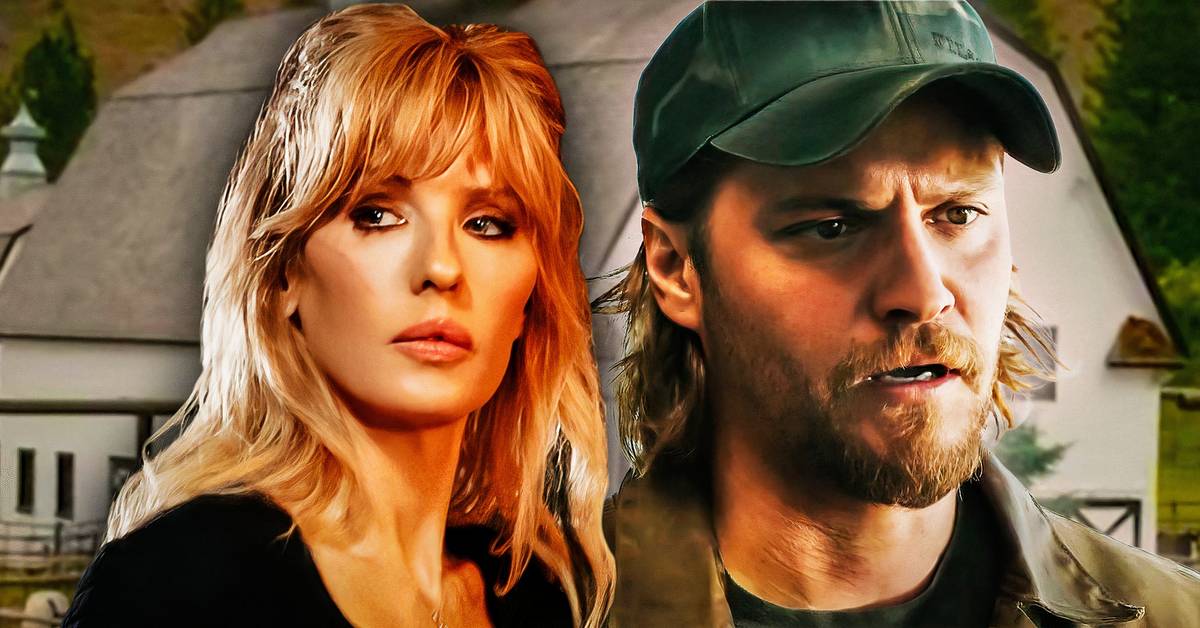
She’s fighting for herself.
That distinction changes everything. Without the burden of her father’s expectations, Beth becomes even more unpredictable, more dangerous. Her actions are no longer about preserving the past—they’re about securing a future she has chosen. And that makes her a force unlike anything her enemies have encountered before.
Meanwhile, Carter’s role grows increasingly significant. No longer just a child caught in the aftermath of adult decisions, he becomes an active participant in this new chapter. Beth’s approach to raising him reflects the harsh realities of the world she knows—there’s no illusion of safety, no attempt to shield him from what’s coming. Instead, she prepares him for it.
In one striking moment, she tells him to be ready for the difficult days ahead while handling a weapon—a visual that encapsulates the philosophy of the Duttons. Survival isn’t taught through comfort; it’s forged through confrontation with reality. Whether that approach will strengthen Carter or damage him is one of the most compelling questions the new series seems poised to explore.
As the season unfolds, the stakes escalate. The clash with Rio Paloma intensifies, pushing Beth into a calculated campaign that mirrors her past strategies while adapting to this new environment. Every move is deliberate, every risk measured. And ultimately, it leads to a victory.
Beth wins.
She outmaneuvers her opponent, establishes control, and secures a foothold in Texas that belongs entirely to her, Rip, and Carter. It’s a triumph that symbolizes independence—a life built not on inheritance, but on determination.
But as always in this universe, victory comes at a cost.
What that cost will be remains uncertain. It could be a fracture in her relationship with Rip, a loss of safety, or even a part of herself that she can’t recover. The series has consistently shown that holding onto something meaningful often requires sacrifice, and there’s no reason to believe this chapter will be any different.
In many ways, Dutton Ranch strips the story down to its most essential question: what are people willing to lose to protect what they love?
For Beth, the answer is more personal than ever before. She’s no longer defending a sprawling empire or honoring a generational promise. She’s protecting a life—her life—the one she chose after everything else fell apart.
And losing that would mean far more than losing land ever did.
As the story moves forward, one thing becomes clear: the ending of Yellowstone wasn’t just a conclusion. It was a transformation. It closed the door on one kind of battle and opened another, more intimate and more dangerous.
Because this time, Beth Dutton isn’t fighting for history.
She’s fighting for her future.