
Willow poisoned Jacinda, forcing Michael to relinquish custody of Wiley – General Hospital Spoilers
Willow Poisoned Jacinda, Forcing Michael to Relinquish Custody of Wiley – General Hospital Spoilers
In the ever-shifting emotional landscape of General Hospital, a chilling new storyline is unfolding—one that transforms a once-beloved heroine into a figure capable of calculated and dangerous choices. What begins as a mother’s desperate attempt to protect her child slowly spirals into something far more unsettling, as Willow’s actions take a dark and irreversible turn.
For longtime viewers, this arc feels deeply personal. Watching Willow now is no longer about simple sympathy or support—it’s about trying to understand the subtle, almost imperceptible shift happening within her. There was a time when her motivations felt clear, her heart open despite the hardships she endured. But now, something has changed. Her demeanor, her silences, even the way she carries herself, all suggest a woman who is no longer guided purely by love—but by fear, control, and a growing obsession with securing her place in Wiley’s life.
At the center of this storm is Jacinda, whose presence in Wiley’s world has triggered something dangerous in Willow. On the surface, Jacinda appears harmless—kind, attentive, and naturally bonding with the child. Their connection is built on small, genuine moments, the kind that typically bring comfort and stability. But in Willow’s eyes, those moments are not innocent. They are threatening. They represent replacement, erasure, and the terrifying possibility that she could once again lose her role as a mother.
This is where the line between protection and possession begins to blur.
Willow convinces herself that Jacinda is more than just a presence—she is an obstacle. And once that belief takes hold, everything changes. Because in Port Charles, when someone becomes an obstacle, they rarely remain safe for long. What makes this situation even more disturbing is that Willow doesn’t act impulsively. She doesn’t lash out in chaos. Instead, she operates with chilling precision. She rationalizes. She builds a narrative in her mind where every action, no matter how extreme, becomes justified in the name of protecting what she loves.
And that is exactly what leads to the unthinkable.
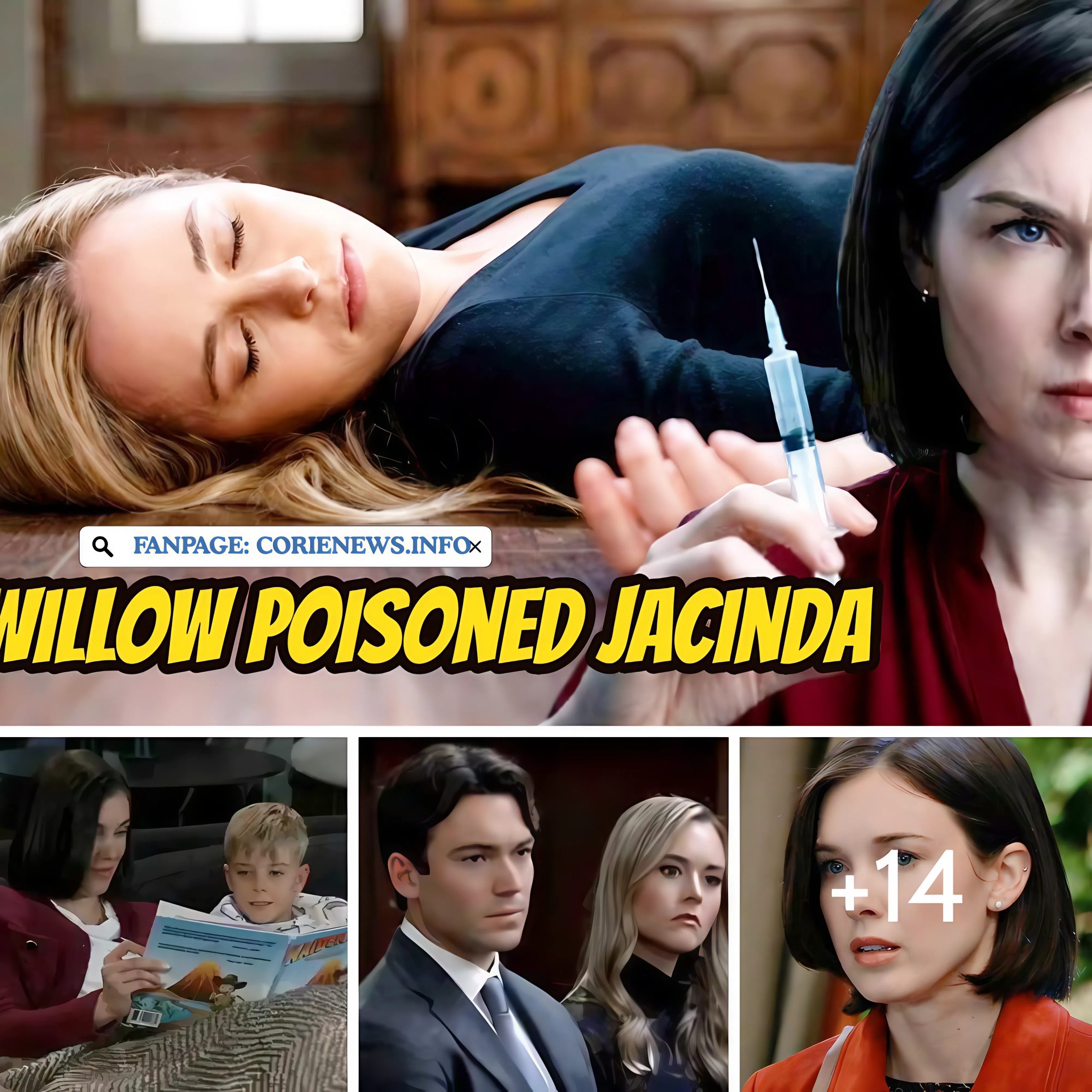
In a shocking twist, Willow poisons Jacinda.
The act is not one of blind rage, but of calculated intent. It’s a move that fits perfectly into the pattern she’s been quietly establishing—eliminate the threat, regain control, secure her position. To Willow, it may not even feel like a crime in the traditional sense. In her mind, it’s a necessary step, a sacrifice made to ensure her child’s future remains firmly in her grasp.
But actions like this don’t exist in isolation.
The consequences ripple outward quickly, and Michael is among the first to sense that something is deeply wrong. For so long, he has been the steady force—the one who absorbs tension rather than creates it. But now, that restraint is gone. In its place is a firm, unwavering determination to protect Wiley and uncover the truth, no matter how painful it may be.
Michael’s shift is significant. When someone like him stops trying to hold things together and instead takes decisive action, it signals that the situation has already crossed a dangerous line. His growing suspicion of Willow is not based on a single moment, but on a pattern of behavior that has become impossible to ignore.
As Jacinda’s condition deteriorates, the tension reaches a breaking point. Questions begin to surface. Doubts turn into accusations. And slowly, the truth starts to emerge.
When it does, it shatters everything.
Willow’s involvement in Jacinda’s poisoning sends shockwaves through everyone connected to her. The woman who once fought so hard to rebuild her life is now facing the consequences of a choice that cannot be undone. And for Michael, the realization is devastating. The person he once trusted, the mother of his child, is now someone he cannot afford to believe in anymore.
Faced with this reality, Michael makes a heartbreaking decision—one that will alter the course of their lives forever.
He relinquishes custody of Wiley. 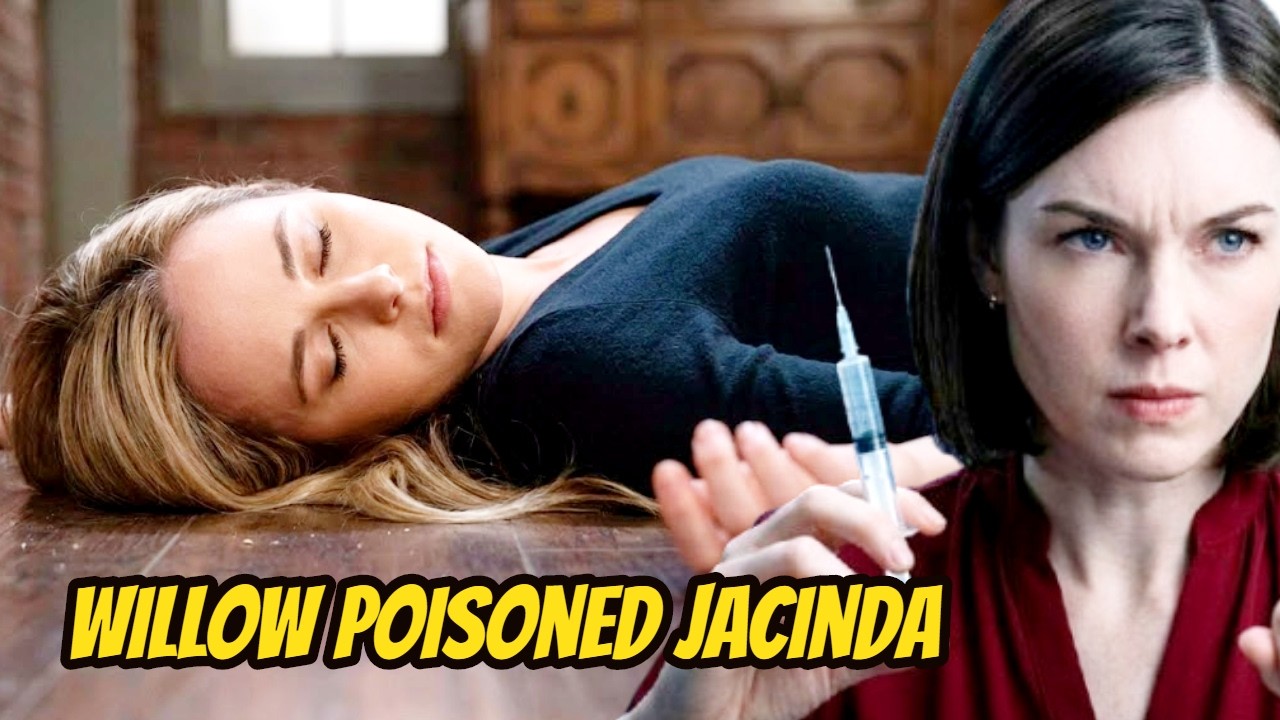
It’s not a choice made lightly, nor is it one rooted in anger alone. It’s a decision driven by fear, responsibility, and the understanding that Willow’s actions have created an environment that is no longer safe. For Michael, protecting Wiley means stepping back, even if it costs him everything he holds dear.
Meanwhile, Christina emerges as a powerful ally in this escalating conflict. Unlike Michael, she doesn’t hesitate. She acts quickly, driven by instinct and a fierce desire to protect those she believes are in danger. Her involvement adds another layer of intensity, turning what might have been a contained situation into a full-scale confrontation.
Together, Michael and Christina form a formidable front—one grounded in both logic and emotion. And their unified stance makes it clear that Willow is no longer seen as someone struggling, but as someone capable of causing real harm.
Yet, even as the walls close in around her, Willow remains a deeply complex figure.
She is not a villain in the traditional sense. She is a woman shaped by loss, fear, and a relentless need to hold onto the one thing that gives her life meaning. But unchecked fear has a way of evolving into something darker. It distorts perception. It justifies the unjustifiable. And in Willow’s case, it has led her down a path from which there may be no return.
Jacinda, caught in the middle of this emotional battlefield, becomes the unintended victim of a conflict she may never have fully understood. Her only mistake was being in the wrong place at the wrong time—forming a bond that Willow could not tolerate.
As the truth continues to unfold, the story takes on a heavier, more introspective tone. There are no clear heroes or villains here—only people making choices they believe are necessary, each one carrying consequences that ripple far beyond the moment.
What makes this storyline so compelling is its quiet intensity. There are no grand declarations or obvious warnings. Instead, the tension builds धीरे and steadily, culminating in moments that feel both shocking and inevitable. It’s a reminder that in Port Charles, the most dangerous transformations are often the ones that happen in silence.
Now, as the fallout from Willow’s actions begins to reshape relationships and redefine loyalties, one question lingers above all others:
Has Willow gone too far to ever come back?
Because once a line like this is crossed, there is no easy redemption. Only consequences, reckoning, and the painful realization that some choices change everything.
And as this explosive chapter continues to unfold, one thing is certain—nothing in this story will ever be the same again.