

OMG SHOCKING!!! 💔 June Brown’s SHOCKING Final Request to Her Co-Star 😱
💔 June Brown’s SHOCKING Final Request to Her Co-Star 😱
Fans of EastEnders are no strangers to emotional storylines, but nothing could have prepared them for the deeply moving and unexpected revelation surrounding the final years of the legendary June Brown—the woman who brought the unforgettable Dot Cotton to life for decades. While her passing in April 2022 at the age of 95 was marked by tributes, admiration, and reflection, a hidden chapter of her life has now come to light, adding a profoundly poignant layer to her already remarkable legacy.
June Brown passed away peacefully at her home, leaving behind a legacy that shaped British television history. Known for her sharp wit, unmistakable voice, and the ever-present cigarette that became synonymous with Dot Cotton, she was more than just an actress—she was a cultural icon. However, behind the warmth and humor that millions adored, there existed a quieter, more personal struggle that few ever saw.
In a startling revelation, her longtime friend and former co-star Michael Cashman—who portrayed Colin Russell on the show—shared a deeply intimate memory during a debate on assisted dying in the House of Lords. According to him, June had once made a heartfelt and emotional request: she wanted help to travel abroad to pursue assisted dying, hoping to end her life on her own terms, with dignity.
This wasn’t a passing thought or a fleeting moment of despair. Cashman described how June, after enduring months of suffering, had carefully considered her situation and confided in him. She expressed a desire to go to countries like the Netherlands or Switzerland, where assisted dying is legally permitted. Her plea placed him in an agonizing position—torn between the law and his loyalty to a dear friend.
In his own words, he admitted that he had even begun contacting clinics abroad, seriously contemplating helping her fulfill this wish, despite the legal risks. It was a decision that weighed heavily on him, revealing just how profound and urgent June’s request had been. Ultimately, however, no arrangements were made, and June’s life came to a natural end.
For viewers of EastEnders, this revelation has cast a shadow of bittersweet reflection over her legacy. Dot Cotton was known as a woman of strong faith, moral conviction, and endless chatter—someone who navigated life’s hardships with resilience and humor. To learn that the woman behind such a character grappled with such a deeply personal and difficult decision is both heartbreaking and humanizing.
June Brown’s journey to becoming Dot Cotton was anything but simple. Born in 1927, she lived through wartime Britain, faced personal losses, and spent years honing her craft in theater and television before landing her defining role in 1985. What was initially intended to be a short stint evolved into a decades-long presence that made Dot one of the most beloved figures in British soap history.
Her portrayal brought depth and authenticity to storylines involving grief, addiction, family conflict, and forgiveness. Viewers watched Dot endure immense emotional trials, often finding strength through her faith and unwavering principles. It’s perhaps this very depth that made the recent revelation so striking—because it highlights the contrast between the character’s steadfast beliefs and the actress’s private reflections on life and death.
Despite her success, June was always candid about the challenges of her career. She openly discussed the frustrations of being typecast and the emotional toll of playing such an intense role for so many years. Yet, she remained fiercely dedicated to her craft, and it showed in every scene she performed. Dot Cotton wasn’t just a character—it became an extension of June herself.
Those who worked with her often described her as intelligent, outspoken, and full of life. She was known for her storytelling, her humor, and her commanding presence both on and off set. In the studio canteen, she would often captivate colleagues with anecdotes and wisdom, leaving a lasting impression on everyone around her. 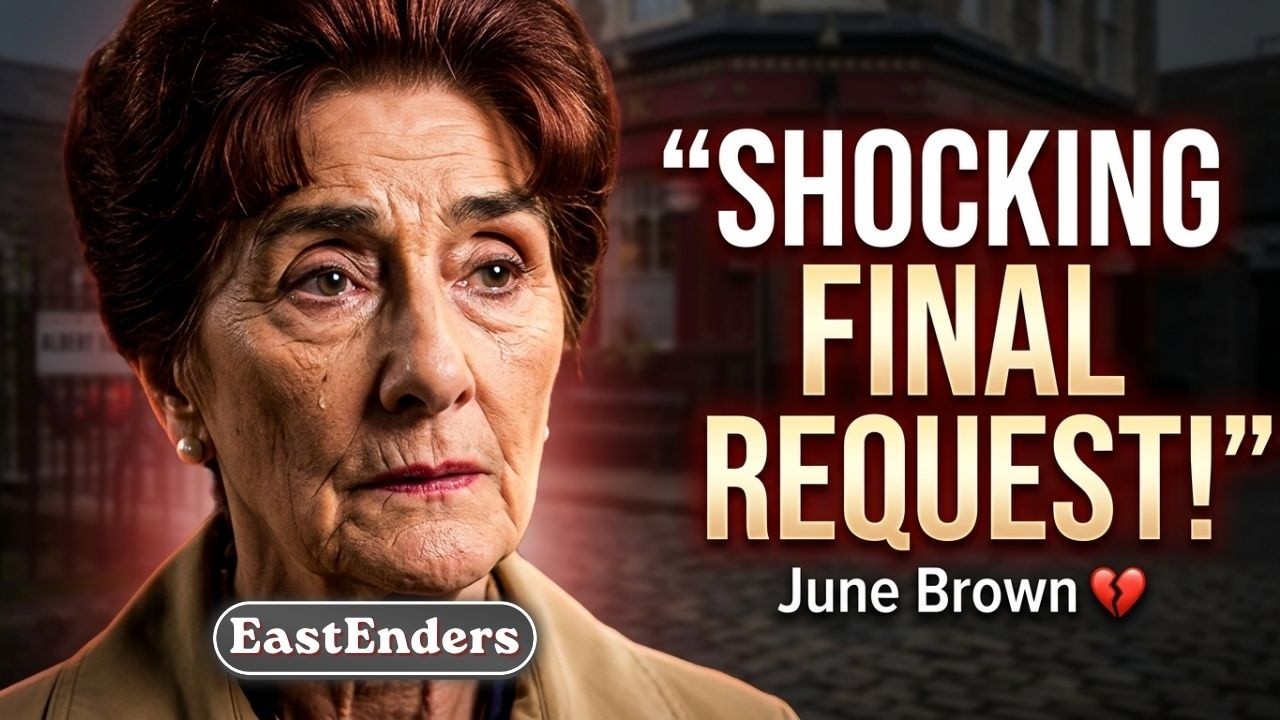
Following her departure from EastEnders in 2020, the show paid tribute to her incredible contribution. Even the studio canteen was renamed in her honor—a testament to the impact she had on the cast and crew. When news of her passing broke, tributes flooded in from co-stars, fans, and public figures alike.
Adam Woodyatt, who played Ian Beale, shared a heartfelt message, expressing how honored he felt to have worked alongside her. Others echoed similar sentiments, describing her as irreplaceable and a true national treasure. Meanwhile, Stephen Fry highlighted her role as a fearless supporter of the LGBTQ+ community, particularly during challenging times in history.
Yet, this newly revealed story has shifted the conversation. It has sparked discussions about aging, dignity, and the right to choose how one’s life ends. June’s request was not a public statement or a political stance—it was a deeply personal moment shared between two friends. But its implications resonate far beyond that private exchange.
For some fans, the revelation is unsettling, challenging their perception of a beloved figure. For others, it is seen as an act of courage—a reflection of a woman who, even in her final years, sought to maintain control over her own destiny. It underscores a universal truth: behind every public figure lies a private individual, navigating fears and decisions that the world may never fully understand.
As the legacy of June Brown continues to live on, both through her work and the memories she left behind, this revelation adds a new dimension to her story. It reminds us that even those who bring joy and comfort to millions can face deeply personal struggles.
Dot Cotton remains immortal in the world of EastEnders—her voice, her values, and her unforgettable presence still echo through the streets of Albert Square. But now, alongside those memories, there is a quieter, more intimate understanding of the woman behind the character.
June Brown’s final chapter is not just about loss—it’s about honesty, humanity, and the courage to confront life’s most difficult questions. In the end, her story is not only one of remarkable talent but also of profound truth.