
Cole Hauser’s Montana Ranch – Yellowstone Fame and a True Western Lifestyle
“Cole Hauser’s Montana Ranch – Yellowstone Fame and a True Western Lifestyle”
Cole Hauser, best known for his role as Rip Wheeler on Yellowstone, has cultivated a lifestyle deeply rooted in the traditions of the American West. Unlike many of his Hollywood counterparts, Hauser’s decision to live in Montana is more than just a celebrity choice—it’s a way of life that reflects a distinct western sensibility. His ranch, set against the expansive backdrop of Montana’s open land and vast horizons, has become the embodiment of his dedication to simplicity, hard work, and balance. The land itself, with its ever-changing light and steady rhythm of daily life, is where Hauser has found a sense of peace that the glitz and glamour of Hollywood could never provide. It is here, in the heart of the West, that Hauser has chosen to build a life that aligns with the values he cherishes most.
Hauser’s career was not one of overnight success, but rather the result of a patient, steady climb. Born into a family with deep ties to the entertainment industry, Hauser was exposed to cinema from an early age. However, his path was not preordained. After his parents’ divorce, he moved between states, learning independence and resilience. These early experiences would later shape his work ethic and acting choices. At just 16, Hauser made the bold decision to leave high school and pursue acting full-time. His debut film, School Ties (1992), did not immediately catapult him to fame, but it set the stage for his journey into a career that would be defined by persistence, not by instant recognition.
Throughout the 1990s, Hauser appeared in several films, including Dazed and Confused, Higher Learning, and Good Will Hunting, though his roles were often secondary. Rather than seeking comfort in leading roles, he opted for characters who were morally complex, characters that challenged his acting range and deepened his craft. In the early 2000s, Hauser began to land more prominent roles in films like Tigerland, Hearts War, and Tears of the Sun, where he portrayed soldiers and men confined to structured, disciplined environments. His performance in Tigerland earned him an Independent Spirit Award nomination, marking a pivotal moment in his career. By this point, Hauser had earned a reputation as a reliable actor, someone capable of portraying strength and authority on screen.
Television came later in Hauser’s career, but his work in series like Cville, Chase, and Rogue cemented his status as a consistent performer. Long hours on set, grueling shooting schedules, and ensemble casts became familiar terrain for Hauser, reinforcing the notion that his career was built on resilience and longevity. It was in 2018, however, that everything converged with his iconic portrayal of Rip Wheeler in Yellowstone. Far from a reinvention, this role was the culmination of decades of work, embodying the silence, discipline, and quiet masculinity that Hauser had been refining his entire career. While Yellowstone may have seemed like an overnight success to fans, for Hauser, it was the result of more than 20 years of patient, deliberate effort.
Now, Hauser’s Montana ranch, which he acquired during his Yellowstone years, reflects the life he has chosen to live. After spending considerable time on location for the show, Hauser decided to settle in Montana, creating a space where his connection to the cowboy lifestyle could exist beyond the confines of Hollywood. The ranch spans approximately 2,500 acres and includes a main residence of 3,300 square feet. The property is functional and grounded rather than a polished, showy estate. Outside, the wide-open grasslands stretch as far as the eye can see, with sparse trees and distant mountain ranges that form a stunning natural backdrop. The landscape constantly shifts with the changing light, giving the land a sense of life and motion.
Inside the main house, the tone is calm and intimate, with wood surfaces and warm, low lighting creating a serene atmosphere. A piano, not for decoration but for personal enjoyment, reflects Hauser’s appreciation for music and the slower rhythms of rural life. The ranch is not about showcasing his fame; it’s about creating a space for personal reflection and balance. From the main house, the view opens directly toward the mountains, a constant reminder of the land that Hauser holds dear. It’s also where he occasionally shares moments related to his whiskey business, Lazy Kbar Whiskey, using the setting not as a marketing tool but as an extension of his lifestyle.
The ranch is a working cattle farm, not a showpiece for celebrity status. Behind the main house sits a horse barn made of warm-toned wood, housing up to six horses at a time. This barn seamlessly blends with the property, reinforcing the working nature of the ranch. The land is shaped by the rhythm of daily life, with wooden rails marking the pastures where Hauser spends his time riding and outdoors. These spaces are functional, reflecting the daily routine of life on the ranch—there is no staging, no production, just life as it is lived. 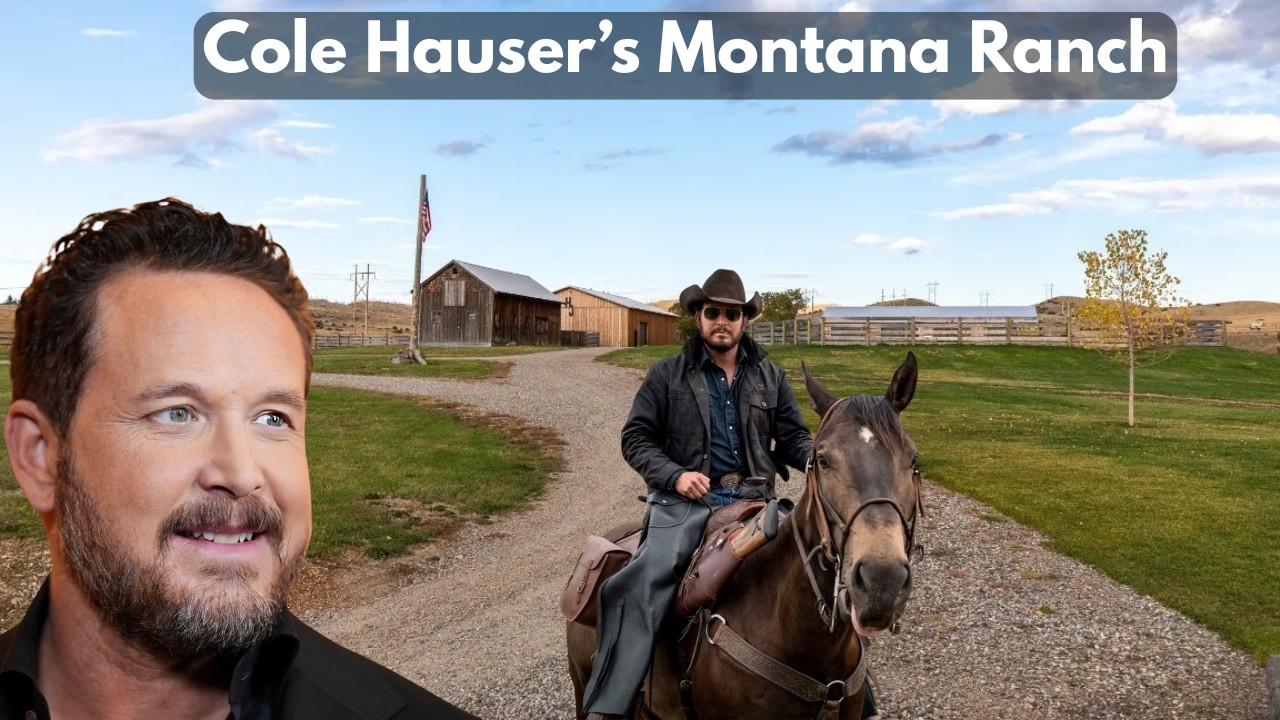
Hauser’s life off the ranch is equally grounded. He is often seen driving one of three vehicles, each one serving a distinct purpose. The first is an Audi Q8, a modern family SUV used for everyday tasks like errands or family outings. The second is a vintage Ford Bronco, rugged and classic, perfectly suited for the dirt roads and rugged terrain of Montana. Lastly, there is the Chevrolet K5 Blazer, a true Western icon that Hauser uses for special occasions, embodying the Western identity he has embraced both on and off screen.
In terms of wealth, Hauser’s financial success is largely driven by his long-term work in television, particularly Yellowstone. While his salary in the early seasons of the show was between $200,000 and $250,000 per episode, it skyrocketed to approximately $700,000 per episode by season five, leading to an estimated $9.8 million in earnings for the final season. Beyond Yellowstone, Hauser continues to generate income from residuals tied to decades of film and television work, bringing in around $300,000 per year. He also co-founded Free Rain Coffee, generating an additional $600,000 annually, and his whiskey brand brings in around $400,000 annually.
Now, as Yellowstone concludes, Hauser is entering a new phase in his career. He remains active in the industry, with upcoming roles in The Dutton Ranch and an untitled Netflix series. Despite his success, Hauser has maintained a steady pace, choosing roles that align with his image and interests rather than chasing fleeting fame.
Away from the spotlight, Hauser’s life revolves around his family. Married for more than 20 years to Cynthia Daniel, a former actress turned photographer, Hauser shares three children with her. Their family time, whether riding horses on the ranch or spending time outdoors, is central to their life. Hauser frequently shares these moments on social media, giving fans a glimpse into the rhythms of his family life—simple, steady, and rooted in the land that defines his identity.
In the end, Hauser’s life today reflects the values of consistency, patience, and authenticity. Whether on screen as Rip Wheeler or at home on his Montana ranch, Hauser lives a life defined by his love for the land, his family, and the quiet rhythms of a true Western lifestyle.