
CAUGHT ON CAMERA: Kody Locked Gabe Out (Proof)Sister Wives
CAUGHT ON CAMERA: Kody Locked Gabe Out (Proof) | Sister Wives
For years, Sister Wives has presented a bold promise through the voice of Kody Brown—a promise he repeated so often it almost became doctrine: every child is loved equally. Equal love. Equal time. Equal presence. It was a statement delivered with confidence, reinforced across 17 seasons, and supported—at least in theory—by the very cameras invited into his life to prove it.
But those same cameras have quietly captured something else. Something far more complicated. And once the pattern becomes clear, it’s impossible to ignore.
This spoiler dives deep into one of the most unsettling realities of the Brown family dynamic—one that unfolds not in a single explosive moment, but through a steady accumulation of evidence across years. The footage doesn’t just challenge Kody’s claim—it dismantles it piece by piece.
Let’s start with an important distinction. This story is not about Robyn Brown’s children. They did not ask to be favored. They did not orchestrate the dynamics that placed them at the center of their father’s attention. They were simply raised in the household where Kody chose to spend most of his time. The responsibility for everything that followed lies entirely with the adult who made those choices—and then denied their impact.
When revisiting past seasons with fresh perspective, the contrast becomes striking. With Robyn’s children, Kody is warm, specific, engaged. He speaks about them with familiarity and affection, referencing their personalities, their needs, their daily lives. It’s the language of a father who is present—because he is present.
But when the focus shifts to Janelle Brown’s sons—especially Gabe Brown and Garrison Brown—the tone changes. The warmth fades. The connection feels distant. Instead of joy, there is tension. Instead of pride, there is frustration. Over time, they are no longer framed as sons to nurture, but as problems to manage.
And that shift didn’t happen in a vacuum.
During the COVID-19 era, Kody introduced strict household rules—rules he claimed were necessary to protect the family. But in practice, those rules became something else entirely: a filter that determined where he would—and wouldn’t—be. Unsurprisingly, the place he remained most consistently was Robyn’s home.
Some defenders argue this was simply a matter of logistics. But that explanation collapses under scrutiny. The reality is that Kody created the conditions that kept him there. His protocols, his enforcement, his decisions—all pointed in one direction. Favoritism didn’t result from circumstance. It created the circumstance.
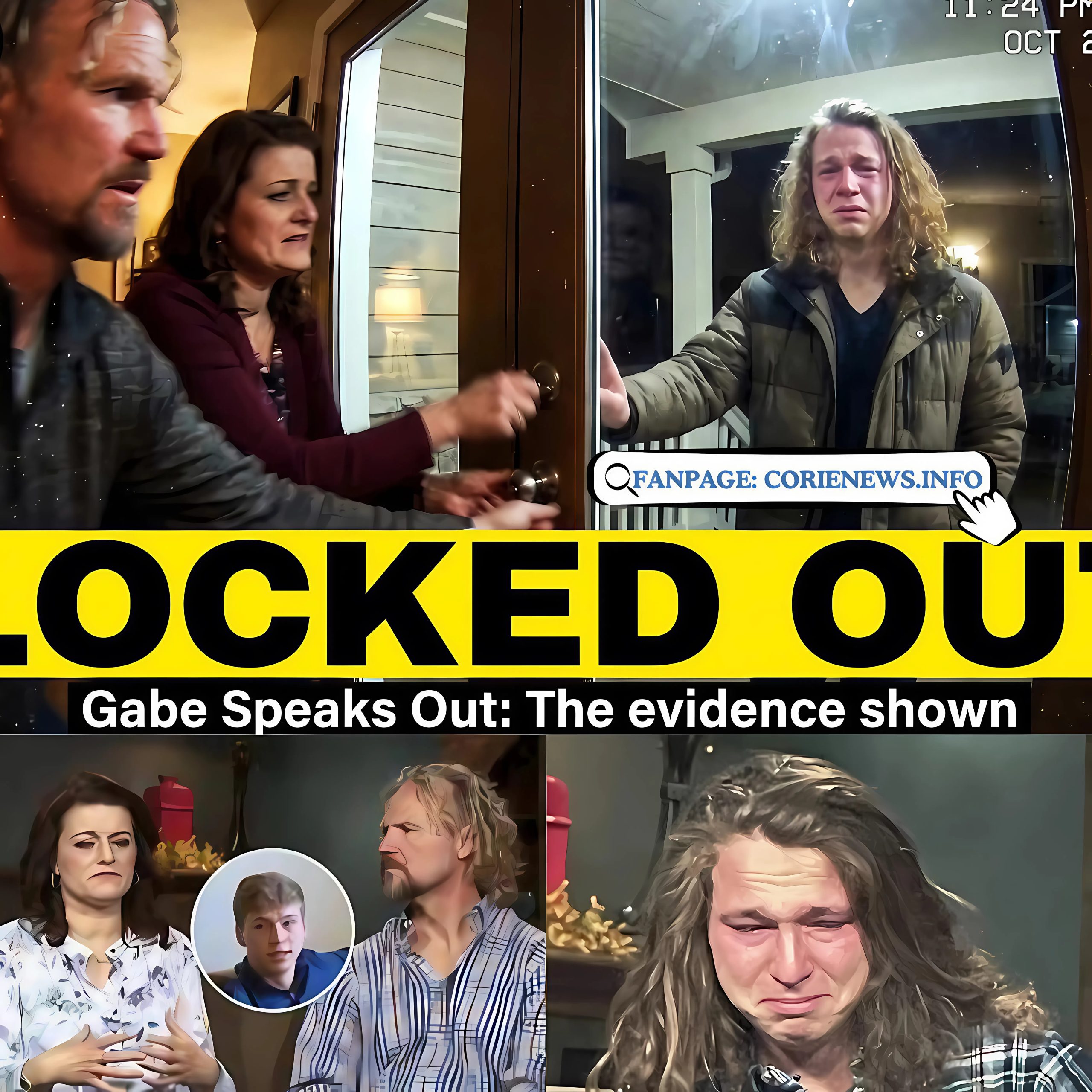
And nowhere is that more evident than in the now-infamous moment that fans can’t stop talking about—the incident where Gabe is effectively shut out. Whether literal or symbolic, the meaning is the same: a son left on the outside, watching his father choose distance over connection.
That moment didn’t stand alone. It was part of a broader pattern that unfolded during a critical time in these young men’s lives. Gabe and Garrison weren’t children anymore—they were entering adulthood, navigating identity, responsibility, and independence. It’s the stage when a father’s presence matters in deeper, more complex ways.
But instead of leaning in, Kody pulled back.
The emotional distance was compounded by practical realities. During the period when the family was developing land at Coyote Pass, resources were stretched thin. Yet even in that strain, priorities were revealed. While one household remained stable and secure, Janelle found herself living in an RV—with her sons witnessing every moment of it.
They saw the disparity. They felt it. And they understood what it meant.
This wasn’t confusion. It was clarity.
And that clarity made the damage harder to repair.
One of the most powerful scenes of this era comes during a confrontation between Gabe and Kody. On the surface, it’s about COVID rules. But beneath that, it’s about something far more painful. Gabe isn’t arguing about protocols—he’s pleading to be seen. To matter. To be acknowledged not as a risk or an inconvenience, but as a son.
And he loses.
That loss resonates because it reflects a deeper truth about Kody’s parenting style. He thrives in relationships that are easy—where admiration comes naturally, where love is uncomplicated. Younger children, who look up to him without question, fit that dynamic perfectly.
But older children—those who challenge, who question, who require emotional effort—demand something more. And time and again, Kody chose the path that required less of him.
This is not an uncommon human failing. Many parents struggle with it. But Kody’s situation is different. He built a public identity around the idea that his family represented something greater—an example of how plural marriage could multiply love rather than divide it.
That’s what makes the gap between his words and actions so stark. 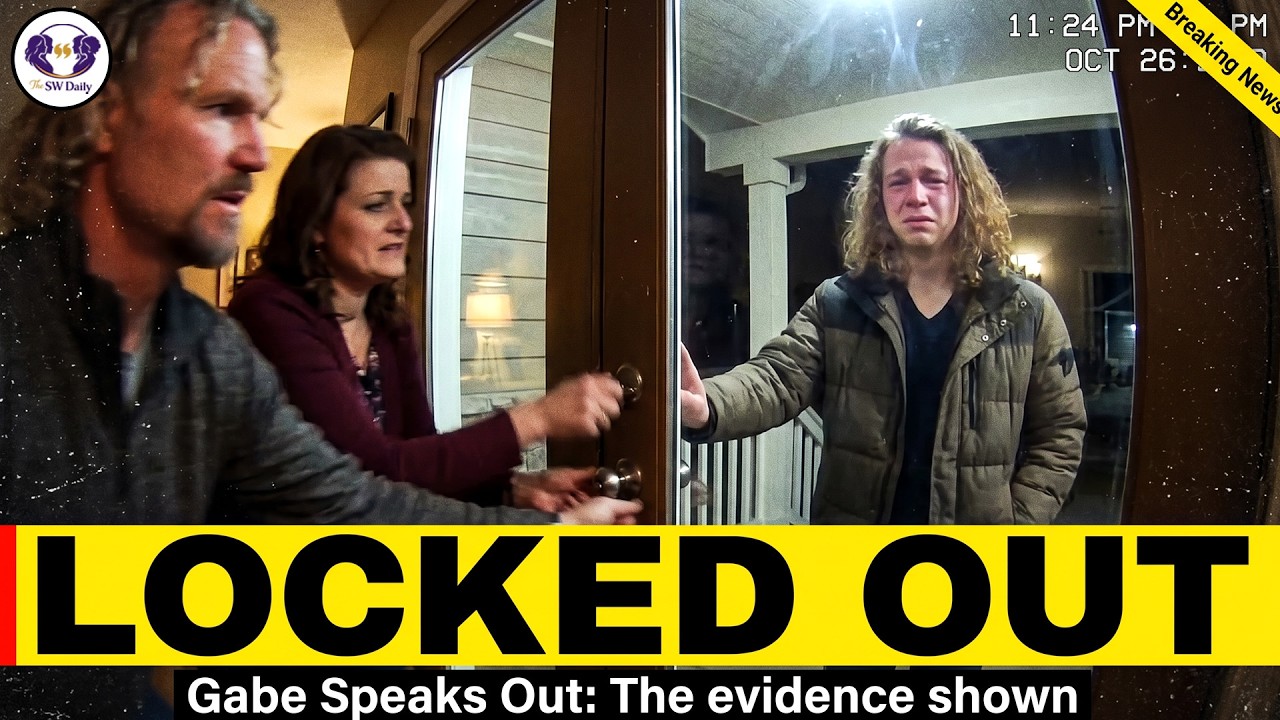
Because in practice, the system didn’t create more love. It created a hierarchy.
Children learned where they stood—not through what they were told, but through what they experienced. They counted the nights their father wasn’t there. They noticed the differences in tone, in attention, in investment. They watched their mothers’ circumstances and drew their own conclusions.
And those conclusions have lasting consequences.
Today, the fractures remain. Gabe continues to live his life independently, with no clear sign of reconciliation. Garrison’s passing casts an even heavier shadow over the story—especially given the unresolved distance that existed at the time.
That reality cannot be rewritten.
And it raises difficult questions about accountability, regret, and the long-term impact of choices made in real time, under the watchful eye of cameras.
But the story doesn’t end there.
Because the next chapter belongs to the children—especially those who are still growing up in Robyn’s household. For now, they exist within a version of the family where their father is present, attentive, and involved. But as they mature, their understanding will deepen.
They will hear the stories. They will form relationships with their siblings. And they will be confronted with a complex truth: that their experience of stability came at the same time others experienced absence.
Reconciling that reality won’t be easy.
And when those conversations finally happen—when every child has the chance to tell their story in their own voice—the narrative of Sister Wives will shift in a way no edit or confessional ever could.
Because the most powerful perspective is no longer Kody’s.
It belongs to the children who lived it.
And as their voices grow louder, clearer, and more unified, the illusion that once held this family together may finally give way to something far more honest—something raw, complicated, and undeniably real.
The truth was always there.
The cameras just needed time to reveal it.