
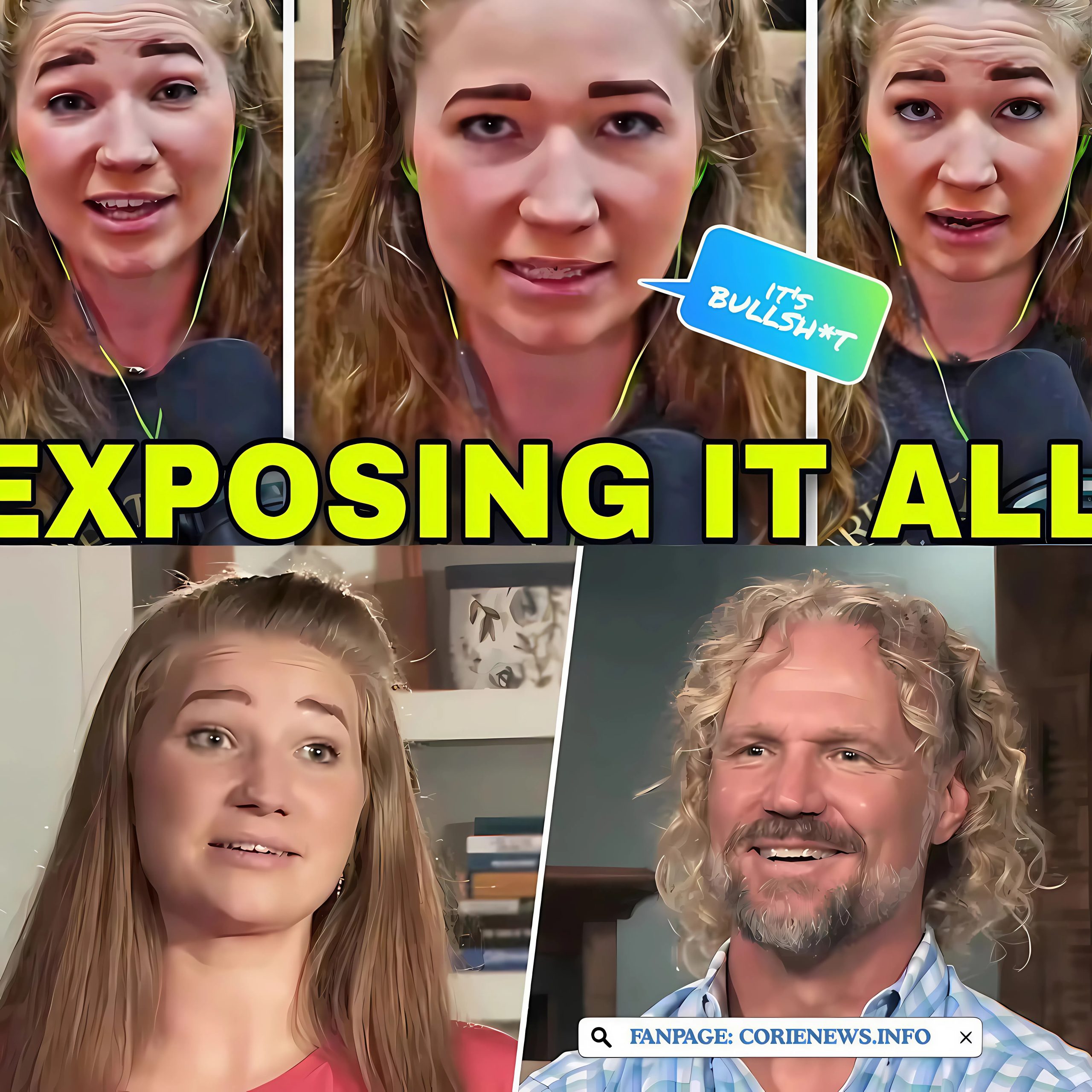
EXCLUSIVE! Mykelti Padron EXPOSES Kody Brown, the Show, Contracts, Finances & more
EXCLUSIVE! Mykelti Padron EXPOSES Kody Brown, the Show, Contracts, Finances & More
In a revelation that is already sending shockwaves through fans of Sister Wives, Mykelti Padron has stepped forward with one of the most unfiltered, revealing interviews yet—pulling back the curtain on her family, the show, and the complicated truth behind what viewers thought they knew.
Appearing on a candid podcast interview, Mykelti didn’t just revisit familiar territory—she dug deeper, offering insight into her upbringing, the inner workings of the show, and the emotional and financial realities that shaped her life. What makes this interview even more explosive is the dynamic between Mykelti and the host, who openly admitted she had never watched Sister Wives. That outsider perspective led to raw, unfiltered questions—questions longtime viewers have been asking for years but rarely hear answered so directly.
From the very beginning, Mykelti laid out her childhood within a polygamist family, explaining the religious foundation tied to the Apostolic United Brethren (AUB). While some of this background has been discussed before, what stood out here was how plainly it was presented—without the usual framing or narrative polish of reality TV. Her mother’s prominent standing within the faith, often described as “AUB royalty,” was acknowledged, but this time it came across as part of a larger system that shaped every decision the family made.
As the conversation turned to Robyn’s arrival into the family, things took a more revealing turn. The host’s lack of prior knowledge prompted Mykelti to explain everything from scratch, including Robyn’s previous marriage and the circumstances surrounding it. According to Mykelti, Robyn’s relationship history—and the narrative built around it—has always been complicated, shaped heavily by perspective. The way Mykelti described it, viewers may not have seen the full picture, only the version that served the storyline.
But perhaps the most eye-opening claims came when Mykelti began discussing how Sister Wives itself was constructed—not just emotionally, but strategically. She revealed that Robyn’s courtship with Kody was extended far longer than it might have been naturally, largely to provide content for the show. Even their now-infamous honeymoon, which lasted 11 days, wasn’t simply a romantic getaway—it was, according to Mykelti, a calculated decision to capture enough footage for multiple episodes. In other words, what audiences saw as organic family moments may have been shaped heavily by production needs.
Then came the topic everyone was waiting for: money.
When asked whether the children were compensated for their participation, Mykelti didn’t hesitate. She made it clear that, as kids, they were not directly paid. Instead, they were given promises—opportunities framed as rewards for being part of the show. She described being told that filming would help pay for college or lead to other benefits, like getting a car. But the reality, she suggested, didn’t always match those expectations.
Her frustration became evident as she reflected on the disparity between what the adults gained and what the children received. While the parents were living in large, comfortable homes, she recalled being given something as modest as a $3,000 car. Though she acknowledged that receiving anything at all was something, the imbalance didn’t sit right with her. It painted a picture of a system where contributions weren’t equally recognized—especially for the younger members of the family.
And then came one of the most shocking revelations of all: once the children turned 18, those who continued filming were no longer simply participants—they became subcontractors under their parents. This arrangement raises serious questions about control, compensation, and autonomy. According to Mykelti, she herself operated under this kind of agreement, effectively tying her participation to her parent’s contractual structure rather than having an independent deal.
As the interview moved into more recent developments, Mykelti hinted at what’s ahead for the show. She confirmed that filming for Season 21 has already taken place and suggested that it could premiere sometime in the fall. However, she also revealed that she hasn’t been asked to participate in the latest season. While she didn’t explicitly say she refused, the implication was clear—her absence may not be entirely her choice. 
She pointed to a shift in production priorities as a possible reason. A newer producer, who has been involved for a couple of years, appears to be steering the focus back toward the adult relationships—specifically Kody, Robyn, and the former wives—rather than the children’s perspectives. If true, this shift could explain why voices like Mykelti’s are becoming less prominent on-screen, even as they grow louder off it.
But the emotional core of the interview came when Mykelti shared a deeply personal story about her relationship with her father, Kody. Around Christmas, she and her family created a thoughtful, personalized scrapbook for him, Robyn, and their children. Each page included handwritten notes, carefully crafted to show love and connection. She even reached out ahead of time to confirm their address and ensure the package would arrive.
The gift was delivered days before Christmas.
And then—nothing.
Weeks passed with no acknowledgment. Eventually, after Mykelti followed up, Kody responded with a brief message: “Yeah, got it. Thanks.” No warmth. No appreciation. Just a few words that, to Mykelti, spoke volumes.
That moment seemed to crystallize her feelings about their relationship. She described it as a painful realization—one that led her to see her father in a very different light. The effort she had put into that gift, only to receive such a minimal response, underscored a deeper emotional disconnect that she no longer felt she could ignore.
And if that wasn’t enough, Mykelti didn’t hold back when discussing other family members—particularly Meri. When asked whether anything on the show had been misrepresented, she immediately brought up the infamous catfishing scandal. Contrary to the sympathetic narrative often presented, Mykelti argued that the situation has been exaggerated and misunderstood.
In her view, the incident didn’t happen in isolation. She suggested that Meri’s actions—specifically engaging in a relationship outside her marriage—played a significant role in what followed. For Mykelti, this wasn’t a case of pure victimhood, and she expressed frustration with how the story continues to be framed publicly.
Her criticism didn’t stop there. She made it clear that her personal relationship with Meri is strained, describing her in blunt terms and rejecting the idea that Meri’s public image reflects who she truly is. It was a striking moment—one that left little room for ambiguity about where she stands.
By the end of the interview, one thing was certain: Mykelti Padron is no longer holding back.
What she revealed wasn’t just behind-the-scenes gossip—it was a fundamental challenge to the narrative that has defined Sister Wives for years. From production manipulation to financial inequities, from strained family bonds to conflicting truths, her story paints a far more complicated picture than the one viewers have been shown.
And as fans brace for the next season, one question lingers: how much of the truth will finally make it to the screen—and how much will remain hidden, waiting for voices like Mykelti’s to bring it into the light?