

Yellowstone | Kayce & Monica’s Love Staying Strong Through Thick & Thin
Yellowstone | Kayce & Monica’s Love Staying Strong Through Thick & Thin
In one of the most emotionally charged arcs yet, Yellowstone dives deep into the fragile yet enduring bond between Kayce and Monica—a relationship constantly tested by loyalty, trauma, and the harsh realities of the Dutton legacy. What unfolds is not just a love story, but a raw exploration of what it means to fight for family when everything around you seems determined to tear it apart.
From the very beginning, their connection is undeniable. Kayce doesn’t just see Monica as his wife—he sees her as his anchor, his closest companion, and the one person who truly understands him. To him, she is everything: his best friend, his only friend, the one person who gives his life meaning beyond the chaos of the ranch. And Monica, despite everything, still feels that same deep connection. But love alone isn’t enough to shield them from the cracks forming beneath the surface.
As the episode unfolds, a difficult conversation emerges about family—specifically, Kayce’s father and his desire to connect with his grandson. Monica is hesitant but pragmatic. She understands the importance of family ties, even complicated ones, and agrees that perhaps they should allow that connection to happen. Yet beneath her calm exterior lies a deeper concern: history has a way of repeating itself, and she fears what influence the Dutton world might have on their son.
Monica’s perspective is shaped by painful realizations. She begins to see Kayce differently—not as the young man she once fell in love with, but as someone still caught in cycles of escape and avoidance. She reflects on their past, recalling how he once ran off to the Navy, believing he was saving her, when in reality, he was running from something within himself. Now, she sees him repeating that pattern, making choices that distance him from the life they could have together.
This leads to a heartbreaking turning point. Monica stops pleading for him to stay. Instead, she does something unexpected—she tells him to go. Not out of anger, but מתוך exhaustion. She’s tired of asking for the same things, tired of watching him choose paths that lead away from her. She challenges him in a way no one else does, forcing him to confront the truth he’s been avoiding.
And then comes the confession that changes everything.
Kayce admits to killing a man—his own brother-in-law. It wasn’t out of malice, but survival. The man had intended to kill him, leaving Kayce with no choice. Still, the weight of that action lingers heavily between them. Monica doesn’t just hear the act—she hears the implications. To her, the issue isn’t just what happened, but the path Kayce continues to walk. A path filled with violence, shaped by his father’s world, and one she desperately wants to shield their son from.
In a moment of painful clarity, Monica makes a decision that cuts deep: she resolves to protect their son, even if it means keeping him away from both John Dutton—and Kayce himself. It’s not a rejection of love, but a redefinition of priorities. She makes it clear that while she loves Kayce with all her heart, her responsibility as a mother comes first.
Kayce is shattered. He doesn’t know how to exist without her. The idea of not speaking to her, not sharing his life with her, feels impossible. To him, she isn’t just his partner—she is part of his identity. And yet, he realizes that something must change. The question is whether he’s capable of making that change. 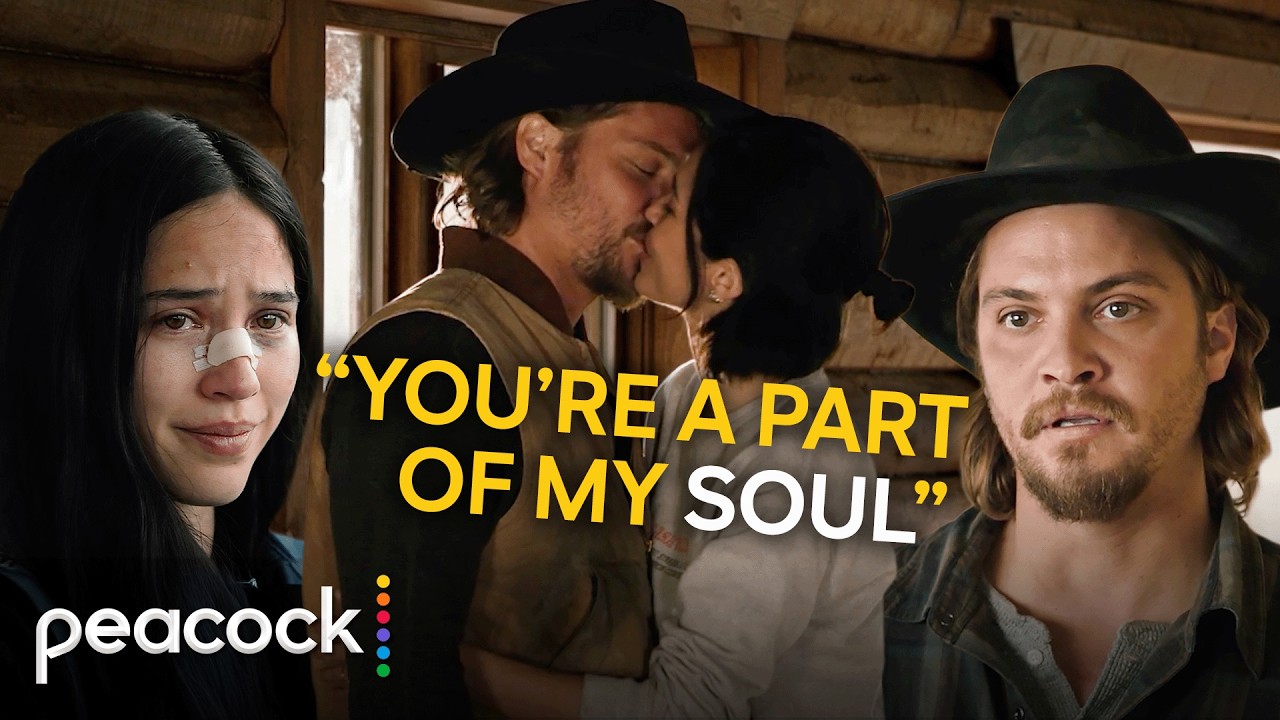
Their argument intensifies when Monica points out a painful truth: Kayce listens when people tell him to leave, but he never fights to stay. He follows orders, even emotional ones, instead of standing his ground for what he truly wants. It’s a flaw that has defined their relationship—and now, it may be what breaks it.
Despite everything, the love between them refuses to disappear. Kayce admits that he tried to move on, tried to find closure, but couldn’t. Monica is woven into his very soul. And Monica, in turn, acknowledges that she never stopped loving him either. But love, as they both realize, doesn’t erase consequences.
Their environment becomes another source of tension. Monica describes the ranch not as a home, but as a fortress—a place where everyone is trapped by duty and legacy. She sees it as a prison, one that holds not just Kayce, but his entire family. And now, she fears it’s trapping them too.
In a rare moment of compromise, Kayce offers a way out. He’s willing to leave the ranch behind, to live in town, to build a simpler life—anything that allows them to be together. For him, the location doesn’t matter. What matters is being with Monica and their son.
For a brief moment, hope flickers.
But reality quickly crashes back in when a crisis strikes—their son goes missing. Panic sets in as they scramble to find him, the fear cutting through all their unresolved issues. In that moment, nothing else matters. Not the arguments, not the past—only their child.
As they search, Kayce opens up about the life he’s been forced into. He describes it bluntly: a constant choice between killing and being killed. It’s not just a job—it’s a burden he carries every day. And what scares him most isn’t the violence itself, but how Monica might see him because of it. He fears that if she truly sees him as a bad man, then that judgment becomes reality.
Monica’s response is both surprising and deeply moving. She tells him that she has always believed the men he’s killed were dangerous—that in some way, his actions made the world safer. It’s her way of reconciling the man she loves with the life he leads. But even that belief has its limits.
Then comes a moment of shocking revelation—Monica reveals she’s pregnant. It’s unexpected, almost surreal, given everything they’ve been through. The news brings a mix of emotions: joy, fear, and uncertainty about what the future holds.
Tragedy soon follows, casting a shadow over what should have been a hopeful moment. Monica experiences a devastating loss, one that leaves her grieving deeply. She doesn’t want a large funeral or public sympathy—just a quiet, private goodbye. Her only wish is to lay their child to rest on the ranch, a place that holds both pain and meaning.
Kayce supports her, promising to make it happen. In this moment, their bond feels unbreakable again. They lean on each other, sharing the weight of their grief. Monica refuses to dwell on “what ifs,” insisting that they move forward without blaming themselves.
As they reflect on everything, Monica recalls a haunting statement—someone once predicted the end of their relationship. For a moment, it feels like that prophecy might be coming true. But Kayce reassures her that this isn’t the end. The only way their love could truly end, he says, is if he chose it. And that is a choice he will never make.
In the aftermath of loss and reconciliation, they begin to rebuild. Together, they create a space that finally feels like their own—a home not defined by the Dutton legacy, but by their shared experiences and commitment to each other. For the first time, it feels real, grounded, and theirs alone.
And in that quiet, hopeful moment, their love proves its strength once again. Through heartbreak, conflict, and unimaginable loss, Kayce and Monica continue to find their way back to each other—holding on, even when everything else threatens to pull them apart.
Because in the end, their story isn’t about perfection. It’s about endurance. It’s about choosing each other, again and again, no matter how difficult the road becomes.