
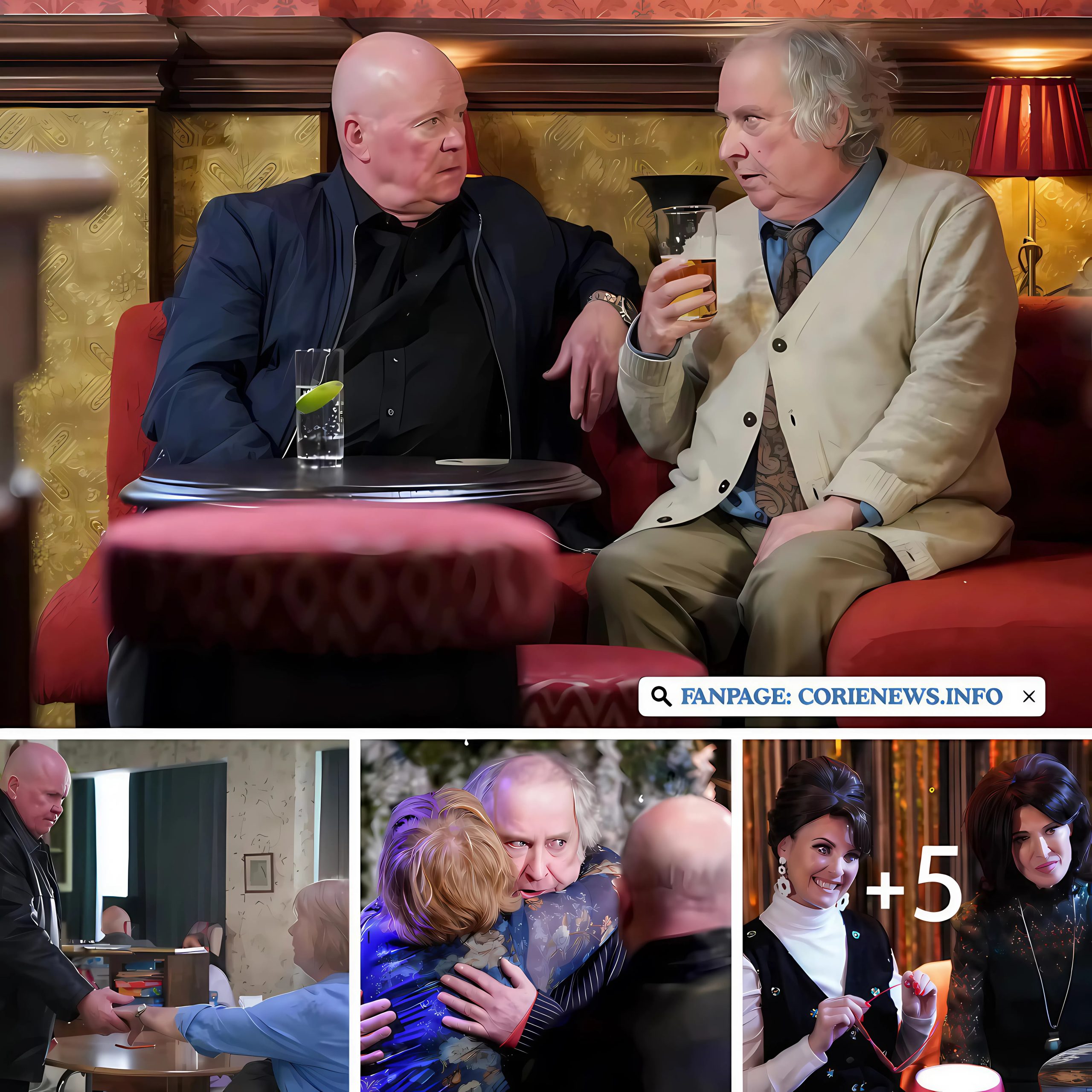
Very EMOTIONAL News!!! 😭 Phil’s FINAL Tribute to Nigel Will Break You? | EastEnders
😭 Phil’s FINAL Tribute to Nigel Will Break You? | EastEnders
What begins as a quiet farewell soon unfolds into one of the most emotionally devastating moments Walford has ever witnessed. In this heartbreaking episode, the story centers on the final hours of Nigel Bates—a man whose warmth, humor, and unwavering loyalty left an imprint on everyone around him, especially Phil Mitchell.
Nigel’s battle with dementia reaches its end in a care home, where those closest to him gather, holding onto the fragile hope that he’s waiting for one last thing before letting go. Julie, his devoted wife, senses it deeply—Nigel isn’t ready to leave yet. Not until he sees Phil.
But Phil hasn’t visited.
For weeks, even months, he’s kept his distance, avoiding the inevitable pain of saying goodbye. It’s a familiar pattern for Phil—pushing away emotion, locking it down, pretending it doesn’t exist. Yet those closest to him, particularly his brother Grant, refuse to let him hide this time. They push, insist, and finally break through his defenses.
And just in time, Phil arrives.
In Nigel’s fading mind, reality blurs into something softer, something kinder. He imagines himself on a beach with Phil, a peaceful place untouched by illness. It becomes clear that Nigel has been holding on not out of fear—but out of love. He needs to know that Phil will be okay without him.
Because years earlier, when Phil was struggling with his own mental health, it was Nigel who stood by him. Nigel who helped him find strength. Nigel who promised he’d never let him face the darkness alone.
Now, it’s Phil’s turn to return that promise.
In a moment that will leave viewers shattered, Phil finally opens up. He reassures Nigel, telling him that he’ll be alright—that it’s okay to let go. It’s not just words; it’s a release. A permission Nigel has been waiting for.
And with that, Nigel passes away peacefully.
The episode doesn’t linger long before showing the immediate aftermath. Julie, devastated but composed, shares a final kiss with her husband. It’s a quiet, intimate goodbye—one filled with love, loss, and acceptance. As she leaves the care home, Phil walks beside her, offering silent support. Over the past year, he has become her rock, even if he struggled to be present before.
Back in Walford, the news spreads quickly. The Square feels different—heavier. The usual noise and chaos are replaced with a subdued, almost reverent stillness. Everyone feels it. Nigel wasn’t just another resident; he was part of the soul of the community.
The Slaters organize a gathering to honor his memory, planning to show a film Nigel had made during Christmas—a reminder of his joy, creativity, and love for life. When Julie sees what everyone has done, she’s overwhelmed. Through tears, she reflects on Nigel’s decision to return to Walford after so many years away. At the time, she hadn’t fully understood it.
Now she does.
Walford wasn’t just a place to Nigel—it was home. It was part of him.
She thanks Phil, knowing how much Nigel meant to him and how difficult this loss must be. Others share the same concern. Linda Carter, among others, quietly worries about how Phil will cope without the one person who truly understood him.
And those fears aren’t unfounded.
Phil retreats to Number 55, sitting alone in his living room, surrounded by silence. The weight of grief presses down on him. He stares at an old photograph of himself and Nigel—a rare image of the two laughing, carefree, untouched by time or tragedy.
For a moment, it seems like Phil might crumble.
But instead, something shifts.
Remembering Nigel’s spirit—his refusal to let life pass by—Phil makes a bold, unexpected decision. He drags his old armchair outside into the Square, shocking everyone who watches. Without hesitation, he sets it on fire.
Gasps ripple through the crowd. Concern spreads quickly. But Phil stands there, watching the flames, a faint smile on his face.
“This is what he would’ve wanted,” he says.
It’s not destruction—it’s release. A symbolic act of refusing to sit in darkness, refusing to let grief consume him.
Then, in a complete emotional turn, Phil invites everyone inside. Together with Grant, he begins sharing stories about Nigel—funny, heartfelt, unforgettable moments that bring both laughter and tears. Music starts playing, and slowly, hesitantly, people begin to dance.
Not just any dance.
They dance like Nigel.
Awkward, joyful, completely unrestrained—just the way he always did. It’s messy, emotional, and beautiful all at once. For the first time since his death, the room feels alive again.
Amid the celebration, Phil holds onto the photograph of him and Nigel. He places a small stone on top of it—a meaningful gift he once gave his best friend. Looking at it, he smiles softly.
“Thanks, mate,” he whispers.
And just like that, the moment breaks him—and heals him at the same time.
But the most powerful scene comes later, inside the Queen Vic.
The pub, usually filled with laughter and noise, falls into an unusual silence. It’s the kind of silence that feels heavy, almost sacred. Everyone knows something significant is about to happen.
Phil stands at the bar, a drink in his hand he hasn’t touched. He looks around at the familiar faces—people Nigel once made laugh, people who shared in his life.
For a moment, it seems like Phil might walk away.
But he doesn’t.
Instead, he speaks.
What follows is one of the most raw and honest speeches Phil has ever given. He admits he’s not good with emotions, not good with words. But for Nigel, he tries.
He talks about how Nigel used to annoy him—always joking, always pushing, always there. The room chuckles through tears. Then his voice shifts.
He confesses he never told Nigel how much he meant to him.

Not once.
The regret is clear, cutting through every word. Phil admits he spent years pushing Nigel away, thinking that keeping people at a distance was safer. But Nigel never gave up on him. He stayed. He cared. He loved him like a brother.
And now, it’s too late to say it directly.
But not too late to say it at all.
Phil calls Nigel the best of them—all heart, all kindness. A man Walford didn’t deserve but was lucky to have. His voice breaks as he acknowledges how much worse the place will be without him.
Then he raises his glass.
“To Nigel.”
The entire room echoes him.
But Phil isn’t done.
He pulls out that same worn photograph and places it on the bar. It’s a simple image, but it says everything—a reminder of what they once had, of a friendship built on loyalty and endurance.
“I didn’t deserve him,” Phil admits quietly. “But I’m glad I had him.”
There’s no dramatic ending. No grand gesture. Just truth.
And that’s what makes it unforgettable.
In that moment, Phil Mitchell isn’t the toughest man in Walford. He isn’t the feared hardman or the unshakable figure people expect.
He’s just a man who has lost his best friend.
And as the camera lingers on the photograph—on two men laughing, frozen in a happier time—it becomes clear that this isn’t just a goodbye.
It’s a tribute.
A final, heartbreaking acknowledgment of love, friendship, and everything left unsaid… until now.