
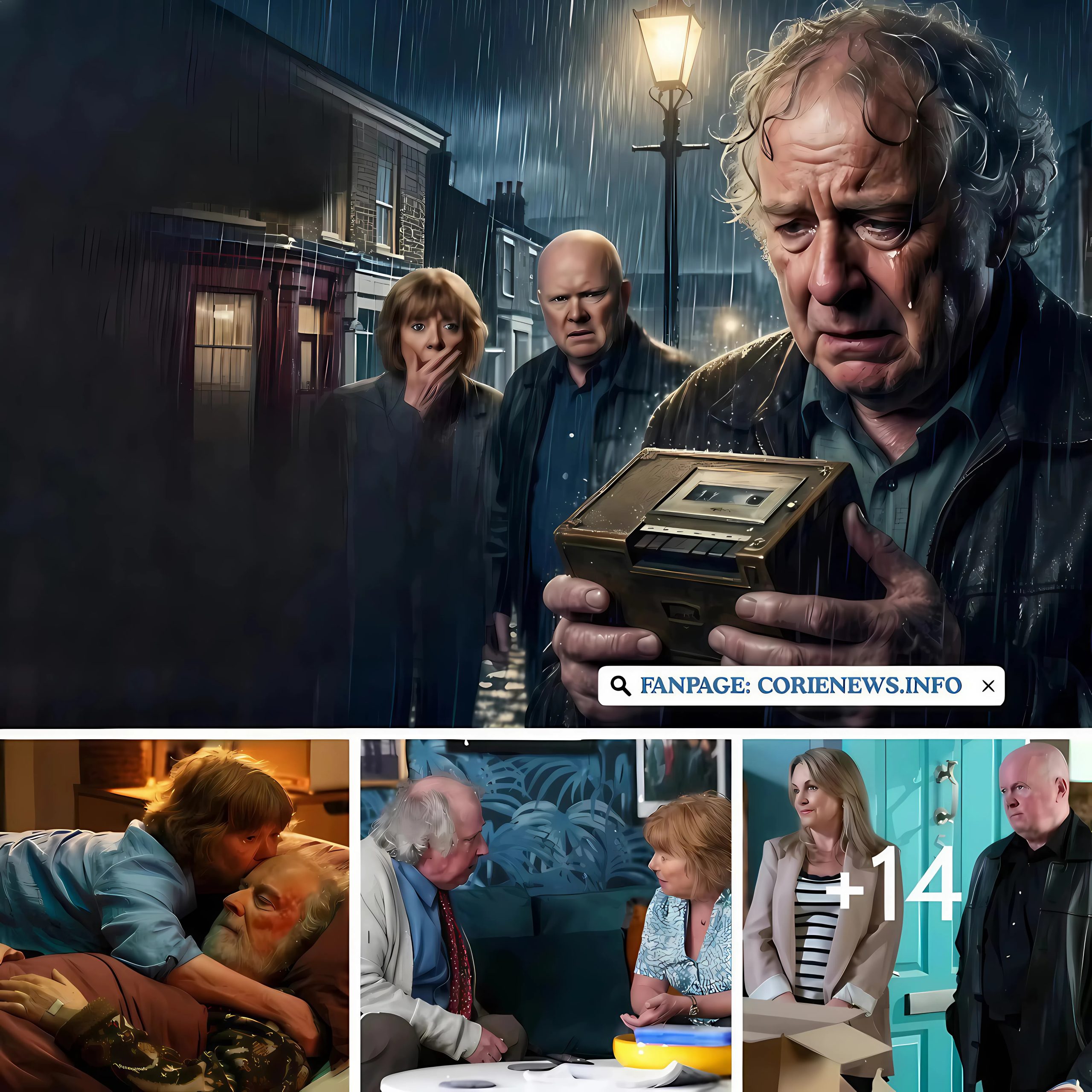
Nigel’s FINAL Message BREAKS Walford 💔 | EastEnders
Nigel’s FINAL Message BREAKS Walford 💔 | EastEnders Spoilers
Walford is no stranger to heartbreak, but nothing could have truly prepared Albert Square for the emotional devastation left behind by Nigel Bates’ final days. Even though his fate had been looming for some time, the moment his story reached its end still landed with crushing force, leaving residents—and viewers—grappling with a grief that felt deeply personal.
In the days leading up to Nigel’s passing, tension and sorrow hung thick in the air. His declining health became impossible to ignore, and those closest to him were forced to confront the inevitable. At the center of it all was Phil Mitchell, a man known for his toughness but now quietly unraveling under the weight of losing his best friend. Phil had already said what he thought was his final goodbye when Nigel was moved into care, unable to face the slow, painful reality of watching him fade away.
But others saw what Phil could not—or would not. Concerned for his brother’s fragile mental state, Grant Mitchell was brought back into the fold by Mark Fowler Jr., who feared Phil might spiral once again into the darkness that had plagued him before. Grant’s return wasn’t just a family reunion—it was an intervention. He knew that if Phil didn’t face Nigel one last time, the regret might consume him.
Meanwhile, Julie Bates carried the heaviest burden of all. As Nigel’s devoted partner and caretaker, she had stood by him through every painful moment, watching the man she loved slowly slip away. When doctors confirmed that his pneumonia had worsened beyond recovery, Julie was forced to make an impossible decision: to stop treatment and allow Nigel to pass peacefully. It was an act of love, but one that would haunt her forever.
With time running out, Grant pushed Phil to do what he had been avoiding. Despite obstacles—including a stalled car that threatened to delay him—Phil raced against time, desperate not to miss his chance. When he finally arrived, the moment was raw and unfiltered. Sitting beside Nigel’s bed, with Julie close by, Phil shed his hardened exterior completely. There were no walls, no bravado—just a man saying goodbye to the person who had meant everything to him.
In those final moments, Phil spoke from the heart, confessing his love and gratitude, his voice breaking as Nigel slipped away. It was a farewell that carried years of friendship, regret, and unspoken emotion. And when Nigel finally took his last breath, the silence that followed felt deafening.
But the aftermath proved just as difficult.
Phil’s history with depression cast a long shadow over everything that came next. Those around him—Grant, Sam, Billy, Linda, and others—watched closely, fearing that this loss might push him back into dangerous territory. For a time, their concerns seemed justified. Phil withdrew, his grief raw and unpredictable. Even during a heartfelt gathering organized by Walford residents to celebrate Nigel’s life, Phil couldn’t stay. The pain was too fresh, too overwhelming.
Yet, in a surprising turn, Phil didn’t collapse under the weight of his sorrow. Instead, he began to confront it in his own way. In a symbolic act of letting go, he burned an armchair tied to some of his darkest memories, as if trying to purge the past. Later, he opened his home to friends and neighbors, allowing laughter and music to return, even if only briefly. It was clear he was still hurting—but he was fighting to stay afloat.
As Walford slowly adjusted to life without Nigel, Julie faced her own quiet battle. Determined not to burden Phil further, she decided to collect Nigel’s belongings from the care home on her own. But grief has a way of revealing itself, no matter how hard one tries to hide it. Kat Moon noticed Julie’s distress and, sensing something wasn’t right, confronted Phil, furious that Julie was being left to handle such a painful task alone.
Her words struck a nerve.
Realizing his mistake, Phil joined Sam and went to the care home to support Julie. It was there, among Nigel’s remaining possessions, that they discovered something unexpected—a letter addressed to Julie, written in Nigel’s own hand. The sight of it alone was enough to break her. Overwhelmed, she couldn’t bring herself to open it.
But that wasn’t the only message Nigel had left behind.
In a quiet, dimly lit room before his death, Nigel had recorded something far more powerful—a final confession captured on an old cassette tape. It wasn’t polished or rehearsed. It was raw, trembling, and painfully honest. He had chosen this medium deliberately, wanting his words to last, to echo long after he was gone.
When the tape finally played days later, it changed everything.
The room fell into a heavy silence as Nigel’s voice filled the air. At first, he struggled to even begin, his breaths uneven, his uncertainty palpable. But soon, the truth started to pour out. He spoke of regret—of the countless mistakes he had made, the pain he had caused, and the opportunities he had wasted. There were no excuses, no attempts to justify his actions. Just a man confronting his own failures.
He admitted that he had hurt the person he loved most, more deeply than he had ever acknowledged before. He spoke of the guilt that had followed him, of the fear that had kept him from being honest. Time, he realized too late, was not as endless as he had once believed.
Nigel’s words painted a picture of someone who had always intended to make things right—but never quite managed to do so. There was always another day, another excuse, until suddenly there wasn’t. 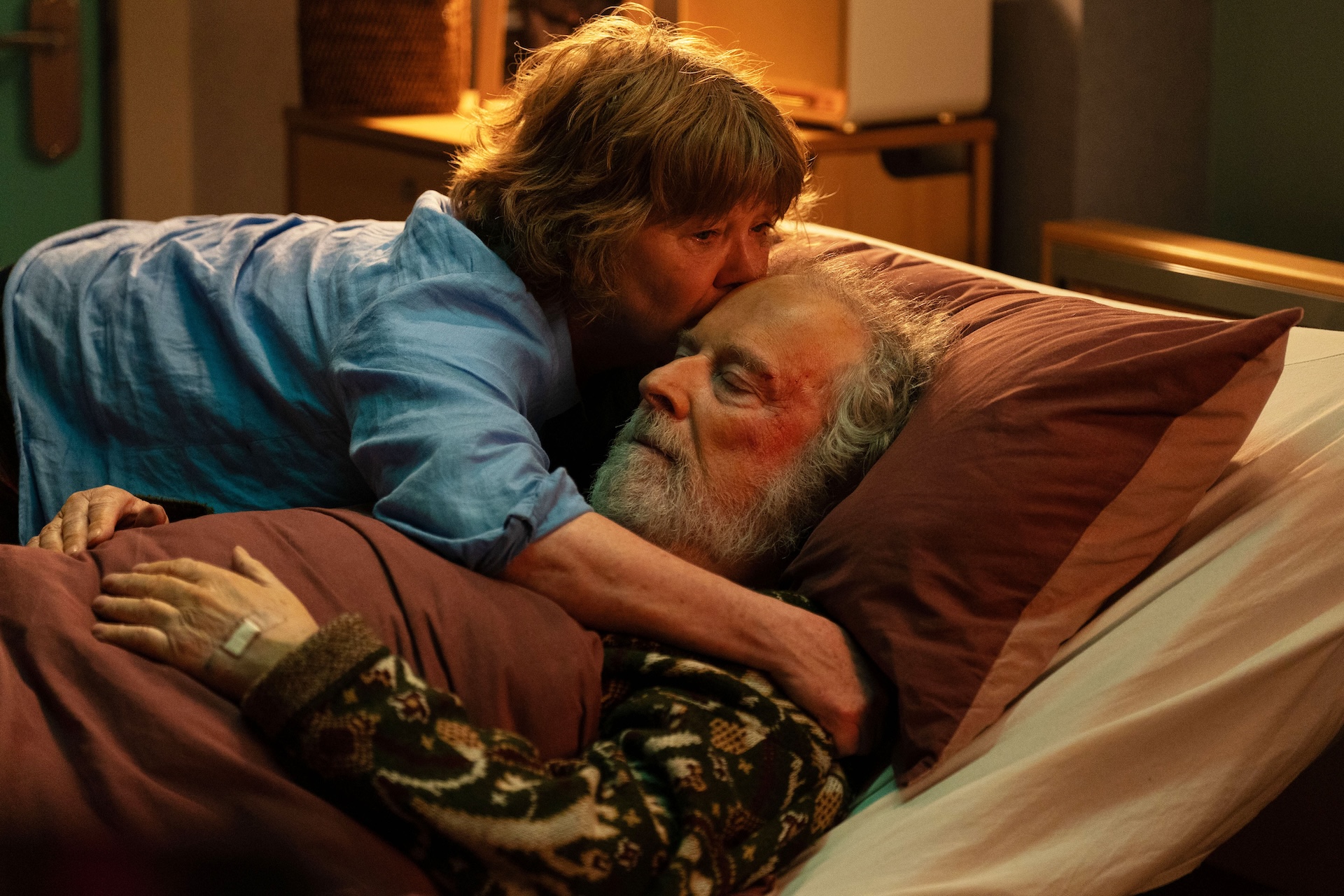
As his voice wavered, he revealed something even more heartbreaking: despite everything, he had never stopped caring. Not for a moment. Even when his actions suggested otherwise, even when he pushed people away, his feelings had remained constant.
He spoke of fear—fear of being seen for who he truly was, fear of rejection, fear of facing the truth. But in the end, he acknowledged that hiding from it had only made things worse. The person he was afraid of becoming… he had already become.
Then came the most painful realization of all: if given another chance, he would choose differently. He would choose love. He would choose honesty. He would choose the life he had let slip through his fingers.
But there are no second chances.
Nigel’s voice softened as he spoke directly to the one person who mattered most. He told her she deserved better—better than what he had given, better than what he had been. And though it broke him to say it, he expressed a hope that she might one day be free of the pain he had caused, even if that meant letting go of him entirely.
And then, finally, came the words he had never properly said before.
“I love you.”
It was simple, but it carried the weight of everything he had left unsaid for so long. It wasn’t meant to fix anything—he knew it couldn’t—but it was the truth, laid bare at last.
As the tape ended, no one in the room could speak. The silence was overwhelming, filled with emotions too complex for words. What Nigel had left behind wasn’t just a goodbye—it was a confession, a plea for understanding, and a love story that had arrived far too late.
Back in Albert Square, life continued, as it always does. But something had changed. Nigel’s presence lingered—not just in memories, but in the spaces between people, in the things left unsaid, in the quiet moments when grief resurfaces without warning.
The rain eventually stopped falling over Walford, but the emotional storm he left behind was only just beginning.
Nigel’s final message didn’t just say goodbye—it shattered hearts, exposed truths, and ensured that he would never truly be forgotten.