
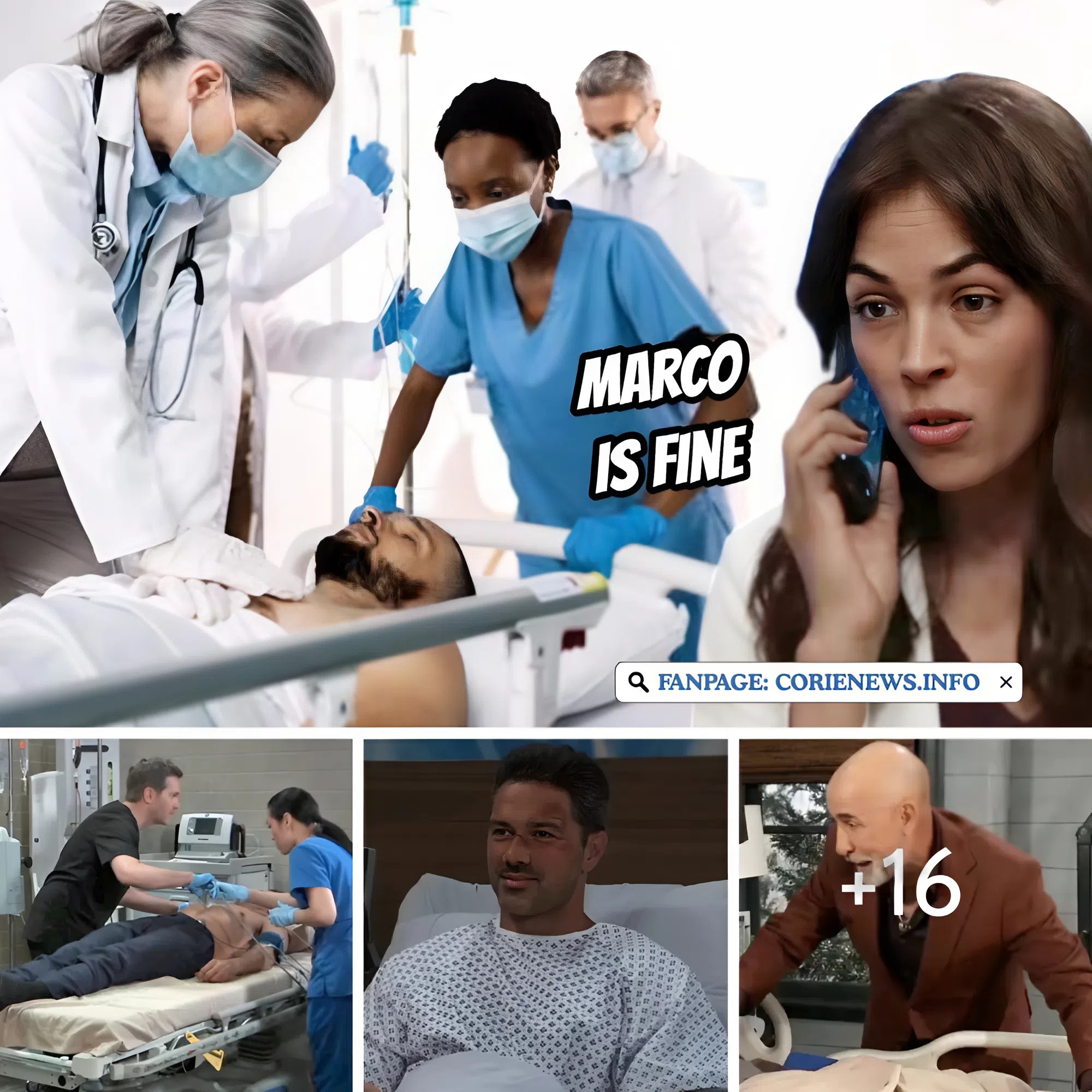
Is This Guy Still Alive And Receiving Treatment In A Safe Place? General Hospital Spoilers
Is This Guy Still Alive And Receiving Treatment In A Safe Place? General Hospital Spoilers
Let’s skip the small talk and get straight to the point. There’s one question that keeps circling in my head, refusing to go away no matter how much I try to dismiss it: what if Marco isn’t actually dead? I know, it sounds far-fetched, maybe even a little ridiculous at first glance. But if you’ve watched enough General Hospital, you already understand that death in Port Charles is rarely as final as it appears. Funerals don’t always mean closure—they can just as easily be part of a larger deception.
So here’s the theory, laid out plainly but fueled by equal parts intuition and obsession: Marco survived. He’s not gone—he’s hidden. Somewhere secluded, out of sight, recovering from his injuries under the care of Lucas. And behind this elaborate secret? A risky, emotionally driven plan orchestrated by both Lucas and Britt.
Before diving deeper into the speculation, it’s worth acknowledging something important. Marco’s character left a lasting impression. The portrayal wasn’t just good—it was compelling, layered, and deeply human. Performances like that don’t simply fade away when a character exits. They linger, sparking conversations, theories, and hope for a return. When viewers feel that kind of connection, it becomes hard to accept a definitive ending. Instead, the mind starts searching for possibilities—loopholes in the narrative that might allow the story to continue.
And that’s exactly where this theory begins.
The official version of events tells us that Marco is dead, and Sidwell’s grief certainly reinforces that belief. His sorrow appears genuine—raw and overwhelming. But in a soap opera, even the most convincing emotions can serve as a smokescreen. Grief doesn’t always mean truth; sometimes it hides something deeper.
The more you examine the situation, the more inconsistencies start to surface. What if Marco didn’t die from the attack? What if he survived but was left in critical condition? And what if, instead of revealing this to the world, a small group of people chose to keep it a secret?
This is where Britt and Lucas come into focus.
At first, it might sound extreme to suggest they would orchestrate something so elaborate. But when you break it down, their involvement starts to make sense. Lucas, driven by love and desperation, would do anything to save Marco. Britt, with her history of deception and survival, would certainly know how to pull off something this complex.
One of the biggest clues lies in Britt’s certainty about Callum being the attacker. She doesn’t just suspect him—she seems absolutely sure. And that raises an important question: how does she know?
Callum isn’t exactly the type to confess. He’s calculated, dangerous, and unlikely to volunteer incriminating information. So Britt’s confidence must come from somewhere else—something more direct.
Now consider Pascal. He had both motive and opportunity. He was among the first to learn about Marco’s betrayal, giving him a strong reason to act. Yet Britt never seriously considers him as a suspect. Not even briefly. That’s not just oversight—it feels intentional.
It’s almost as if she knows Pascal didn’t do it.
And that kind of certainty doesn’t come from guesswork. It comes from knowledge. Real, firsthand knowledge.
Which leads to a striking possibility: Britt knows the truth because she heard it from Marco himself.
But how could that be possible if Marco is supposedly dead?
That’s where the theory truly takes shape.
Imagine this: Marco survives the attack but is gravely injured. Lucas finds him first, barely clinging to life. Acting quickly, he stabilizes him and reaches out to Britt. Together, they realize that Marco’s survival puts him in even greater danger. If his enemies discover he’s alive, they won’t hesitate to try again.
So they make a decision—a dangerous one.
They let everyone believe Marco is dead.
To make this believable, they stage a deception. A body is substituted in the morgue—someone unrecognizable, altered just enough to pass as Marco. It’s a classic soap opera maneuver, but one that fits perfectly within this world. With careful planning, they create the illusion of death while secretly moving Marco somewhere safe.
Hidden away, he begins the long process of recovery.
Picture it: a secluded room, far from the chaos of the hospital. The atmosphere is tense but filled with fragile hope. Lucas works tirelessly, using whatever resources he has to keep Marco alive. Every small improvement feels like a victory. Every setback is a reminder of how precarious the situation truly is.
Britt, meanwhile, plays her role on the outside. She maintains the illusion, carefully controlling what she reveals and to whom. Her behavior toward Sidwell becomes especially telling. She points suspicion toward Callum but never pushes too hard. It’s a delicate balancing act—enough information to guide the narrative, but not enough to expose the truth.
Because if Sidwell starts digging too deeply, the entire plan could unravel.
What makes this theory so compelling isn’t just its plausibility—it’s the emotional weight behind it. Sidwell mourns a son who may still be alive. Lucas risks everything for someone he loves. Britt walks a moral tightrope, balancing deception with the intention of saving a life.
And at the center of it all is Marco—silent, hidden, caught between life and death.
This kind of storytelling is exactly what soap operas excel at. Secrets layered upon secrets. Love pushing characters to extreme choices. The constant tension between truth and illusion. It’s messy, dramatic, and deeply engaging.
Another fascinating aspect is the idea that this secrecy isn’t just about hiding Marco—it’s about buying time. Time for him to heal. Time to deal with the threat Callum poses. Time to ensure that when the truth finally comes out, it won’t put Marco back in danger.
Because if the truth were revealed too soon, the consequences could be deadly.
Callum would undoubtedly come after him again. There would be no hesitation, no second chances. Keeping Marco hidden isn’t just a choice—it’s a necessity.
And then there’s the potential payoff. 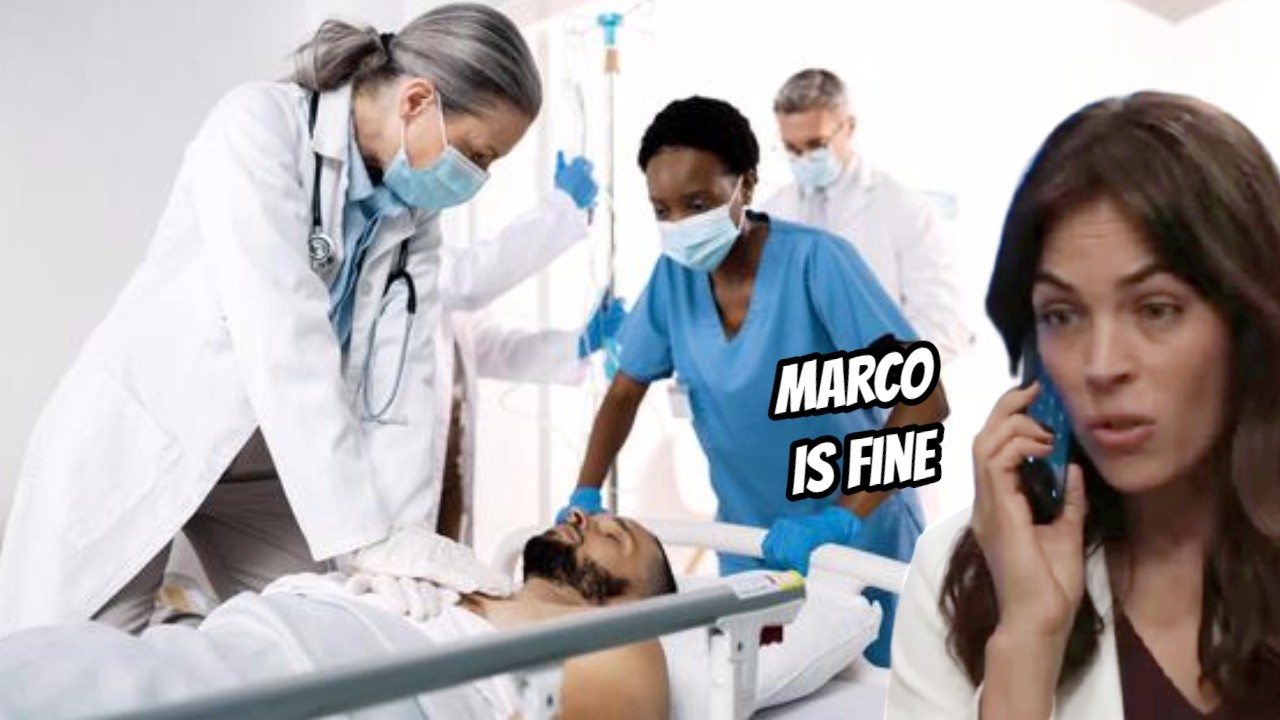
If this theory turns out to be true, the eventual reveal would be explosive. Imagine Sidwell discovering that his son is alive after all. The shock, the disbelief, the overwhelming flood of emotion. Lucas stepping forward, finally revealing the truth. Britt standing firm, ready to face the consequences of her actions.
And Marco himself—alive, changed, but still standing.
It wouldn’t just be a twist. It would be a defining moment.
When you step back and look at all the pieces, they start to form a coherent picture. Britt’s certainty about Callum. Her dismissal of Pascal. Her history of deception. Lucas’s medical expertise. The genre’s long-standing tradition of fake deaths and hidden recoveries.
Individually, each detail might seem insignificant. But together, they create a narrative that feels surprisingly solid.
Of course, there’s no guarantee any of this is true. It could all just be speculation—a fan theory fueled by hope and imagination. But that’s part of what makes General Hospital so compelling. It thrives on unpredictability. It challenges expectations and often delivers twists that seem impossible until they happen.
So maybe Marco really is gone.
Or maybe he’s not.
Maybe he’s out there, hidden away, slowly healing. Maybe Britt knows far more than she’s letting on. Maybe Lucas is risking everything to protect the man he loves.
And maybe, just maybe, this story isn’t over yet.
Because in Port Charles, the line between the impossible and the inevitable is razor-thin. And sometimes, the most unbelievable theories turn out to be the ones closest to the truth.
For now, all we can do is watch, wait, and wonder.
Is Marco still alive?
If this theory holds, the answer might be yes—and when the truth finally comes to light, it could change everything.