

Guilty or Not Guilty for Murder? | This Week On EastEnders
Guilty or Not Guilty for Murder? | This Week On EastEnders
This week in Walford delivers one of the most emotionally charged and morally complex storylines yet, as Jasmine Fisher’s fate hangs in the balance. Accused of murder, haunted by her past, and surrounded by conflicting loyalties, Jasmine’s trial becomes more than just a legal battle—it’s a collision of truth, trauma, and family secrets that have been buried for years.
The tension begins to build when her estranged brother, Josh, makes a shocking decision—he wants to visit Jasmine in prison. It’s not a move fueled by support or forgiveness, but by a desperate need for answers. Having not seen her since they were children, Josh is driven by a mix of curiosity, anger, and unresolved pain. He doesn’t know whether he believes her innocence or guilt—he just needs to look her in the eye and decide for himself.
Meanwhile, Jasmine’s legal team is struggling. The evidence against her is frustratingly unclear. A crucial piece of mobile phone footage fails to show the exact moment of the attack, leaving room for interpretation. Was it self-defense, as Jasmine claims? Or was it a calculated act of violence? With little physical evidence, the case hinges almost entirely on witness testimonies—and that’s where things begin to unravel.
One of the biggest blows comes from within Jasmine’s own family. Her grandmother is pressured to testify in court, despite her deep reluctance. Initially resistant, she’s pushed into a corner, forced to choose between protecting her granddaughter or telling what she believes is the truth. The weight of this decision threatens to tear the family apart.
At the heart of the case is the night Dr. Anthony Truman died. Jasmine insists she acted in self-defense, claiming she found him attacking her mother, Zoe, who was lying unconscious. In a moment of panic and fear, Jasmine struck him from behind, believing she had no other choice. She maintains that she acted purely to save her mother’s life.
But the prosecution paints a very different picture.
They argue that Anthony was unarmed, with no history of violence, and that Jasmine’s reaction was excessive and unjustified. They question why she didn’t call for help, why she fled the scene, and why she hid evidence—including the weapon used in the attack. To them, these are not the actions of someone innocent—they are the signs of guilt.
The courtroom becomes a battlefield of narratives. Jasmine’s character is put under a microscope, with her troubled past dragged into the spotlight. A former guardian, Sandra, delivers a devastating testimony, describing Jasmine as emotionally detached and deeply disturbed. She recounts a traumatic car accident from Jasmine’s childhood, where her husband died—and claims Jasmine showed no emotion, only a cold, unsettling stare.
Sandra goes even further, suggesting that Jasmine may have been responsible for that tragedy too.
These accusations shake the entire case. Suddenly, Jasmine is no longer just a frightened young woman defending her mother—she’s portrayed as someone capable of causing harm, even death. The jury is left questioning everything they thought they knew.
Josh’s prison visit becomes a pivotal moment. Face to face with Jasmine, he demands the truth. Why did she kill their father—a man neither of them truly knew? Jasmine breaks down, insisting she didn’t even realize Anthony was their biological father at the time. She describes the chaos of that night, the fear, the confusion, and the split-second decision that changed everything.
Her apology is raw and heartfelt. She expresses deep regret—not just for taking a life, but for robbing Josh of the chance to know their father. She pleads with him to believe her, to see the truth in her eyes. It’s a powerful moment, but whether it’s enough to sway him—or the jury—remains uncertain.
As the trial intensifies, another devastating twist emerges. A key witness admits under pressure that they don’t fully believe Jasmine’s version of events. This doubt ripples through the courtroom, weakening her defense and pushing her closer to the edge.
At one point, it seems Jasmine might give up entirely. Influenced by the mounting pressure and the damaging testimonies, she considers changing her plea to guilty. The emotional toll is immense—she feels abandoned, misunderstood, and overwhelmed by the possibility of spending decades behind bars.
But in a final, desperate push, those closest to her urge her to keep fighting. They remind her that the truth matters, that she deserves a chance to be heard. And in a dramatic turn, Jasmine decides to stand her ground—she pleads not guilty.
Her testimony becomes the emotional centerpiece of the trial. She recounts the events of that night in vivid detail, explaining how she believed her mother’s life was in immediate danger. She admits to the fatal blow but insists it was never her intention to kill. It was instinct, fear, and love that drove her actions.
She doesn’t deny the consequences. In fact, she openly expresses her guilt—not for murder, but for the outcome. Learning that Anthony was her father only deepens her anguish. She tells the court she feels sick with regret, but stands firm in her belief that she did what she had to do in that moment.
The courtroom falls silent as the jury deliberates. 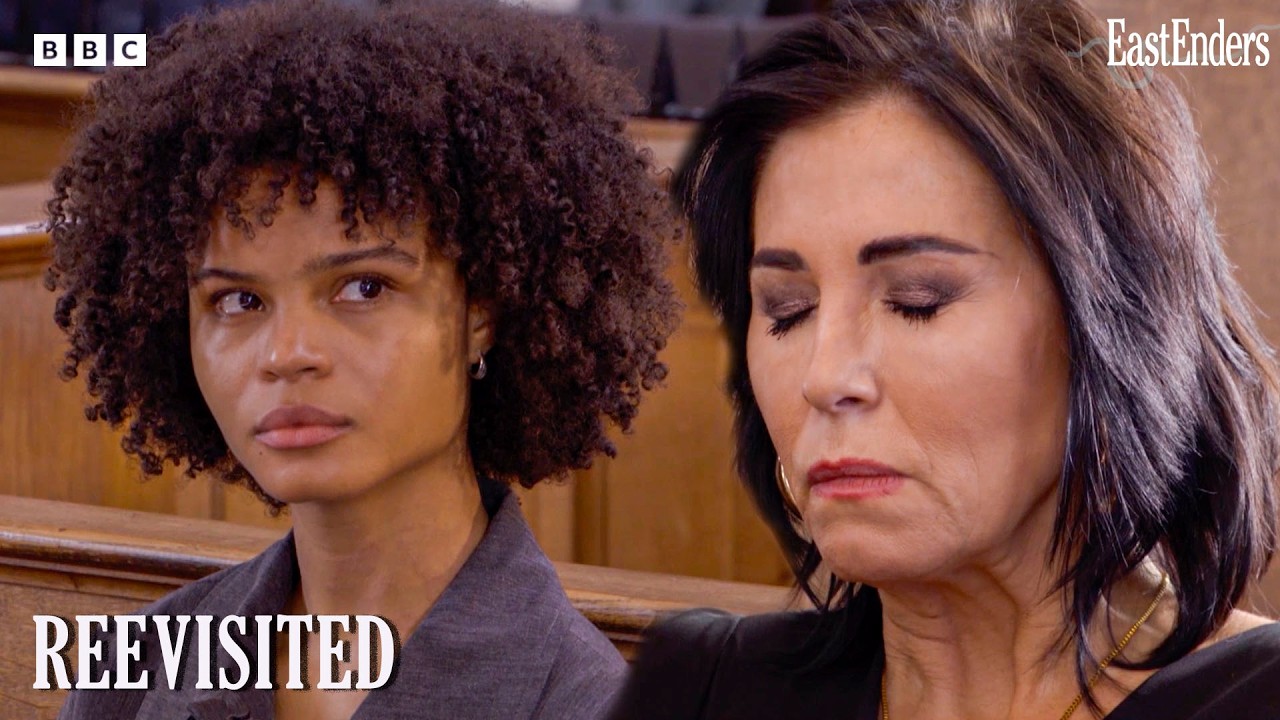
Every second feels like an eternity. Jasmine’s future hangs by a thread, and the emotional strain on her family is unbearable. Then, finally, the verdict is announced.
Not guilty.
The courtroom erupts. Relief, shock, anger—all collide in a chaotic outpouring of emotion. Jasmine is free, but the reaction from the community is far from unanimous. Some celebrate her survival, while others are convinced justice has not been served.
Back in Walford, tensions continue to simmer. Jasmine’s grandmother fiercely defends her, declaring her a survivor who did what anyone would do when pushed into a corner. She refuses to let anyone tarnish her granddaughter’s name, standing strong in the face of criticism.
But even with her freedom, Jasmine’s journey is far from over.
In the aftermath, she opens up about the trauma that has shaped her life. She reveals the deep scars left by her childhood—the accident that killed her foster father, the guilt she carried, and the belief that she was somehow responsible for the tragedies around her. For years, she thought she was “the bad kid,” destined to cause pain and loss.
This heartbreaking confession sheds new light on her actions. It’s not just about one night—it’s about a lifetime of fear, abandonment, and emotional damage.
As the dust settles, Jasmine begins to rebuild her life. Surrounded by family members who now understand her pain, she starts to find a sense of belonging she’s never truly had. There are offers of support, new beginnings, and the promise of healing.
But the scars remain.
This week’s storyline leaves viewers questioning everything: What defines guilt? Can a single moment determine a person’s fate? And how much of our past shapes the choices we make in the present?
In true EastEnders fashion, there are no easy answers—only raw emotion, complex characters, and a story that lingers long after the final scene fades.