
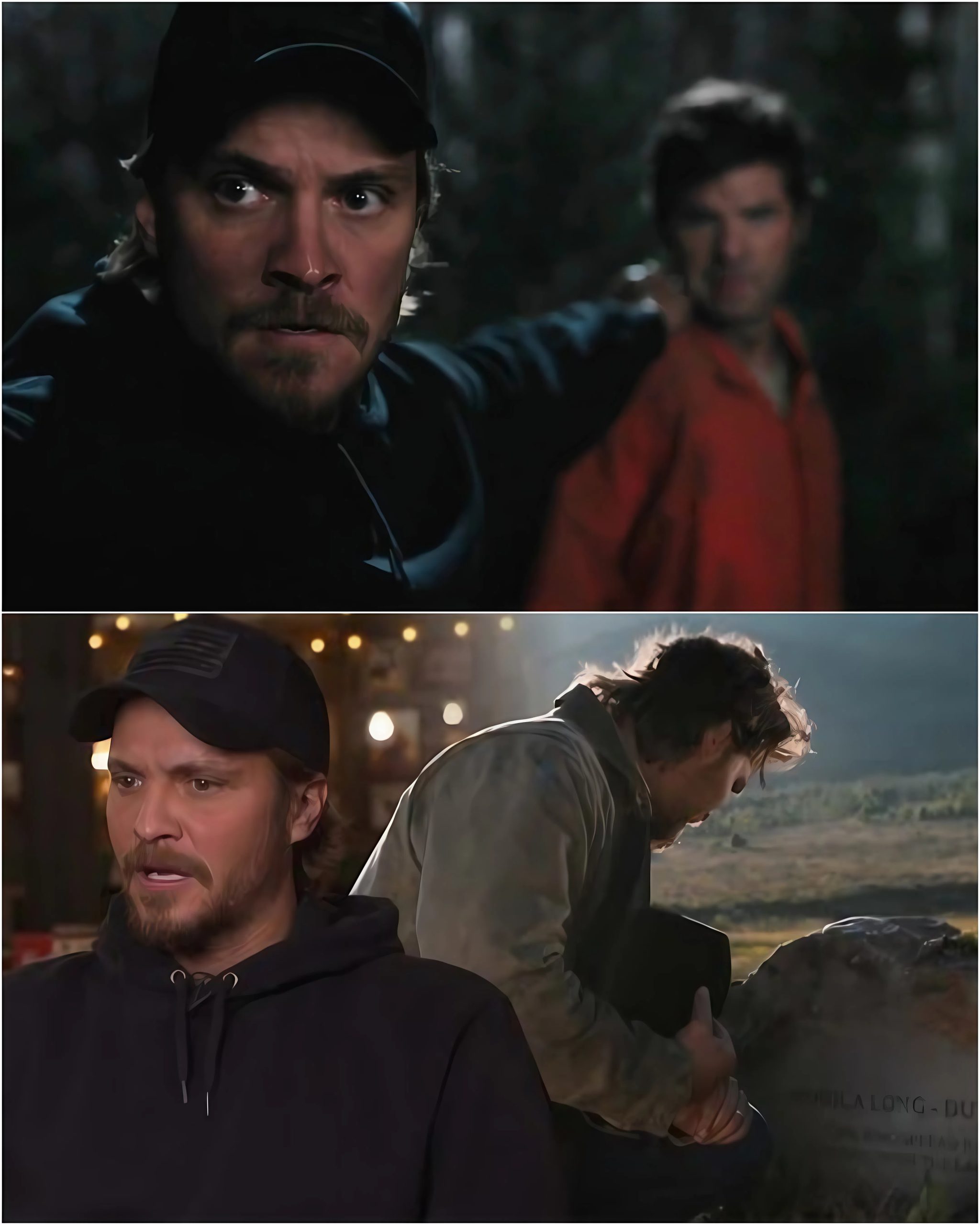
Marshals Episode 7 Shows How John Dutton’s Yellowstone De@th Still Haunts Kayce.. Marshals”
Marshals Episode 7 Shows How John Dutton’s Death Still Haunts Kayce
Marshals Episode 7 makes one thing very clear: Kayce Dutton may have survived the end of Yellowstone, but he has not escaped it.
The episode places Kayce in a situation that forces him to confront old grief, unresolved guilt, and the complicated legacy of his father, John Dutton. On the surface, the story follows a new case involving danger, deception, and family secrets. But underneath that procedural structure, Episode 7 is really about Kayce still trying to understand what John’s death means for him.
Since Marshals takes place after the events of Yellowstone Season 5, Kayce is no longer living directly under John Dutton’s command. The ranch has changed. The family has changed. John is gone. But his presence still hangs over everything Kayce does.

That becomes especially clear when Tom Weaver returns.
Earlier in the season, Tom seemed to function almost like a substitute father figure for Kayce. He was another powerful older rancher, another man tied to land, legacy, and old-school ideas about what ranching should be. In Episode 7, Weaver comes back into Kayce’s life with an offer to buy East Camp.
That offer immediately stirs up memories of John.
For Kayce, land is never just land. It carries blood, duty, sacrifice, and history. His father spent his entire life protecting the Yellowstone ranch, often at terrible personal cost. So when Weaver talks about buying East Camp, Kayce is forced to think about everything John believed in — and everything John failed to protect.
The episode uses those conversations to remind us that Kayce is still caught between two versions of himself. One part of him wants to move forward, build a quieter life, and escape the violence of the Dutton name. The other part still hears John’s voice in every decision involving land, family, and loyalty.

That emotional tension deepens through the episode’s main case.
The Marshals are assigned to protect Pauline Ays, a federal judge who appears to be targeted by an ex-con. At first, it seems like a straightforward threat against a public official. But as the investigation unfolds, the truth becomes more complicated. Pauline’s husband, Blake, has been hiding a dangerous double life. He has allegedly used the structure of his nonprofit to smuggle guns to South American revolutionaries.
That revelation changes the entire emotional shape of the case.
Suddenly, this is not just about saving a judge. It is about a family discovering that its patriarch is not the man they believed him to be. Blake is a husband and father, but he is also a man with secrets. He is someone whose good public image hides darker choices. For Kayce, that hits painfully close to home.
John Dutton was also a father with secrets.
He loved his family, but he damaged them. He protected the ranch, but he also built that protection on violence and fear. He inspired loyalty, but he demanded sacrifice. Kayce has spent much of his life trying to reconcile the father he loved with the man John truly was.
Episode 7 puts Kayce in front of another family facing a similar truth.

When Kayce saves Blake from being killed, the moment carries more emotional weight than a standard rescue. He is not only saving a man’s life. He is saving a husband and father from being erased before his family has the chance to fully understand him. That matters because Kayce never truly got that chance with John.
John’s death in Yellowstone was sudden, violent, and controversial. Even after Beth, Kayce, and the others uncovered the truth and avenged him, closure was never really possible. Revenge did not bring John back. It did not untangle the pain. It did not give Kayce the conversation he probably still wishes he could have had.
That is why Episode 7 feels so personal for him.
Later, when Kayce speaks about forgiveness, it sounds like he has made peace with John’s death. He seems calm. He seems wise. He understands that people are complicated and that love does not erase wrongdoing. In many ways, Kayce has grown enough to accept that John was both his father and a deeply flawed man.

But the episode also suggests something more painful.
Kayce may have forgiven John.
He has not forgiven himself.
That has always been one of Kayce’s defining wounds. He carries guilt for things he could not control, for choices he made, for people he could not save, and for the violence that followed his family everywhere. John’s death only added another layer to that burden.
Marshals Episode 7 works best when it lets those emotions sit beneath the action. The case itself may involve crime, danger, and hidden corruption, but the real story is Kayce looking at another broken family and seeing pieces of his own.
The episode does not give him closure.
It gives him a mirror.
And what Kayce sees in that mirror is a man still haunted by his father, still shaped by the ranch, and still unsure whether moving forward means honoring John Dutton’s legacy or finally escaping it.
That is what makes Episode 7 important. It proves that John Dutton’s death was not just an ending for Yellowstone. It remains one of the central ghosts driving Marshals forward.