
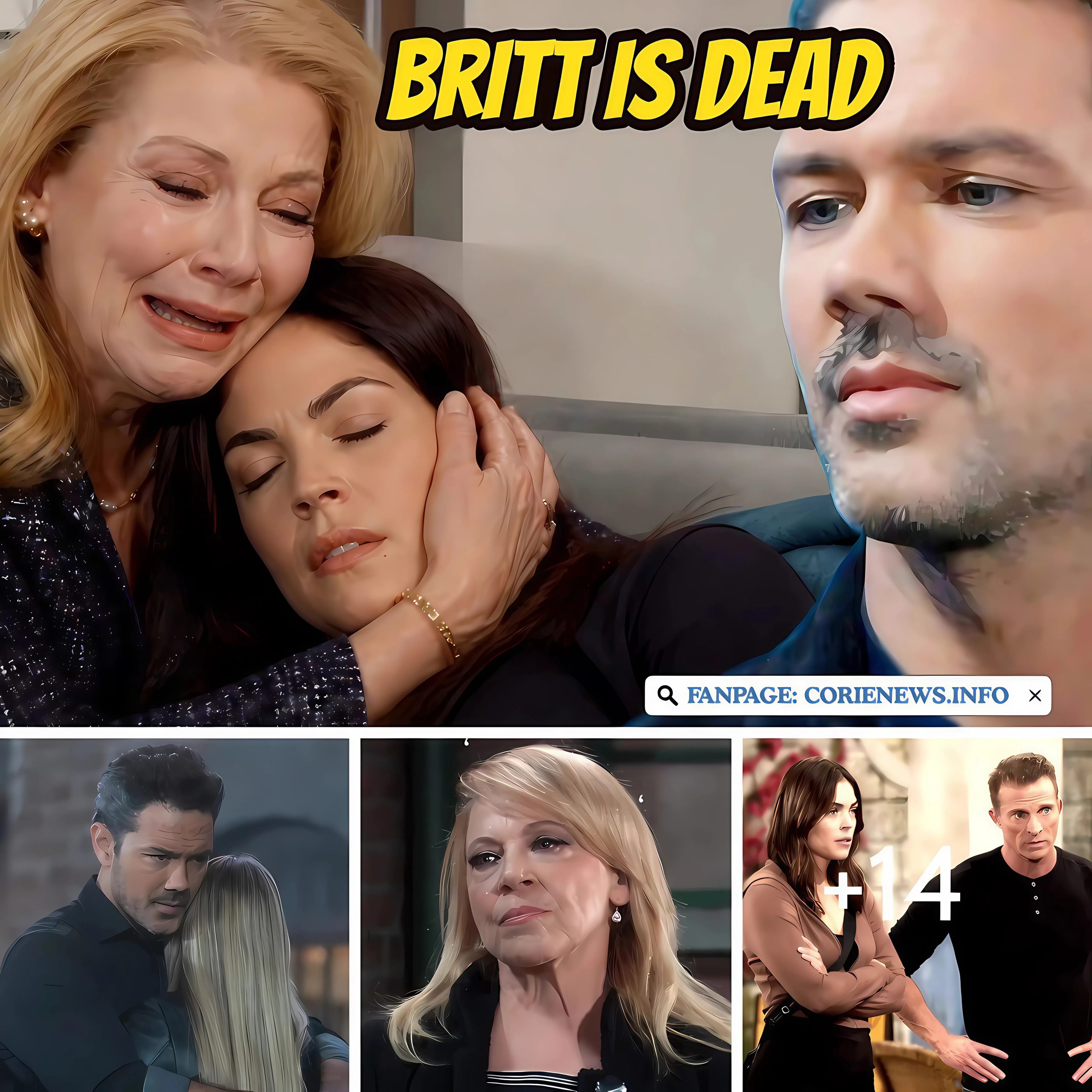
Liesl agrees to conceal Cassius’s identity after Britt’s death – General Hospital Spoilers
Liesl Agrees to Conceal Cassius’s Identity After Britt’s Death – General Hospital Spoilers
ABC General Hospital spoilers reveal a gripping and emotionally layered storyline that places Liesl Obrecht at the center of a dangerous and deeply personal storm. For years, Liesl has been portrayed as a woman of formidable intellect—someone who rarely reacts without purpose and almost never finds herself caught off guard. That is precisely why her response to the truth about Cassius feels so striking. Her apparent shock raises an unsettling question: is this reaction genuine, or is it another carefully crafted performance from a woman who has spent her life mastering control?
Liesl has always understood that knowledge is power. In her world, ignorance is either a liability or a deliberate tactic. If her reaction is real, then it signals a rare shift—one where she is no longer orchestrating events from the shadows but instead reacting to a revelation that has been deliberately hidden from her. That alone introduces a vulnerability we seldom associate with her. Yet even within that vulnerability, there is a sense that her mind is already working, calculating, adapting.
Cassius, however, represents far more than a shocking identity reveal. The true danger lies not just in who he is, but in who he has become—and, more importantly, who he is connected to. His ties to powerful and shadowy figures like Sidwell and Colum suggest something far more sinister than a personal or family conflict. This is no ordinary secret; it hints at a network of influence that stretches into darker territory, where loyalty is questionable and motives are rarely pure.
As Liesl begins to grasp the magnitude of what she’s facing, it becomes clear that Cassius’s presence in her life is not accidental. It is strategic. Every interaction, every decision moving forward carries weight and potential consequences that extend far beyond immediate emotions. Liesl isn’t just dealing with a complicated past—she’s confronting an expanding threat that could engulf everyone she cares about.
What makes this storyline particularly compelling is how quickly it transitions from revelation to negotiation. Instead of a straightforward confrontation, we see the emergence of a tense, unspoken understanding between Liesl and Cassius. This is not simply a clash between two individuals; it is a calculated exchange between people who understand power, leverage, and survival. Both recognize that the stakes are too high for impulsive actions.
Liesl’s decision to enter into some form of agreement with Cassius is as fascinating as it is troubling. Is she attempting to control him, to keep his dangerous connections at bay while protecting her loved ones? Or is she aligning herself with him in a desperate effort to ensure her own survival? Either possibility carries significant risk. History in Port Charles has shown time and again that compromises made under pressure often come with unforeseen consequences—and Liesl is not immune to that reality.
At the heart of this story lies a deeply emotional conflict. Liesl is not just navigating a dangerous situation; she is grappling with the realization that someone tied to her life has become a source of fear. That kind of truth forces introspection. It demands that she confront her past, her choices, and the possibility that her own actions may have contributed to the present crisis.
The ripple effects of Cassius’s connections cannot be ignored. If his alliances with figures like Sidwell and Colum continue to grow, the danger will not remain contained. In Port Charles, personal crises have a way of escalating into widespread turmoil, and this situation is no exception. Everyone connected to Liesl could find themselves drawn into the fallout.
Unlike slower-burning storylines, this one unfolds with an almost relentless urgency. The truth is revealed quickly, and the characters are forced to react just as fast. There is little time for reflection, which heightens the tension and creates an atmosphere where every decision feels immediate and irreversible. This sense of urgency keeps the audience on edge, unsure of what will happen next.
As the narrative progresses, one central question looms large: can Liesl truly contain what Cassius has become? Or has the situation already spiraled beyond her control? The answer appears to lie somewhere in between. She may be able to delay the inevitable, to manage certain aspects of the threat, but eliminating it entirely seems unlikely. And that is where the true suspense lies—not in whether disaster will strike, but in how and when it will unfold.

Adding another layer of complexity is Liesl’s silence after learning the truth. Silence, especially from someone like her, is rarely empty. It is where strategy is born. Yet this time, her silence feels different. It carries weight, almost as if it is burdened by something deeper than calculation. From that silence emerges a decision that is both intriguing and deeply unsettling: entrusting Cassius with Britt’s safety.
On the surface, this choice seems contradictory, even reckless. Cassius is the very embodiment of the threat Liesl fears. His connections and actions place him firmly within a dangerous world. And yet, Liesl brings him closer, placing Britt within his reach. This is not a careless move. It suggests a deliberate strategy—one rooted not in trust, but in control.
Perhaps Liesl believes that by keeping Cassius close, she can monitor him, influence him, and ultimately contain the threat he represents. But this approach is fraught with risk. Control is often an illusion, especially when dealing with individuals who operate within powerful and unpredictable networks. If Cassius is no longer someone who can be guided or restrained, then Liesl’s decision could have devastating consequences.
Britt’s role in this unfolding drama is particularly concerning. She becomes both a protected figure and a potential target, caught in a situation she may not fully understand. The line between protection and exposure is thin, and in this case, dangerously blurred. Britt’s vulnerability adds emotional weight to the story, making the stakes feel even higher.

As for Cassius himself, his true nature remains ambiguous. Is he a product of manipulation, shaped by forces beyond his control? Or has he fully embraced the darkness surrounding him? The answer to that question is crucial. If there is still a part of him that can be influenced, Liesl’s plan might hold—at least temporarily. But if his loyalties lie firmly with the likes of Sidwell and Colum, then the danger is far greater than Liesl anticipates.
Liesl’s position is undeniably complex. She is not simply reacting to a threat; she is choosing to engage with it, to negotiate with it, to coexist with it. This decision speaks to her resilience and determination, but it also highlights the precarious nature of her situation. History suggests that such arrangements rarely end well.
What Liesl ultimately hopes to achieve remains unclear. Is she buying time? Gathering information? Trying to protect Britt in the only way she knows how? Or is she being drawn deeper into a web of danger that will eventually consume her as well? These questions add to the suspense, leaving viewers uncertain of what lies ahead.
One thing is certain: this storyline is built on tension. Every decision feels temporary, every solution incomplete. Liesl’s agreement with Cassius does not resolve the threat—it merely reshapes it. And as the tension continues to build, it becomes increasingly clear that a breaking point is inevitable.
When that moment comes, the consequences will extend far beyond Liesl and Cassius. Britt will be affected, as will others connected to them. The carefully maintained balance will collapse, giving way to chaos and uncertainty.
In the end, this story is not about easy answers or clear resolutions. It is about the complexity of human choices, the illusion of control, and the lengths people will go to protect those they love. Liesl’s silence, her decisions, and her willingness to confront danger head-on all point to a woman navigating an impossible situation.
As the drama unfolds, one thing remains certain: something significant is on the horizon. Not because of what has been revealed, but because of everything that remains hidden.