

Marshall Episode 8 Ending Explained: Cal, Garrett & the Truth Behind “Blowback”
Marshall Episode 8 Ending Explained: Cal, Garrett & the Truth Behind “Blowback”
Episode 8 doesn’t just move the story forward—it reframes everything that’s come before it. At first glance, the hour looks like a standard high-stakes installment filled with multiple threads: a fugitive lead, an emotional reunion, and a shocking abduction. But as the episode unfolds, it becomes clear that none of these events exist in isolation. They all trace back to a single source, a single decision-maker whose past choices are now erupting into the present with devastating force.
That source is Cal.
What makes this episode so powerful is how it quietly builds its case. It doesn’t shout its message or rely on dramatic exposition. Instead, it trusts the audience to connect the dots. And once you do, the truth becomes unavoidable: every major crisis in this episode is a consequence of something Cal set in motion long ago—or failed to take responsibility for when he had the chance.
The emotional centerpiece of the episode comes from Garrett’s return and his interaction with Casey. It’s a scene that hits hard because it feels earned. There’s history there—years of silence, pain, and unresolved tension finally breaking through. But the real weight of the moment isn’t just about Garrett’s suffering. It’s about what caused it. It’s about the quiet destruction that can follow a single decision, especially when that decision is never fully acknowledged.
Garrett isn’t just a man who fell apart. He’s a man who was pushed off course. And the episode makes it increasingly difficult to ignore who pushed him.
Meanwhile, the supposed central plot—the search for Reed Pollard—turns out to be something else entirely. On the surface, it looks like a routine operation. A tip comes in, the team mobilizes, and everything seems to follow a familiar pattern. But that illusion collapses the moment they discover Pollard was never part of the equation. He’s already locked up elsewhere. The entire lead was fabricated.
That revelation shifts the episode into a different gear. The Pollard case wasn’t a mistake—it was a trap. And not just any trap, but one meticulously designed to exploit the team’s habits, their instincts, and most importantly, their leadership structure.
Randall Clegg isn’t acting randomly. He’s studied them. He understands how they respond under pressure, how they divide resources, and where their vulnerabilities lie. By feeding them false information, he doesn’t just mislead them—he manipulates their decision-making process.
The result is devastatingly precise.
While the team chases a ghost, Andrea is left isolated. Sent alone to follow a routine task, she becomes the perfect target. Her abduction isn’t an accident or a coincidence. It’s the direct outcome of a calculated strategy.
And at the center of that strategy is a single moment: Cal choosing to send her alone.
It’s a small decision on the surface. The kind leaders make every day without a second thought. But this time, it’s different. This time, Cal isn’t fully present. He’s distracted—by Garrett’s return, by his own guilt, by the mounting pressure in both his personal and professional life. And in that distracted state, he makes a call that carries consequences he doesn’t anticipate.
That’s the pattern the episode is exposing.
Clegg operates externally as a strategist, but internally, Cal mirrors that same dynamic in a different way. He makes decisions, others pay the price, and the fallout lingers long after the moment has passed.
The episode’s title, “Blowback,” isn’t just thematic—it’s literal. Everything happening now is a reaction. A consequence. A delayed response to actions that were never fully reckoned with.
Garrett represents one kind of blowback. His life—derailed, fragmented, and filled with pain—can be traced back to a decision Cal made during their time in the Seals. A decision that ended Garrett’s career and set him on a downward spiral through institutions, incarceration, and instability.
Clegg represents another. The Broken Rock incident, which destroyed his world and cost him his family, is tied directly to Cal’s operation. It’s the kind of event that doesn’t just end—it echoes. And those echoes have now taken form in a man who has dedicated himself to understanding and dismantling the system that wronged him.
Andrea’s kidnapping is the most immediate example. It’s not rooted in the distant past, but in the present moment—a tactical error made under emotional strain. And yet, it fits perfectly into the same pattern. Another decision. Another cost.
What makes Episode 8 so compelling is how it weaves these threads together into a single argument. This isn’t a story about separate incidents. It’s a story about accumulation. About how unacknowledged decisions stack up over time until they can no longer be ignored.
Cal isn’t just caught in the middle of these events. He’s the common denominator.
And that realization changes the stakes moving forward.
By the time the episode reaches its climax, the team finds themselves walking straight into Clegg’s compound—a place already prepared for their arrival. Defensive positions are set, the ambush is waiting, and the Marshals are stepping into a situation that has been carefully engineered from the start.
As the firefight erupts and the screen cuts to black, one question hangs in the air: can Cal lead in this moment?
Not just tactically, but morally.
Because this time, the danger isn’t just external. It’s internal. It’s the weight of everything he’s done—or failed to do—bearing down on him at once.
Looking ahead, the episode sets up several key possibilities.
Garrett, for one, feels far too significant to remain on the sidelines. His return isn’t just about closure—it’s about transformation. He arrives with nothing: no career, no stability, no clear place in the world. But he brings something else with him—training, experience, and a deeply personal grievance against Cal.
More importantly, he shares a genuine bond with Casey. That connection, strengthened through their emotional exchange, could position Garrett as a crucial ally in what’s to come. The trust between them has been established, and in a finale where trust will be everything, that matters.
At the same time, the episode seems to be building toward a direct confrontation for Cal. Not a subtle one, not something left implied—but something explicit. A moment where he has to answer for his actions, not just internally, but in front of others.
Casey’s role in this is particularly important. He’s been positioned as a witness to both sides of Cal’s story. He’s seen Garrett’s pain up close, and he’s also seen the consequences of Cal’s recent decisions. That dual perspective makes him uniquely suited to challenge Cal in a way no one else can.
Then there’s the lingering mystery surrounding Roner—the fallen member of their unit whose story has never been fully told. The episode continues to hint at unresolved truths there, suggesting that Cal’s past may hold even more weight than we currently understand.
If that thread is finally pulled in the finale, it could change everything. 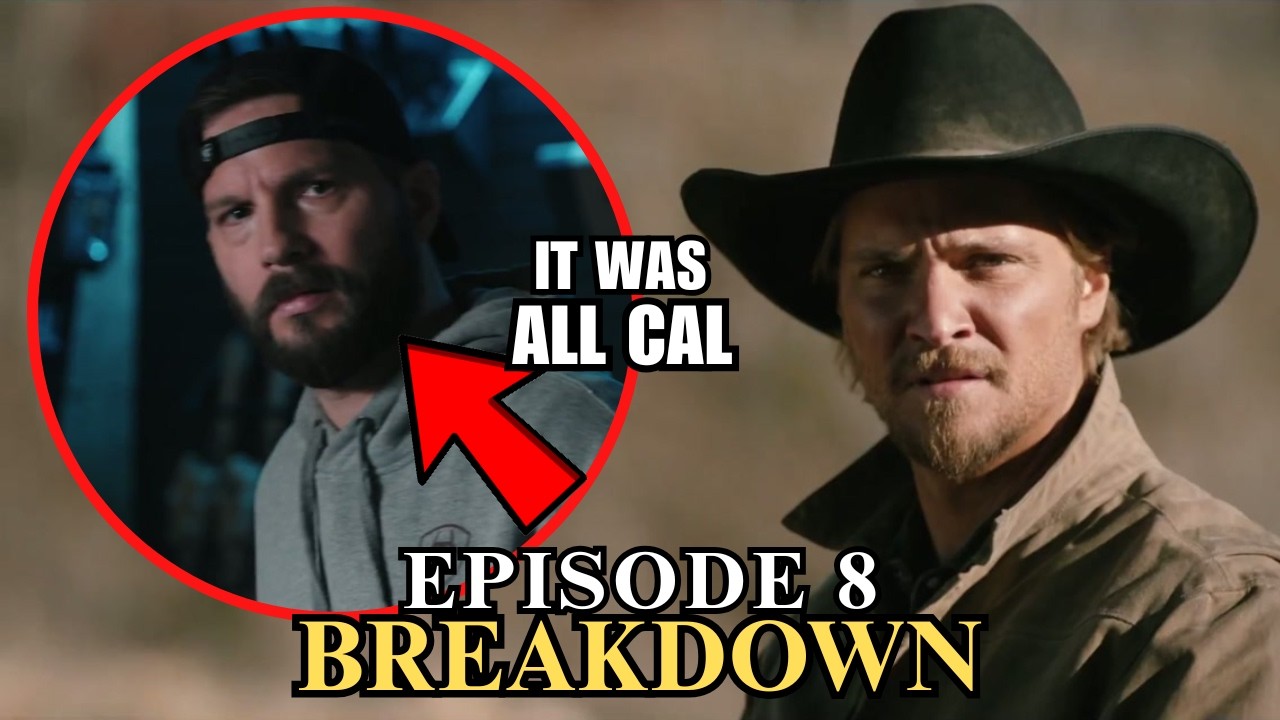
Because at its core, this season isn’t just about external conflict. It’s about accountability. About what happens when leadership operates without it, and how the cost of that absence eventually comes due.
Clegg may be the immediate threat, but he’s also a product of that system. A reaction to damage that was never addressed.
Cal, on the other hand, is the one making the original choices. The one setting events into motion without fully confronting their consequences.
That’s what makes him such a complex figure. He’s not a traditional villain. He’s capable, principled in many ways, and clearly burdened by guilt. But the episode draws a sharp distinction between guilt and accountability.
Feeling bad isn’t the same as taking responsibility.
And that’s the line Cal has yet to cross.
“Blowback” doesn’t offer easy answers. Instead, it leaves us with a question that feels increasingly urgent as the season approaches its end:
Is Cal a fundamentally good leader overwhelmed by impossible circumstances? Or is he the true source of the chaos unfolding around him?
That’s the tension driving the story now. And depending on how it’s resolved, it could redefine everything we thought we understood about this season.
One thing is certain—after Episode 8, there’s no more hiding from the consequences. The past has caught up. The damage is visible. And the reckoning is coming.