

6666 Ranch Crossover EXPOSED — How Dutton Ranch Connects to Jimmy’s Story
6666 Ranch Crossover EXPOSED — How Dutton Ranch Connects to Jimmy’s Story
Jimmy Hurdstrom has always been the kind of man people underestimate. From the very beginning, he was labeled a screw-up, a liability, someone one bad decision away from losing everything. “You’re a two-time loser,” the warning echoed, a reminder that his past wasn’t just behind him—it was waiting to catch up. One more mistake, one more felony, and his future would be sealed behind bars. That looming threat defined Jimmy’s early days, shaping how others saw him—and how he saw himself.
But what makes Jimmy’s story so compelling isn’t where he started. It’s where he’s been sent—and what that journey is quietly building toward.
As the Yellowstone universe continues to grow, it does so with a careful, almost invisible hand. Instead of loud crossovers or dramatic collisions between storylines, it builds connections slowly, through character evolution and parallel worlds. Jimmy’s move to the legendary 6666 Ranch in Texas is one of the clearest examples of this method. At first glance, it feels like an exit—a way to remove him from the chaos of the Dutton Ranch. But in truth, it’s something far more deliberate.
Jimmy didn’t leave Yellowstone behind. He carried it with him.
When John Dutton made the decision to send Jimmy away, it wasn’t an act of dismissal. It was a calculated move. Jimmy wasn’t being cast out—he was being reforged. Every mistake he made in Montana, every painful lesson, every hard-earned scar became the foundation for what he would become in Texas. The 6666 Ranch wasn’t a fresh start. It was a continuation under stricter, more disciplined conditions.
And that distinction changes everything.
In Montana, life at the Yellowstone Ranch was unpredictable, often brutal. Threats came from all sides—land disputes, political pressure, violent confrontations. Jimmy was constantly reacting, struggling to keep up with a world that moved faster than he could understand. He survived, but survival alone didn’t make him strong.
Texas is different.
At the 6666 Ranch, the rhythm of life is steady, almost relentless in its consistency. The work is hard, but it’s clear. Expectations are not shouted—they’re understood. There are no shortcuts, no chaos to hide behind. You either do the job, or you don’t belong. For Jimmy, this environment becomes a crucible. It strips away excuses and forces him to confront himself.
Here, growth isn’t optional—it’s required.
At first, the adjustment is jarring. Jimmy, used to reacting, now has to anticipate. Used to chaos, he must learn discipline. The transition isn’t glamorous. There’s no sudden transformation, no overnight success. Instead, it’s a slow grind—long days, repetitive tasks, and the quiet pressure to improve. But over time, something shifts.
Jimmy begins to change.
Not in dramatic, showy ways, but in the small details that matter. His posture, his confidence, the way he handles responsibility—all of it evolves. He becomes reliable. Focused. Grounded. The man who once stumbled through every challenge begins to stand firm in the face of them.
And this is where the deeper connection between the 6666 Ranch and the Dutton Ranch begins to take shape. 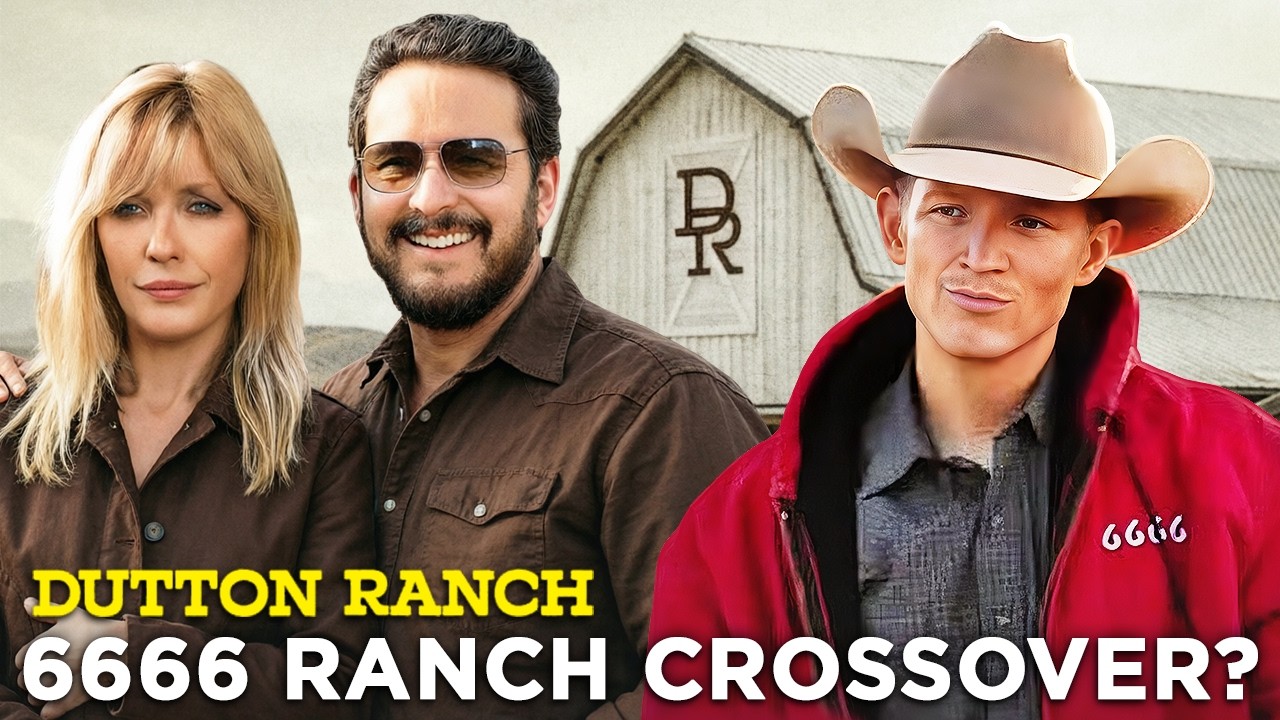
Because Jimmy is no longer just a former ranch hand. He’s something else entirely—a living bridge between two worlds.
The Yellowstone Ranch and the 6666 Ranch may exist in different states, under different pressures, but they are not disconnected. They are reflections of each other, built on the same foundation but shaped by different forces. Montana thrives on urgency, on reacting to constant threats. Texas thrives on stability, on maintaining tradition and discipline.
These differences don’t divide the story—they enrich it.
And Jimmy stands at the center of that contrast.
He understands both worlds in a way no other character does. He has lived the chaos of Yellowstone and the structure of the 6666. He knows what it means to fight for survival and what it means to earn respect through consistency. That dual experience makes him unique—and incredibly important to the future of the story.
Because if these two worlds ever collide, Jimmy will be the reason why.
The idea of a crossover between the Dutton Ranch and the 6666 Ranch doesn’t feel forced or artificial. It feels inevitable. The groundwork has already been laid, quietly and carefully, through Jimmy’s journey. He is the thread that ties everything together, the character who ensures that these two seemingly separate worlds remain connected.
Even John Dutton’s influence stretches far beyond Montana.
Though he may not be physically present in Texas, his decision continues to shape Jimmy’s path. Everything Jimmy becomes at the 6666 Ranch traces back to that single choice—to send him away, not as punishment, but as an opportunity. John’s control hasn’t disappeared. It has simply evolved, becoming something more subtle, more strategic.
And that lingering influence creates a powerful narrative tension.
If Jimmy ever returns to Yellowstone, he won’t be the same man who left. The reckless, uncertain young ranch hand will be gone, replaced by someone more disciplined, more capable. That transformation will force everyone around him to reconsider who he is.
The people who once doubted him will have to confront the reality of who he has become.
And that shift won’t be comfortable.
There’s also the matter of philosophy—two fundamentally different ways of living and working that could clash if brought together. The Yellowstone Ranch operates under pressure, where decisions must be made quickly and often brutally. The 6666 Ranch values patience, consistency, and tradition.
Neither approach is wrong.
But they are not easily compatible.
If these two worlds were to intersect, that tension would likely come to the surface. Conflicts wouldn’t just be physical—they would be ideological. How do you balance urgency with discipline? How do you reconcile survival instincts with structured tradition?
Jimmy, once again, would find himself caught in the middle.
He would understand both sides, yet fully belong to neither. That internal conflict could become one of the most compelling aspects of his story, adding layers of depth to a character who has already come so far.
And yet, despite all these possibilities, the beauty of the Yellowstone universe lies in its restraint.
It doesn’t rush toward big, explosive moments. It builds them slowly, allowing characters and storylines to evolve naturally until they reach a point where convergence feels earned. The connection between the Dutton Ranch and the 6666 Ranch isn’t being forced—it’s being cultivated.
Every step Jimmy takes in Texas brings him closer to that intersection.
Every lesson he learns, every challenge he overcomes, strengthens the bridge between these two worlds. His story remains open-ended, constantly moving forward, refusing to settle into a single path.
And that openness is what keeps the possibility of a crossover alive.
If and when it happens, it won’t feel like a sudden twist or a dramatic surprise. It will feel like the natural conclusion of everything that has been building all along. A moment where parallel paths finally meet, where two worlds shaped by different forces come together through the journey of one man.
Jimmy Hurdstrom’s story is far from over.
In fact, it may just be getting started.
Because in a universe defined by land, legacy, and survival, it’s not always the strongest or the most powerful who shape the future. Sometimes, it’s the ones who learn, who adapt, who endure.
And Jimmy has done all three.
The connection between the Yellowstone Ranch and the 6666 Ranch isn’t just a possibility anymore—it’s a quiet certainty, waiting for the right moment to reveal itself.
And when it does, it won’t just change Jimmy’s story.
It will change everything.