
Curtis’s Earlier Lucidity Was Only Temporary. General Hospital Spoilers
Curtis’s Earlier Lucidity Was Only Temporary. General Hospital Spoilers
Fans of General Hospital are no strangers to the genre’s flair for the dramatic. This is a world where the impossible often becomes reality, where characters survive the unthinkable, and where emotional stakes are always dialed up to the maximum. Viewers willingly embrace this heightened reality—it’s part of the unspoken agreement between the show and its audience. But every so often, a storyline comes along that pushes even the most devoted fans to question what they’re seeing. And right now, that’s exactly the situation unfolding.
At the center of the current controversy is the devastating car crash involving Curtis and Jordan Ashford. On paper, the aftermath is tragic enough: Jordan suffers catastrophic injuries, including a fractured skull and severe brain trauma, leaving her fighting for her life. The gravity of her condition is undeniable, carrying both emotional and medical weight. Yet what has truly left viewers puzzled isn’t just Jordan’s suffering—it’s Curtis’s apparent lack of it.
Despite being in the same violent crash, Curtis emerges with no visible injuries. No cuts, no bruises, no signs of trauma. He’s upright, alert, and seemingly unaffected. For many viewers, this contrast feels jarring, even implausible. In a genre known for its dramatic liberties, this moment risks crossing the line from compelling storytelling into narrative inconsistency.
Soap operas thrive on spectacle, but they also rely on a certain internal logic. When one character is critically injured in a shared حادثة, it feels strange—almost disorienting—for another to walk away untouched. Jordan’s condition demands seriousness and realism. Pairing that with Curtis’s apparent invincibility creates a disconnect that has sparked widespread debate among fans.
Still, before dismissing the storyline outright, it’s worth taking a closer look. Because in the world of daytime drama, things are rarely as straightforward as they appear.
Rewinding to the crash itself, the situation was anything but ordinary. Curtis and Jordan were driving together when chaos erupted. A reckless driver appeared out of nowhere, swerving unpredictably and forcing Jordan into a split-second reaction. That moment of panic caused her to lose control, leading to a violent collision. But one detail stands out—Curtis reportedly noticed the erratic driver before impact.
In a show like General Hospital, that kind of detail is rarely insignificant. It raises an important question: was this truly an accident, or is there something more sinister at play? The possibility of a larger conspiracy begins to take shape, hinting that the crash may be part of a bigger, more dangerous storyline.
The aftermath only adds to the intensity. The wreckage was mangled, the situation dire, and time was running out. Just when hope seemed lost, Carly Corinthos and Valentin Cassadine arrived, pulling both Curtis and Jordan from the vehicle moments before it exploded. The rescue was dramatic, cinematic—classic soap opera storytelling at its finest.
But even amid the spectacle, one question lingers: how did Curtis escape such a catastrophic event without a scratch?
At the hospital, the contrast becomes even more pronounced. Jordan is rushed into emergency surgery, her life hanging in the balance. Doctors emphasize the severity of her injuries, making it clear that her survival is far from guaranteed. Meanwhile, Curtis stands nearby, coherent and composed. He recalls the details of the crash, speaks clearly, and reacts appropriately to the situation.
On the surface, it appears as though he’s completely fine. But in a genre built on twists and reveals, surface appearances can be deceiving.
This is where the theory begins to shift. Instead of viewing Curtis’s condition as unrealistic, it may actually be a deliberate narrative choice—a setup for something far more compelling. Soap operas are masters of misdirection. They often present a false sense of security before delivering a shocking twist, and Curtis’s seemingly perfect condition could be exactly that.
Because not all injuries are visible.
In reality, trauma doesn’t always manifest immediately. Especially when it comes to head injuries, symptoms can be delayed, subtle, and dangerously deceptive. A person might appear completely normal in the hours following an accident, only to deteriorate suddenly and without warning.
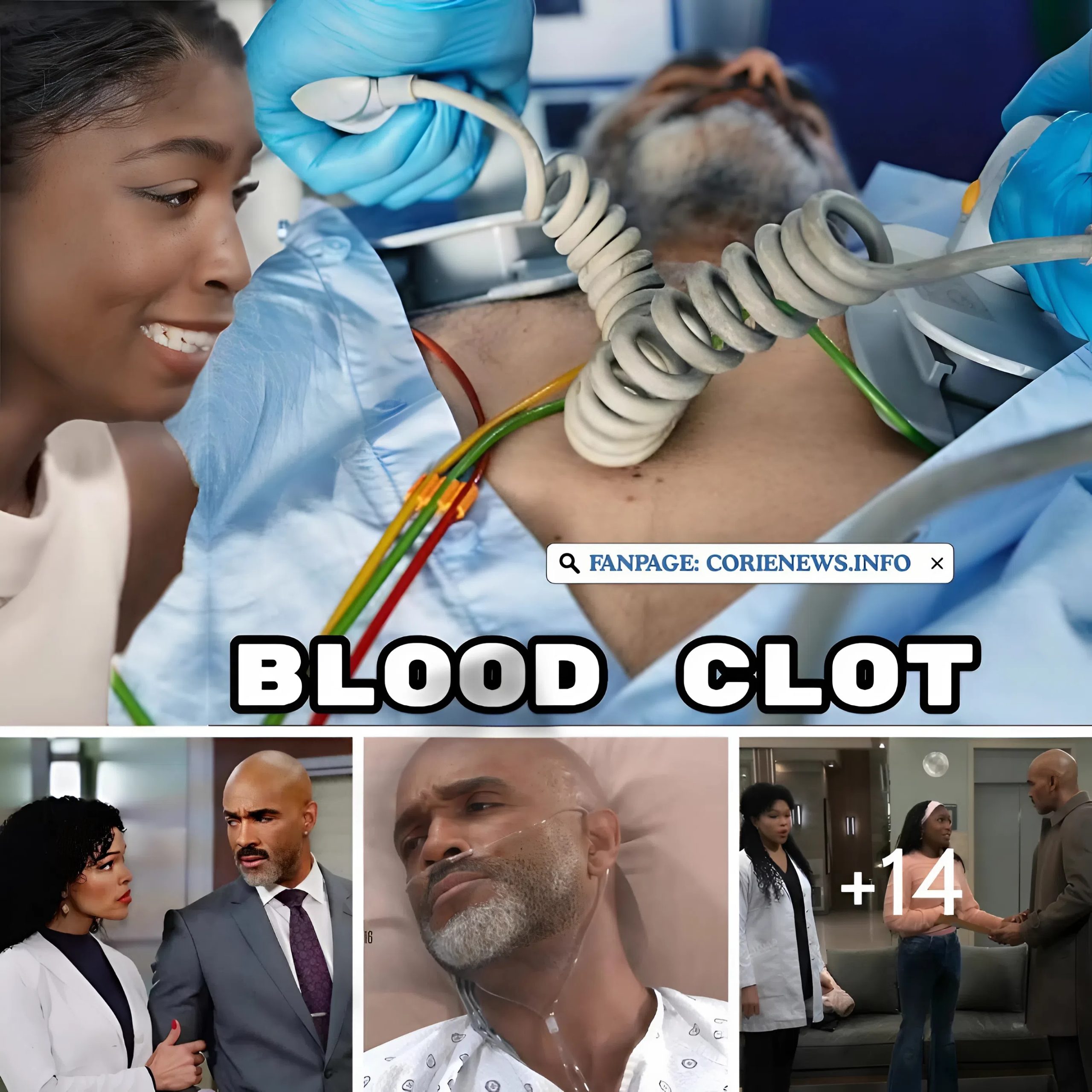
Curtis could very well have suffered an internal injury during the crash. A blow to the head that left no external mark. A concussion that went unnoticed. Or even more ominously, a slow-developing brain clot—a ticking time bomb that hasn’t yet revealed itself.
If this is the direction the story is heading, then what initially seemed implausible becomes something far more intriguing. Instead of a narrative flaw, it transforms into a carefully constructed buildup.
Imagine the moment it all comes to light. Curtis, trying to stay strong amid Jordan’s crisis, is speaking calmly—perhaps with someone like Laura Collins. He’s holding himself together, processing the trauma, focusing on Jordan’s condition. Then, without warning, something shifts.
A pause. A flicker of confusion. A subtle loss of focus.
And then—he collapses.
No dramatic warning. No buildup. Just sudden, shocking reality. Doctors rush in. Tests are conducted. And the truth is revealed: Curtis has been suffering from a hidden brain injury all along.
In that moment, everything changes.
This kind of delayed reveal would not only make sense medically, but it would also elevate the storyline emotionally. Jordan’s injuries are immediate and visible, while Curtis’s are hidden and delayed. Together, they create a powerful contrast—two sides of the same tragedy, unfolding in different ways.
It also opens the door for deeper character development. Curtis and Jordan’s relationship would take on new layers of vulnerability and connection. Their shared experience wouldn’t just be about survival—it would be about confronting mortality together, facing uncertainty, and finding strength in each other.
Other characters would also be drawn further into the story. Laura’s presence could highlight her compassion and leadership during a crisis. Carly and Valentin, already tied to the حادثة through their heroic rescue, might find themselves entangled in a larger mystery if the crash proves to be more than it seems.
Because in Port Charles, nothing happens in isolation. 
Fan reactions to the storyline have been mixed, with many expressing skepticism over the apparent inconsistency. And that skepticism is understandable. At first glance, Curtis’s condition does seem too convenient, too clean in contrast to Jordan’s suffering.
But there’s another way to look at it.
Rather than a misstep, this could be a slow-burning narrative. A carefully planted setup designed to pay off in a dramatic and emotionally devastating way. Soap operas often rely on delayed gratification, revealing key truths only after building tension and speculation.
And in that sense, Curtis’s unexplained resilience becomes a storytelling tool. It invites questions, fuels theories, and keeps viewers engaged.
Misdirection is one of the genre’s most powerful techniques. By leading the audience to believe one thing, writers can create a much stronger impact when the truth is finally revealed. If Curtis’s condition is indeed temporary—if his lucidity is only an illusion—then the eventual twist will carry far greater emotional weight.
From that perspective, the storyline begins to feel less like a stretch and more like a calculated risk.
Personally, it’s hard to believe that Curtis truly escaped the crash unscathed. The signs point to something deeper, something hidden beneath the surface. His apparent recovery feels too perfect, too easy. And in a show like General Hospital, easy answers are rarely the correct ones.
It seems far more likely that Curtis is living on borrowed time, his condition quietly deteriorating until it reaches a breaking point. When that moment comes, it won’t just shock the characters—it will redefine the entire storyline.
In the end, this arc sits at the intersection of realism and drama. Jordan’s critical injuries provide emotional gravity, while Curtis’s mysterious condition adds an element of suspense. Together, they create a tension that keeps viewers watching, questioning, and waiting.
Whether this storyline ultimately delivers on its promise remains to be seen. But one thing is certain: something isn’t right. And when the truth finally emerges—whether it’s a hidden injury, a larger conspiracy, or an unexpected twist—it won’t just explain what happened.
It will change everything.