
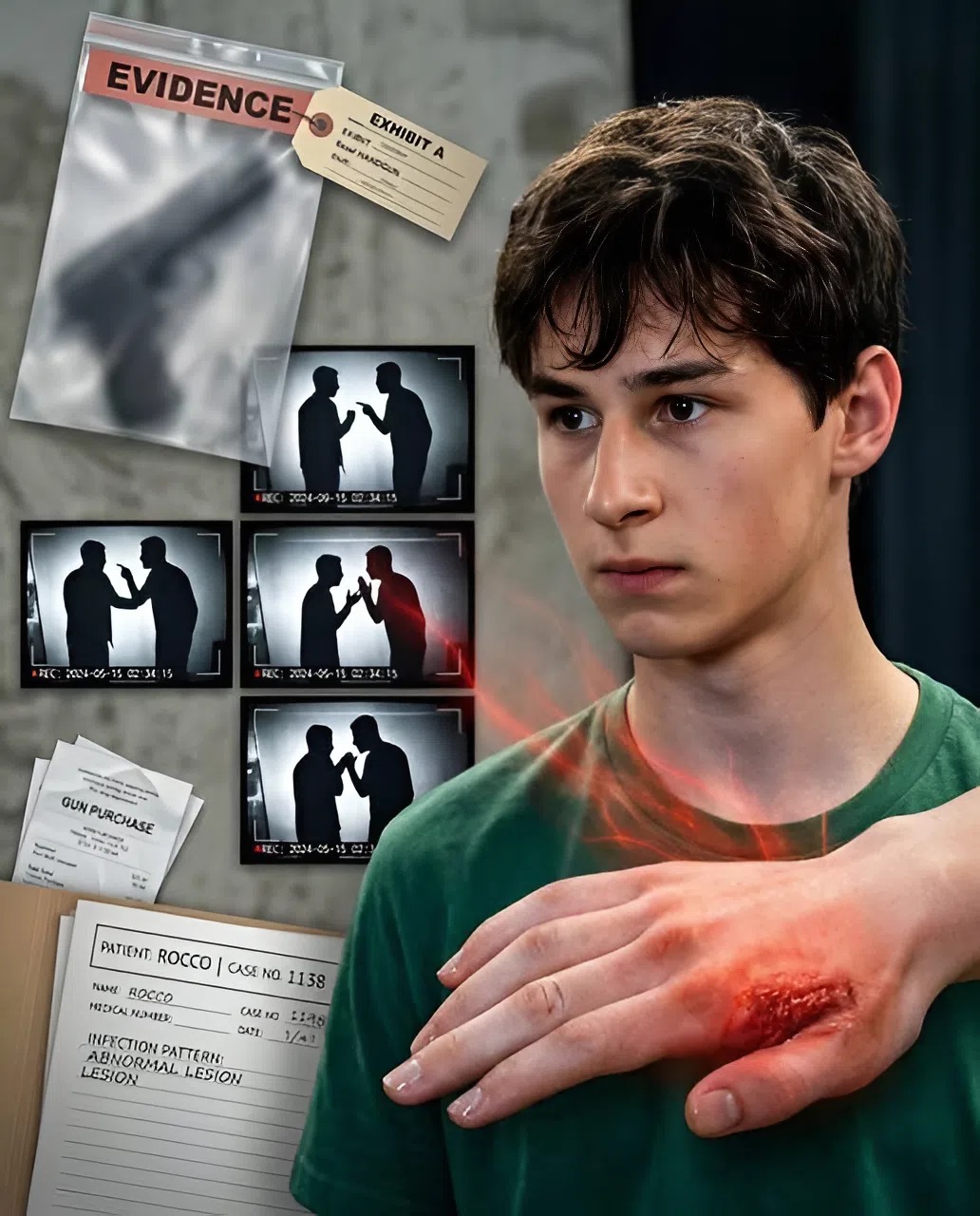
Rocco’s “infection” isn’t just a symptom—it’s a setup. 🚨 Nothing in this storyline is placed by accident, especially not a detail this specific. What if that wound is the trigger for a much darker chain reaction? And what if it’s already pointing to a truth no one is ready to face? 😳 One overlooked clue could flip the entire shooting narrative
What looked like a simple medical complication is quickly turning into one of the most dangerous narrative clues in Port Charles. Rocco’s infection didn’t just happen—it appeared at the exact moment the fallout from Cullum’s shooting began to ripple outward. In soap storytelling, timing is never accidental. When two major events collide like this, it’s usually because they were always meant to be connected. The infection isn’t a side effect. It’s the signal that something buried is starting to surface.

The first red flag is the wound itself. This isn’t just a random injury—it carries the unmistakable signature of a gun-related accident. Specifically, the kind of cut caused by recoil or slide impact when someone inexperienced fires a weapon. That detail matters. It quietly suggests that Rocco didn’t just witness something—he may have been directly involved. The show didn’t emphasize the wound for no reason. It planted it as evidence in plain sight.
Jason’s behavior only deepens the suspicion. His decision to fire the gun multiple times and end up with a similar injury feels less like coincidence and more like calculated misdirection. By mirroring the same type of wound, Jason effectively creates a visual narrative that he was the shooter. It’s a classic cover move—one designed not just to protect someone, but to redirect an entire investigation. And if that’s true, then the real question becomes: who is he protecting, and why does it have to be hidden this carefully?
The gun itself may still hold the truth no one is ready to face. Even if it was wiped down, soap logic—and real-world forensics—leave room for trace evidence. Blood, partial prints, microscopic residue—any of it could contradict the official version of events. If multiple DNA profiles are found, the story immediately falls apart. Suddenly, Jason’s “confession” becomes less convincing, and the possibility of another shooter becomes impossible to ignore.
That’s where the idea of interference comes in. If someone like Cassius is involved behind the scenes, the evidence might not just be hidden—it could be actively manipulated. This wouldn’t just protect Rocco. It would reshape the entire narrative of the crime. Instead of a simple cover-up, we’re looking at a controlled version of the truth being fed to everyone else. And that kind of manipulation always comes with consequences.
The infection then becomes more than a physical issue—it becomes a ticking clock. Fever, delirium, disorientation—these are classic soap mechanisms for forcing the truth out when characters are no longer able to control what they say. If Rocco reaches that point, even a single line spoken in confusion could change everything. A half-conscious confession, overheard at the wrong moment, could destroy the entire illusion that’s been carefully constructed. 
Dante is the one character positioned to connect all the dots. As both a father and a police commissioner, he has the emotional stakes and the investigative instinct to recognize what others might miss. The matching injuries, the inconsistencies in the story, the timing of the infection—these are not details he would ignore. And once he starts asking the right questions, the truth becomes much harder to contain.
What makes this even more explosive is the choice Dante may be forced to make. If he realizes that his own son is connected to the shooting, the conflict becomes deeply personal. Does he follow the law, or does he protect his child? That tension is where the real drama lives—not in the shooting itself, but in the aftermath that forces impossible decisions.
Meanwhile, the hospital becomes the unexpected center of the story. With multiple characters converging there—Rocco being treated, Jason’s injury still unresolved, and other crisis victims arriving—the environment is primed for discovery. Doctors may begin to question the nature of the wounds. Observations that seem minor at first could unravel everything. In soap storytelling, hospitals are rarely just places of healing—they are places where secrets are exposed.
Ballistics and forensic results loom as the final threat to the cover story. If tests reveal inconsistencies—different blood types, multiple users of the weapon—the official narrative collapses. What was once a clean explanation becomes a tangled web of contradictions. And once that happens, the truth doesn’t just come out—it explodes.
In the end, this was never about the infection. It was about what the infection represents. A small, almost forgettable detail that begins to spread, exposing cracks in a much larger lie. The bullet may have started the chaos, but the wound is what carries the truth. And now, that truth is getting harder—and harder—to contain.