
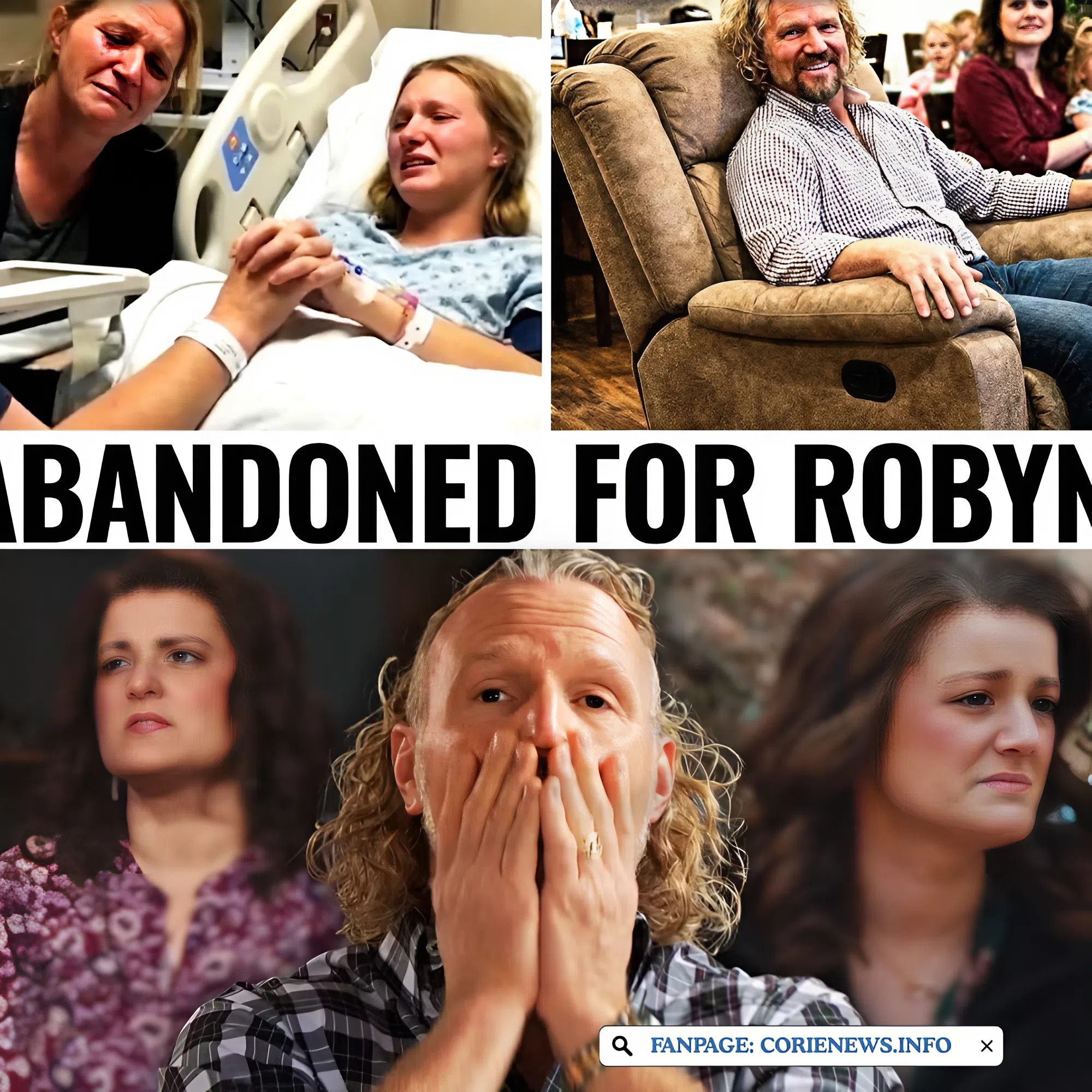
PROOF Kody Abandoned Ysabel’s Surgery For Robyn (The Footage That Destroyed Him!)
PROOF Kody Abandoned Ysabel’s Surgery For Robyn (The Footage That Destroyed Him!)
Imagine trusting someone who built his entire identity around being your protector—only to discover, at the worst possible moment, that he is the very person who lets you down. That is the emotional core of what unfolded in Sister Wives, when a long-maintained image of leadership, sacrifice, and devotion collapsed under the weight of one critical decision.
For years, Kody Brown presented himself as the central pillar of a large, unconventional family. He claimed authority not just as a husband, but as a guardian—someone whose strict expectations and demands for obedience were rooted in love and protection. His role as patriarch wasn’t just a title; it was the justification for everything he enforced within the family dynamic. When global uncertainty hit in 2020, he doubled down on that identity, creating an elaborate set of rigid safety rules that governed every household.
These rules were extreme. Family members were expected to sanitize everyday items, limit all outside contact, and essentially live in isolation—even from each other. Kody framed these measures as necessary sacrifices to ensure everyone’s safety. But behind the scenes, speculation began to grow that these protocols may not have been entirely about health. Some believed they conveniently centralized his time and presence in one specific household—raising questions about motive versus necessity.
This carefully controlled narrative began to unravel when real-life urgency entered the picture in a way no rulebook could contain.
Ysabel, his teenage daughter, had been battling severe scoliosis for years. This wasn’t a minor issue—it had reached a point where her spine’s curvature was affecting her internal organs and causing constant, intense pain. She had endured braces, exercises, and alternative treatments, largely encouraged by her father, who had long resisted surgical intervention. But eventually, the situation became unavoidable. Doctors made it clear: surgery was no longer optional—it was critical.
Faced with this moment, Kody was forced into a decision that would define everything that followed. Instead of stepping forward, he hesitated. He leaned on the very rules he had created, using them as a barrier to avoid traveling out of state for the procedure. Reports suggest he even encouraged delaying the surgery, hoping circumstances would change so he wouldn’t have to confront the situation directly.
But time had already run out.
His reasoning placed him in a difficult position. On one hand, he claimed he couldn’t leave certain members of his household—particularly younger children—without emotional consequences. On the other hand, going to the surgery would mean bending the strict rules he had enforced on everyone else for months. Either choice would expose a contradiction: flexibility in his rules or absence in his responsibilities.
He chose to stay.
And that decision spoke louder than anything he had ever said about being a father.
While Ysabel prepared for a frightening, life-altering operation, her mother Christine stepped up in every way possible. She arranged the travel, handled the medical logistics, and emotionally supported her daughter through the fear and pain. Importantly, she also allowed cameras to document the journey—ensuring that the reality of the situation would not remain hidden.
What viewers eventually saw was a stark contrast. On one side, a mother and daughter navigating hospitals, fear, and uncertainty. On the other, a father remaining in the comfort of home, maintaining the very rules that kept him away.
But the deepest impact wasn’t just physical distance—it was emotional fallout within the family itself.
One of the most significant, yet subtle, shifts occurred in the perspective of Truely, another of Kody’s daughters. While much of the attention focused on the surgery itself, Truely quietly observed everything unfolding around her. She saw the preparation, the fear, and the absence. She asked questions—questions that reportedly went unanswered or avoided.
And in that silence, she reached her own conclusion.
For a child, understanding doesn’t always come through explanation—it comes through observation. If her father wouldn’t be there for her sister during such a critical moment, what did that mean for her? That realization didn’t need to be spoken aloud. It settled in, reshaping how she saw him moving forward.
Meanwhile, analysis of Kody’s behavior pointed to something deeper than favoritism or rule-following. Some believe what was truly revealed was an inability to face emotionally intense situations—particularly those where he wasn’t in control. A hospital setting, surrounded by professionals and uncertainty, stripped away the authority he relied on. In that environment, he couldn’t lead in the way he was accustomed to—and instead of adapting, he withdrew.
Rather than confronting fear, he rationalized it.
When he later spoke about the situation publicly, his attempts to express regret didn’t fully resonate with viewers. His emotional responses seemed more focused on how the situation affected him than on what his daughter endured. That disconnect only amplified criticism, making it difficult for audiences to empathize with his perspective.
Adding further complexity were rumors suggesting that the household he chose to remain with had additional support—raising doubts about the necessity of his presence there. If true, it would mean his justification wasn’t just flawed—it was avoidable.
When the footage finally aired, public reaction was swift and intense. What viewers witnessed wasn’t just a family disagreement—it was a moment where values, priorities, and actions collided in a way that couldn’t be explained away. The image of a father missing from such a pivotal moment became symbolic of a much larger breakdown.
Despite everything, Ysabel’s surgery was successful. She emerged physically stronger, her condition corrected. But emotionally, the situation left a mark that couldn’t be repaired as easily. Trust, once broken under such circumstances, doesn’t return to what it was before. 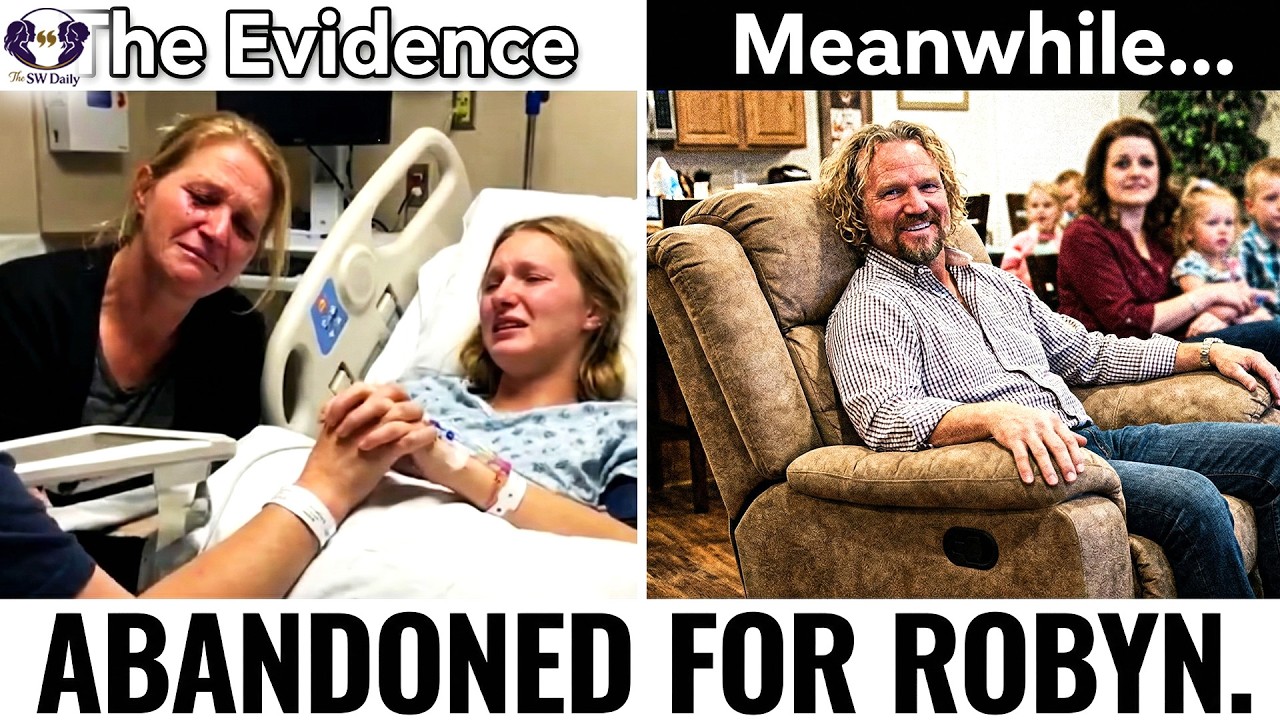
The absence during that defining moment became part of her story—and part of how she would relate to her father going forward.
For Truely, the shift was even more profound. Her understanding of her father changed permanently. The idea of him as a protector faded, replaced by something more distant and uncertain. Her loyalty naturally gravitated toward the parent who had been present, consistent, and unwavering.
In the end, what unfolded wasn’t just about one decision. It was about what that decision revealed.
Kody had built an identity around leadership, protection, and authority. But when faced with a situation that required vulnerability, sacrifice, and emotional strength, those qualities were put to the test—and the outcome reshaped everything.
The aftermath extended beyond a single event. It influenced relationships, altered perceptions, and contributed to a broader unraveling within the family structure. What once appeared unified began to fracture, not through sudden conflict, but through moments like this—moments where actions spoke louder than years of words.
The story leaves a lingering question: was this a moment of regret, or simply a moment of exposure? Because sometimes, it’s not a single mistake that changes everything—it’s the clarity that follows it.
And once that clarity sets in, there’s no going back.