
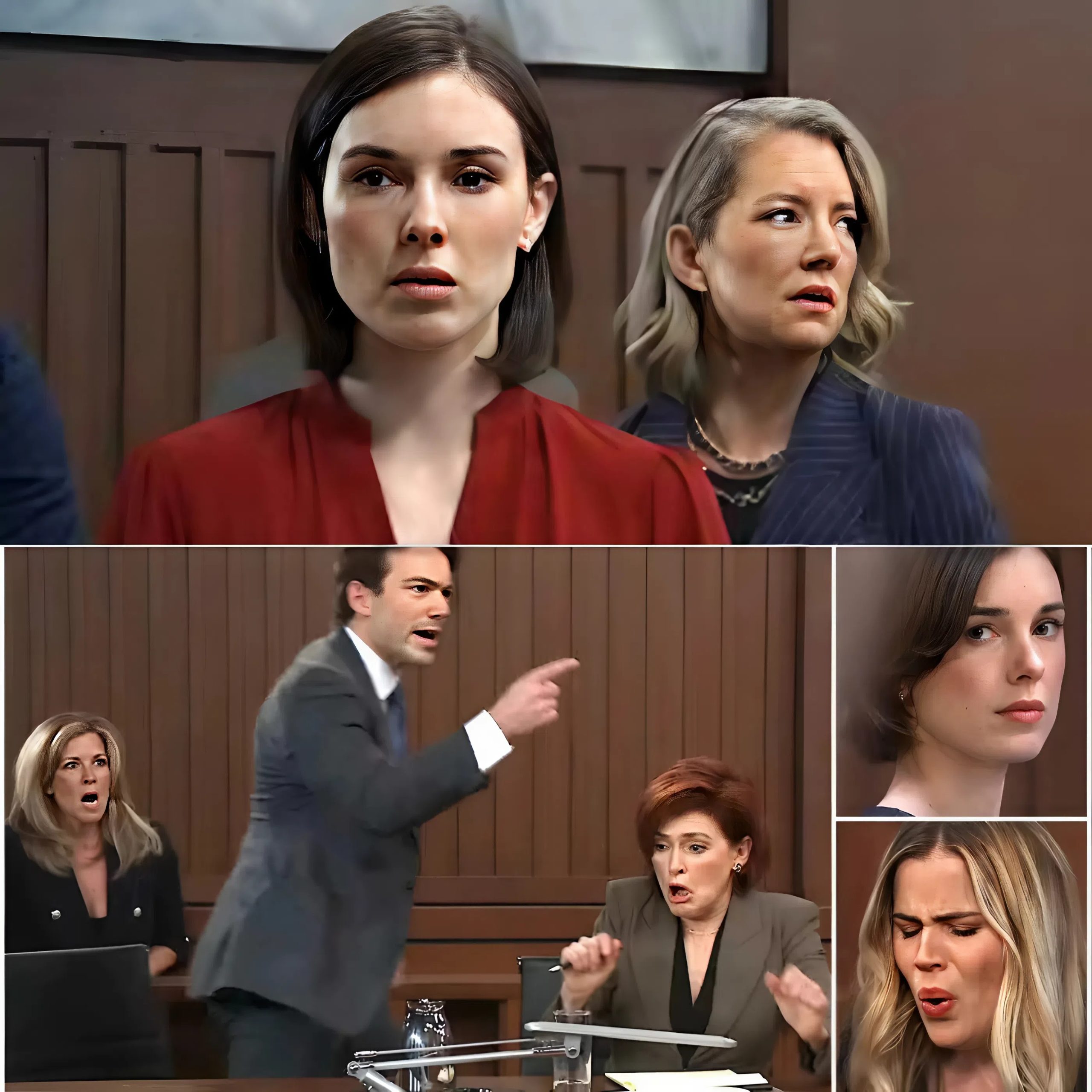
OMG SHOCKING!!! If Willow Tait truly believes the right answer is sending Michael Corinthos to prison, then something fundamental has already been lost. This isn’t just about a crime, a courtroom, or even justice anymore — it’s about the irreversible damage that choice would inflict on Wiley and Amelia.
In Port Charles, justice has never been simple. Lines blur, loyalties shift, and truth is often tangled in emotion. But the current fallout surrounding Willow Tait and Michael Corinthos has pushed General Hospital into deeply uncomfortable territory — one where viewers are no longer debating plot twists, but morality itself.
At the center of the storm is a question that has shaken longtime fans: if Willow truly wants Michael to end up in prison, did she ever really love him at all?
This isn’t a debate rooted in romantic disappointment or fan favoritism. It’s about the devastating ripple effect such a decision would have — especially on two innocent lives caught in the crossfire: Wiley Corinthos and Amelia Corinthos.
![General Hospital Preview: As Michael and Willow's Custody Case Begins, Carly Rats Out [Spoiler] and Sasha Goes Into Labor!](https://s.yimg.com/ny/api/res/1.2/MJ2xRlVfU_TJNPf1XcK55Q--/YXBwaWQ9aGlnaGxhbmRlcjt3PTI0MDA7aD0xNDAwO2NmPXdlYnA-/https://media.zenfs.com/en/soaps_732/4da6483380580bee34ecb8f0244e0808)
For years, Willow has been portrayed as compassionate, selfless, and guided by a strong moral compass. She has fought cancer, endured heartbreak, and sacrificed herself repeatedly for the people she loves. That history is precisely why her current stance feels so jarring to many viewers. This isn’t the Willow fans believed in — and that’s exactly why the backlash has been so intense.
Sending Michael to prison would not simply punish a man accused of wrongdoing. It would fundamentally alter the lives of his children forever. Wiley, already shaped by instability, loss, and confusion, would be forced to grow up without his father. Amelia, too young to understand the complexities of guilt and innocence, would inherit the consequences all the same. Children don’t process justice — they process absence.
What troubles fans most is that Willow seems fully aware of this reality and is still pressing forward. That awareness transforms her actions from tragic to troubling. This is no longer about truth at any cost; it’s about what cost is too high.
Michael Corinthos is far from perfect. He has made questionable choices, acted out of anger, and crossed moral lines of his own. But General Hospital has always thrived on nuance — characters are rarely purely good or evil. The show has asked viewers to sit with discomfort before. What feels different this time is the imbalance between accountability and collateral damage.
Willow’s supporters argue that justice should never be compromised for convenience or emotional ties. That principle, on its own, is understandable. But critics counter with a brutal truth: justice that destroys children in the process stops feeling just at all.
And this is where the emotional fracture truly begins.
If Willow loved Michael, if she ever saw a future built on forgiveness and growth, could she really choose a path that guarantees lifelong trauma for their children? Love doesn’t vanish overnight — but priorities reveal everything. In choosing this course, Willow has made it clear what she values most, and many fans are realizing it isn’t family unity.
The reaction online has been swift and unforgiving. Message boards, comment sections, and fan groups are filled with viewers expressing heartbreak, anger, and disbelief. Some admit they no longer want to see Willow walk free — not because of legal guilt, but because of moral failure. That shift in audience perception is powerful, and potentially irreversible.
General Hospital has always understood the weight of consequence. When characters make choices, the show usually ensures those choices echo for years. If Willow continues down this path, the aftermath won’t end with a verdict. It will live on in Wiley’s confusion, Amelia’s absence of memory, and a fractured family that can never fully be repaired.
Perhaps that is the point of the storyline — to force viewers to confront uncomfortable truths about righteousness, punishment, and the unseen victims of moral absolutism. Or perhaps it’s a cautionary tale about how easily compassion can curdle into something far colder.
Either way, Willow Tait stands at a crossroads, and many fans believe she has already crossed a line she can never uncross. Her words may insist she’s doing the right thing, but her choices tell a harsher story — one where love was conditional, and children pay the ultimate price.