

#Days of Our Lives Bombshell: Suzanne Rogers Reveals Why Maggie Suddenly Disappears from Salem! 😱
#Days of Our Lives Bombshell: Suzanne Rogers Reveals Why Maggie Suddenly Disappears from Salem! 😱
For decades, viewers have relied on Maggie Horton as one of the emotional pillars of Days of Our Lives—a steady, compassionate presence in a town where chaos is practically a daily occurrence. But longtime fans have noticed something curious over the years: Maggie sometimes seems to vanish from Salem without much explanation, only to reappear weeks later as if she never left. Now, in a revealing and refreshingly honest discussion, Suzanne Rogers finally sheds light on the real reason behind these mysterious absences—and the truth may surprise even the most devoted viewers.
This isn’t a story about retirement, fading relevance, or behind-the-scenes drama. Instead, it’s a deeper look into the mechanics of soap opera storytelling and the evolving role of a character who has already lived through nearly every imaginable twist and tragedy.
Maggie Horton isn’t just another resident of Salem. She represents its heart. Over the years, she has endured devastating losses, including the death of her beloved husband Mickey and the emotional blow of losing her adoptive daughter Abigail. These are the kinds of life-altering events that would break most people, yet Maggie continues to stand strong, offering wisdom, compassion, and quiet strength to those around her.
So why would a character with such depth and history ever be sidelined?
According to Rogers, the answer lies in the ever-changing nature of the show’s writing process. When new writers step in, they face an enormous challenge: they must quickly adapt to a sprawling universe filled with decades of backstory, layered personalities, and interconnected relationships. There simply isn’t time for them to study every nuance of every character in detail. As a result, they often gravitate first toward characters whose voices are easier to define or whose storylines are more immediately accessible.
Maggie, however, is anything but simple.
She is a character built on subtlety. She is nurturing but not naïve, strong yet gentle, and deeply moral without being self-righteous. Writing for someone like Maggie requires precision and understanding—something that takes time to develop. And in the fast-paced world of daytime television, time is a luxury writers don’t always have.
This means that when new creative teams take over, Maggie may temporarily take a step back—not because she’s unimportant, but because she’s complex.
Rogers explains that this shift is reflected in the number of script pages she receives. While she’s more than capable of handling heavy dialogue loads, her current workload is lighter than it once was. But rather than seeing this as a negative, she views it as part of the natural rhythm of the show.
In fact, Maggie’s presence on screen is closely tied to the show’s main storylines at any given moment.
At present, much of the drama revolves around Xander Cook and Sarah Horton. Because Maggie is directly connected to Sarah, she remains involved—but in a more supportive capacity. She isn’t driving the action; she’s grounding it. She’s the emotional anchor, the voice of reason in a world filled with outrageous plot twists.
This role may not always put her at the center of the drama, but it makes her essential.
Rogers describes this as playing a “supporting engine” role—the kind of character who ensures everything else runs smoothly. Maggie may not always be at the forefront, but she’s the one offering guidance, delivering hard truths, and quietly influencing the decisions of those around her.
When Sarah struggles, Maggie is there to steady her. When Xander attempts to justify his questionable choices, Maggie’s reactions—often conveyed through a single look—can speak volumes. It’s a different kind of power, one rooted in presence rather than prominence.
And then there’s the nature of soap operas themselves.
Unlike modern streaming shows, where entire seasons are consumed in a matter of hours, daytime dramas operate on a completely different rhythm. Storylines ebb and flow. Characters move in and out of focus. One week, someone may dominate the screen; the next, they might barely be mentioned.
Rogers compares this to a roller coaster—and it’s an analogy that perfectly captures the experience.
The high-intensity moments—the betrayals, the revelations, the dramatic confrontations—are only effective because of the quieter periods that precede them. Those slower stretches, where characters like Maggie take a step back, are essential for building tension and anticipation.
Without the climb, there’s no thrill in the سقوط.
Rogers understands this balance and embraces it. She doesn’t see her reduced screen time as a setback. Instead, she recognizes it as a necessary part of storytelling. In fact, she believes that absence can make a character even more impactful. When Maggie does return to the spotlight, her presence carries greater weight because viewers have had time to miss her.
It’s a perspective that comes from experience—decades of it.
Rogers has witnessed the evolution of the show firsthand. She’s seen changes in technology, shifts in production styles, and countless cast turnovers. Through it all, she has remained a constant, bringing authenticity and depth to Maggie with every performance.
Her journey hasn’t been without challenges. In the 1980s, she faced a life-threatening battle with myasthenia gravis, a condition that nearly ended both her career and her life. That she continues to perform at such a high level today is nothing short of remarkable. 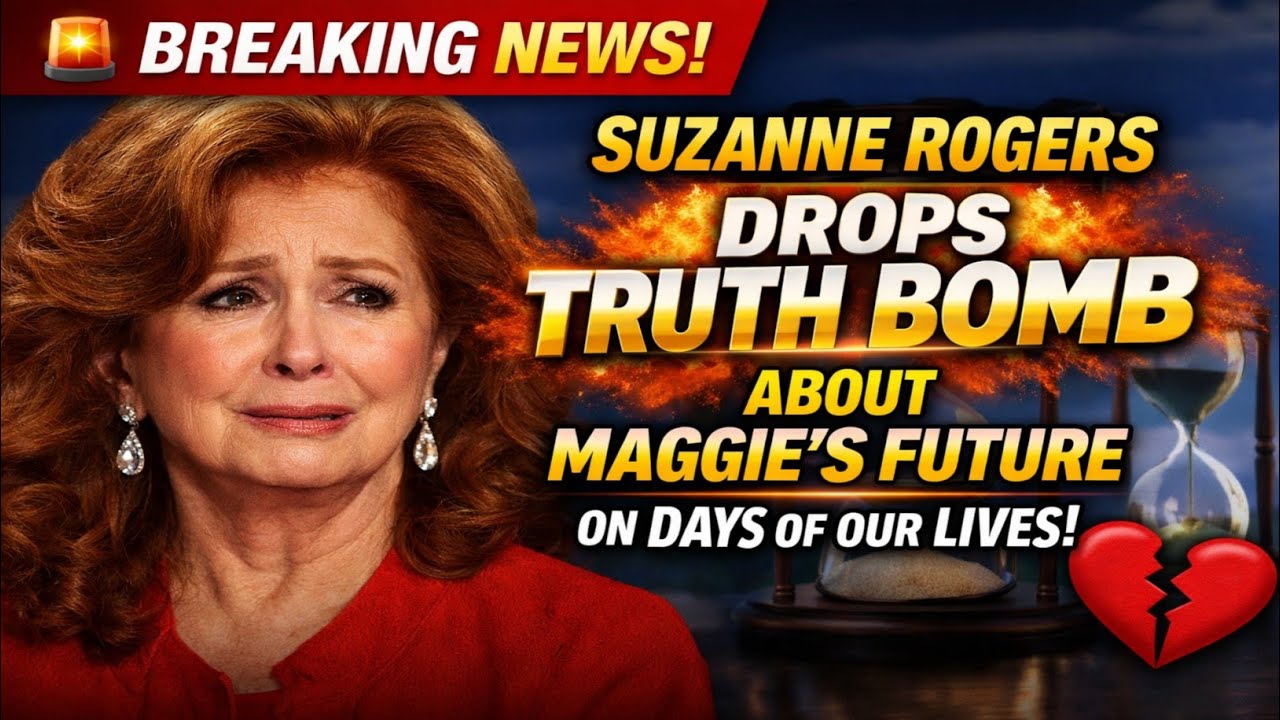
And perhaps that’s why she approaches her work with such clarity and gratitude.
When she talks about having fewer scenes, there’s no bitterness—only understanding. She knows she’s reached a stage in her career where she doesn’t need to carry the show. Instead, she can choose her moments, delivering performances that resonate precisely because they are measured and meaningful.
This phase of Maggie’s journey could even be seen as a renaissance.
As one of the show’s most seasoned characters, she now occupies a unique space. She’s no longer at the center of every storyline, but her influence is undeniable. She represents continuity, history, and emotional truth in a world that often defies logic.
So what does the future hold for Maggie Horton?
While fans may hope for a major storyline centered entirely around her, Rogers remains realistic. She acknowledges that if such a plot were to happen, it would likely involve familiar soap opera tropes—perhaps a health crisis or a long-lost connection from the past.
She’s open to it, even enthusiastic about the possibility. But she isn’t waiting for it.
Instead, she finds fulfillment in simply being part of the show, contributing where she can, and continuing to bring Maggie to life. For her, the joy lies in the work itself, not in the size of the role.
And that’s the real bombshell.
Maggie’s occasional disappearance isn’t a sign of decline—it’s a reflection of a carefully balanced storytelling system. It’s about timing, perspective, and the shifting focus of an ever-evolving narrative.
She hasn’t been written out. She hasn’t stepped away.
She’s simply waiting—like the rest of Salem—for the next rise in the roller coaster.
In a genre that often sidelines its veteran performers, Suzanne Rogers stands as a powerful exception. She proves that longevity isn’t about constant visibility; it’s about lasting impact. Maggie Horton doesn’t need to dominate every episode to remain vital. Her strength lies in her consistency, her resilience, and her ability to anchor even the most chaotic storylines.
So the next time Maggie disappears from Salem, fans might see it differently.
Not as an absence—but as a pause before something meaningful.
Because when she returns, as she always does, it’s never without purpose.