
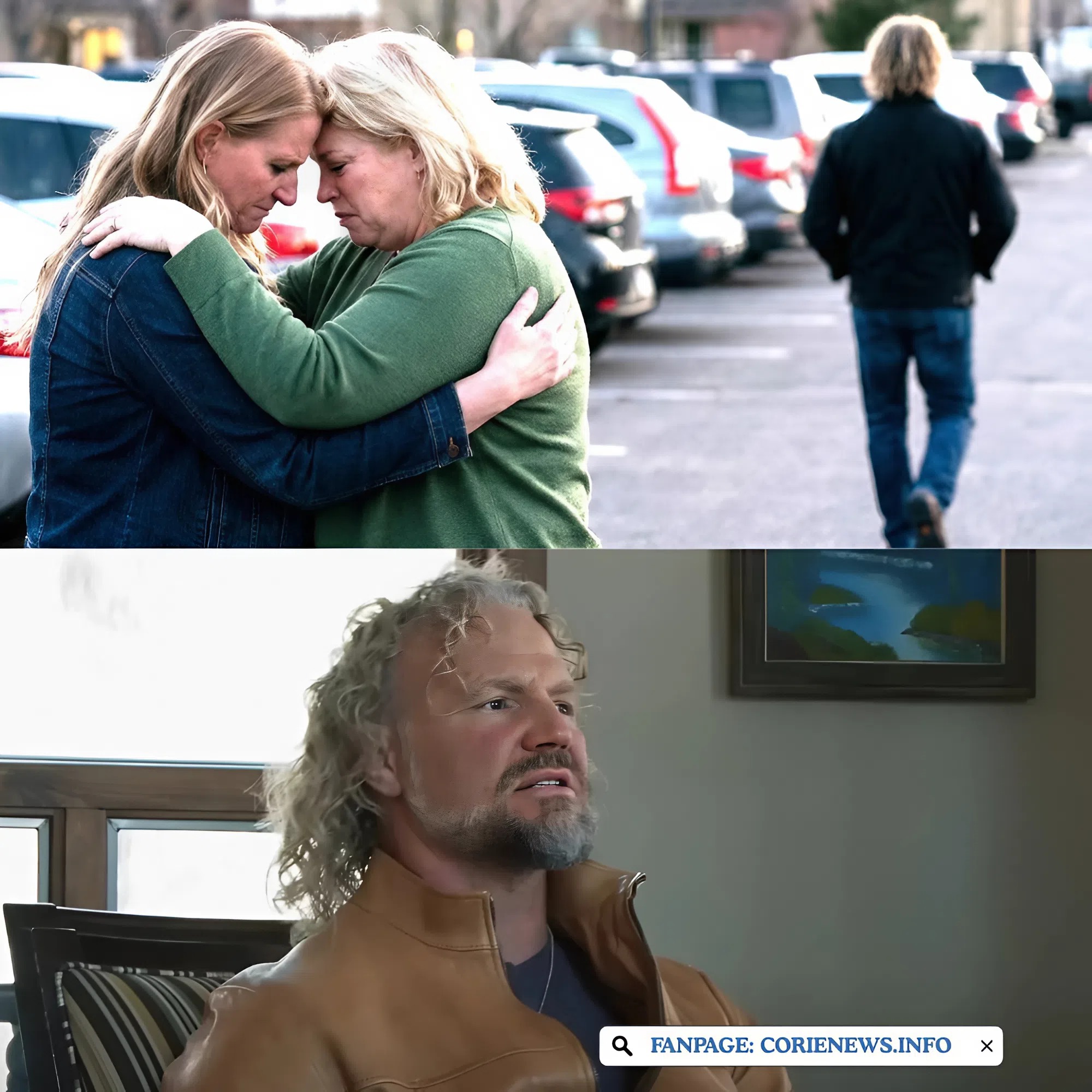
Kody Brown & Garrison’s Final Days That TLC Hid- But The Timeline Tells A Darker Story
Kody Brown & Garrison’s Final Days That TLC Hid — But The Timeline Tells A Darker Story
In 2024, Kody Brown sat before the cameras of Sister Wives and presented himself as a devoted father—a man whose identity revolved around family, faith, and legacy. Yet in that same year, his son, Garrison Brown, died alone in his home. He was not found by his father, but by his younger brother. Kody wasn’t the first to be notified. He wasn’t the one rushing to the scene. And as the aftermath unfolded, a painful question echoed far beyond television screens: where was he—not just in that moment, but in all the moments leading up to it?
Because when you examine the timeline closely, what emerges is not just a tragedy, but a pattern—one that reality TV never fully revealed.
For over a decade, Kody built a public identity as the head of a large, unconventional, plural family. With his distinct personality and carefully crafted persona, he sold viewers the idea of unity, purpose, and deep familial love. He spoke often about legacy, about his children being the center of his world. And for years, audiences accepted that image—or at least continued watching it unfold.
But a television persona is not the same as real life. What played out onscreen was a version of events, shaped by editing and storytelling. Behind that version, the reality was far more strained. Tensions existed long before they became impossible to ignore, and for many within the family, especially the children, those tensions carried emotional weight that viewers could only partially see.
By the later seasons of the show, the cracks had widened into something undeniable. Marriages dissolved. Wives left. Adult children faded quietly from the narrative. Not with dramatic exits, but with a kind of silence that often follows disappointment—the realization that something hoped for will never arrive. One by one, relationships fractured, and each time, Kody explained it away. The blame, in his telling, rarely pointed inward.
This pattern becomes crucial when understanding Garrison’s story.
Garrison was 25 when he died in March 2024. He was known to viewers as lively, outspoken, and charismatic. He had served in the National Guard and built a small business after his service. He was described by those close to him as funny, creative, and warm—the kind of person who brought energy into a room. But he was also struggling, and those closest to him were aware of it.
His mother, Janelle Brown, remained consistently present in his life. She has spoken about their frequent communication—calls, texts, daily check-ins. She made a deliberate effort to stay connected, understanding that even adult children still need reassurance and support.
Now contrast that with the relationship he had with his father.
During the COVID-19 pandemic, Kody implemented strict household rules that effectively divided the family. Some households were prioritized, while others—including Janelle’s—found themselves increasingly distant. Garrison and his brother Gabriel questioned these rules. They challenged them, not simply out of defiance, but out of frustration and a desire for fairness and connection.
Kody’s response was not to engage deeply with their concerns, but to label their resistance as rebellion. What viewers saw were tense interactions—sons seeking acknowledgment, and a father responding with criticism rather than understanding.
From a psychological perspective, this dynamic is not unfamiliar. When a parent becomes emotionally unavailable, children often escalate their behavior—not to create conflict, but to provoke connection. Even negative attention can feel better than being ignored entirely. In those moments, Garrison didn’t appear to be pushing his father away; he seemed to be trying, in the only way left to him, to reach him.
After Garrison’s death, Kody spoke publicly about digging his son’s grave, describing it as one of the most meaningful acts he had ever performed. The statement struck many as deeply unsettling—not because grief should look a certain way, but because of what it implied in contrast to the years before.
A single act, however symbolic, cannot replace years of absence.
A grave requires effort once. A relationship requires effort every day.
And this is where the timeline becomes difficult to ignore.
Reports from within the family suggested continued distance even after the tragedy. At the funeral, tensions persisted. One of Kody’s other children publicly expressed feeling dismissed during that moment—an event that should have unified the family in grief. Even more striking was the claim that communication from Kody ceased entirely afterward.
That silence speaks volumes.
Because the story here is not just about one moment, but about accumulation—the buildup of choices over time. Prioritizing certain relationships over others. Explaining away conflict instead of addressing it. Maintaining a public image while private connections weakened.
It’s important to acknowledge that Garrison’s death cannot be reduced to a single cause. Mental health is complex, and no single factor defines such a tragedy. But patterns still matter. The environment someone lives in, the support they receive—or don’t—those things shape outcomes in ways that are not always immediately visible.
What stands out is the contrast between presence and absence.
Janelle showed up—consistently, actively, without cameras. 
The siblings showed up for each other, especially in the aftermath. They honored Garrison in personal, meaningful ways, including shared tributes and memorials. These acts were not performances. They were expressions of genuine connection.
Meanwhile, Kody’s presence seemed to remain tied to public appearances—interviews, filmed discussions, controlled narratives.
There were also questions surrounding what viewers were not shown. Later seasons of the show appeared, to many fans, heavily edited. Emotional moments felt muted, conversations incomplete. Some speculated that critical interactions—possibly even warning signs—were left out entirely. While this cannot be confirmed, the sense that something was missing was widely felt.
What is known is this: Janelle was in contact with her son shortly before his death. She was aware he was struggling. She stayed connected.
And in the time that followed, the family—particularly the siblings—leaned on each other.
One year later, they gathered again to remember him. They shared tributes, stories, and memories. Some chose to mark their bond permanently, referencing a meaningful quote about loyalty and honor—a reflection of the connection they shared with Garrison.
These moments reveal what family can look like when people truly show up for one another.
And that brings us back to the central question: what does it mean to build a legacy?
Kody often spoke about legacy as something grand—something tied to belief systems, family structure, and public identity. But legacy, in its simplest form, is built in small, consistent actions. It’s in the phone calls returned. The conversations had. The effort made, even when it’s inconvenient.
It’s not what is said in front of cameras. It’s what is done when no one is watching.
The story that emerges here is not just about a father and a son. It’s about the difference between performance and presence. About how easily one can be mistaken for the other—and how costly that confusion can become.
Because when the cameras stop, what remains is not the narrative that was presented to the world, but the reality experienced by those who lived it.
And in this case, that reality is far more complicated—and far more painful—than anything that ever made it to air.