
Pascal killed Cullum right in the hospital ABC General Hospital Spoilers
Pascal Killed Cullum Right in the Hospital — ABC General Hospital Spoilers
Once again, the so-called security at General Hospital proves to be nothing more than an illusion. For a place that regularly houses dangerous criminals, covert agents, and people with more enemies than allies, you would expect tighter protocols, stricter access, and actual protection. Instead, it remains shockingly easy for the wrong person to walk in and do exactly what they came to do. And this time, Ross Cullum pays the ultimate price.
Cullum lies in the ICU, barely clinging to life after being shot in the back. The bullet came from Rocco Falconeri, though the burden of that act has been shifted onto Jason Morgan, who willingly surrendered himself to authorities to protect the teenager from a lifetime of consequences. Now Jason sits in WSB custody, sacrificing everything, while the man he supposedly shot still breathes—at least for the moment.
Ironically, the one responsible for saving Cullum’s life is Lucas Jones, a man drowning in grief after losing his boyfriend, Marco Rios. Unaware that Cullum was Marco’s killer, Lucas performed the surgery that kept him alive. It’s a cruel twist of fate: the grieving surgeon unknowingly preserves the life of the man who caused his heartbreak. But deep down, it’s clear to everyone that Cullum’s survival is temporary. The only question was who would finish what had already begun.
Several people came close. Jocelyn Jax nearly crossed that line, sneaking into Cullum’s room with deadly intent, only to be stopped before she could act. Britt Westbourne also had her moment, armed with a syringe and ready to deliver her own brand of justice, but she too was interrupted. In a town filled with people who wanted Cullum dead, it seemed inevitable that someone would succeed. Surprisingly, that person turned out to be Pascal.
Pascal had always been seen as insignificant—a background player, someone who followed orders and stayed out of the spotlight. He was the kind of man others overlooked, the one who checked safes and reported back, never making waves. But this time, Pascal steps forward and takes control of the situation in a way no one expected.
Whether acting under orders from Jen Sidwell or making the decision himself, Pascal recognizes that Cullum is a liability. With tensions rising and blood already spilled, leaving Cullum alive poses too great a risk. Perhaps Sidwell, fueled by grief and rage over Marco’s death, demanded retribution. Or perhaps Pascal simply decided to eliminate a loose end tied to the dangerous Cold Fusion Project. Either way, he moves with precision and purpose.
Instead of sneaking in like an amateur, Pascal chooses a more calculated approach. He disguises himself as a respected surgeon, complete with scrubs, a white coat, and likely a forged ID badge. In a place like General Hospital, confidence is all it takes. If you look like you belong, no one questions you. And so Pascal walks through the corridors unchallenged, blending seamlessly into the controlled chaos of hospital life.
The ICU is guarded, as expected. Cullum is a high-profile patient, and officers are stationed outside his room. But even that proves meaningless. Pascal flashes his credentials, offers a plausible explanation, and is granted access without hesitation. Just like that, the illusion of safety collapses.
Inside the room, everything is quiet. Machines beep steadily, monitoring Cullum’s fragile condition. He lies motionless, vulnerable in a way that contrasts sharply with his former power and menace. This is a man who terrorized others, who destroyed lives without remorse. Now he is reduced to a patient, dependent on machines and the care of others.
Pascal wastes no time. He retrieves a syringe filled with a clear, lethal substance—something designed to kill quickly and leave no trace. His plan is simple and efficient: inject the poison into Cullum’s IV line and make it appear as though complications from the gunshot wound claimed his life. It’s clean, untraceable, and effective.
With steady hands, Pascal prepares to carry out the act. He inserts the needle into the IV port, his thumb poised to press the plunger. One small movement is all it would take to end Cullum’s life quietly.
But fate intervenes.
The door opens.
A nurse enters the room, expecting nothing more than a routine check. Instead, she finds a stranger standing over the patient, mid-injection. Instantly, she knows something is wrong. She freezes, her clipboard slipping from her hands and clattering loudly against the floor. The noise shatters the silence, drawing attention to the scene.
Pascal and the nurse lock eyes. In that brief moment, everything hangs in the balance. The nurse prepares to call for help, to alert the guards just outside. Pascal realizes he has run out of time for subtlety.
He has a choice: flee and leave Cullum alive, or act decisively and ensure the job is finished.
He chooses violence.
Abandoning his careful plan, Pascal lunges forward. The syringe is no longer a tool for a quiet kill—it becomes part of a desperate struggle. The nurse screams, her voice echoing through the ICU. Alarms begin to sound as Cullum awakens, sensing the danger.
Despite his weakened state, Cullum fights back. Training and instinct kick in as he struggles against his attacker. But Pascal is relentless. Fueled by urgency and determination, he overpowers him. Whether by suffocation or a direct injection during the chaos, Pascal ensures there is no escape.
The heart monitor spikes wildly before settling into a single, unbroken tone.
Flatline.
Ross Cullum is dead.
For real this time.
There will be no miraculous recovery, no last-minute intervention. The man who caused so much destruction meets a brutal end in the very place meant to heal.
But Pascal’s job isn’t finished. He must escape.
The nurse’s screams have already drawn attention. Officers burst into the room, weapons ready. Without hesitation, Pascal creates a distraction, hurling a tray of surgical instruments toward them. The sudden chaos buys him just enough time to slip past and flee into the hallway.
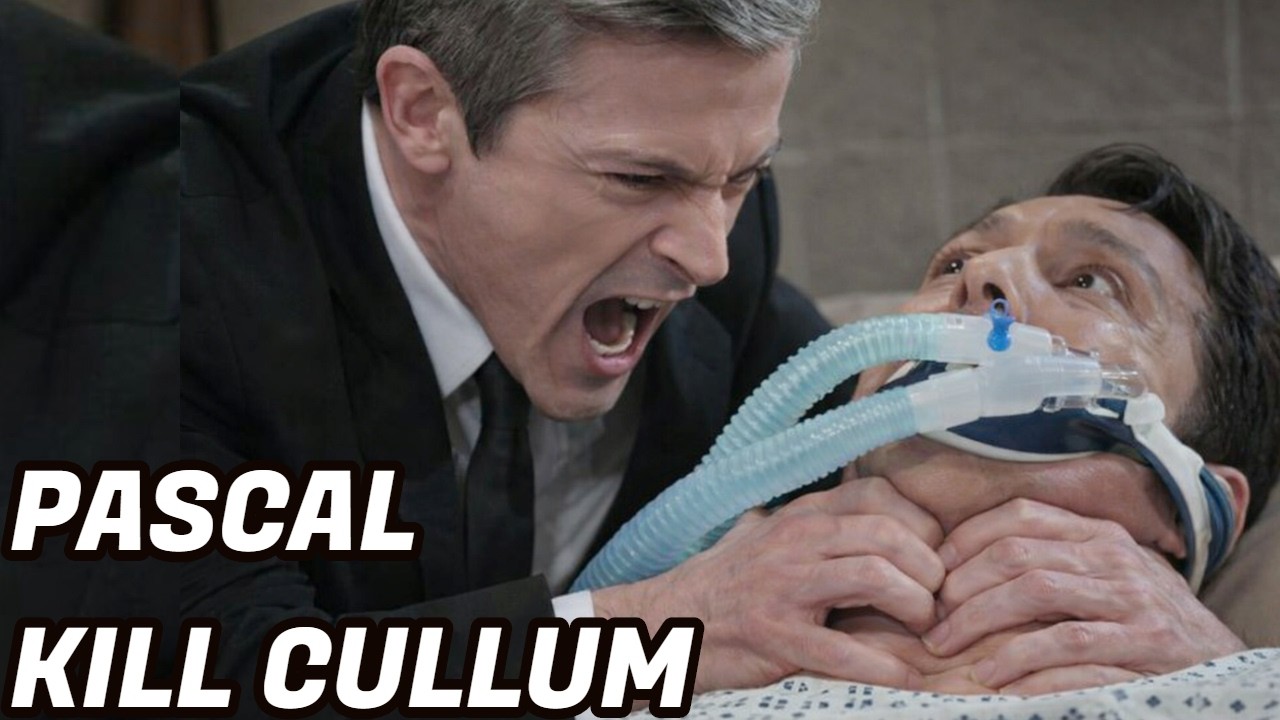
As he runs, he sheds his disguise, blending into the confusion of staff and patients drawn by the commotion. Within moments, he disappears completely, leaving behind a dead body and a trail of unanswered questions.
The consequences ripple outward immediately.
Jason Morgan remains imprisoned, having sacrificed himself for a crime that now seems meaningless. Cullum is dead regardless, yet Jason still faces the consequences of a confession that may no longer hold weight. The legal implications are staggering, and the truth threatens to unravel everything.
Lucas Jones, already devastated by loss, now faces another crushing blow. He saved Cullum’s life only for it to be taken hours later under his watch. Even though he is not to blame, the guilt will weigh heavily on him. This could push him to a breaking point.
Meanwhile, Jen Sidwell’s role remains unclear. If he ordered the hit, it suggests he discovered Cullum’s responsibility for Marco’s death. If not, Pascal may have acted independently—an act that could have deadly consequences of its own. Either way, Sidwell’s grief and anger make him unpredictable and dangerous.
Britt Westbourne also finds herself in a complicated position. Cullum’s death removes an immediate threat, but it doesn’t solve the larger problem. The forces behind the Cold Fusion Project remain active, and new dangers are already emerging. In this world, eliminating one enemy often only creates space for another, more powerful one to rise.
Pascal’s actions prove a chilling truth: nowhere in Port Charles is safe. Not even a guarded hospital room can protect someone from those determined to kill.
Cullum never saw it coming. One moment, he was under medical care. The next, he was face-to-face with death disguised in a white coat.
And just like that, it was over.