
Yellowstone Marshals Episode 5 Explained | Trafficking Twist, Ending & Episode 6 Theories
Yellowstone Marshals Episode 5 Explained | Trafficking Twist, Ending & Episode 6 Theories
Episode 5 delivers one of the most unsettling and emotionally complex moments of the season—not because of violence or suspense, but because of a choice. Casey finally finds Haley. She’s alive, within reach, and yet he allows her to walk back into the hands of a trafficker. At first glance, it feels like failure. But the deeper truth is far more disturbing: Haley made a decision that even a trained soldier and federal marshal couldn’t make for her—and she made it instantly, without hesitation.
This episode challenges viewers to sit with that discomfort. It’s not about the chase or the criminals—it’s about agency, sacrifice, and the horrifying realities behind trafficking. Haley’s decision becomes the emotional core of the episode, and everything else spirals outward from it.
The chain of events begins in an almost ordinary way. Casey attempts to sell Monica’s wild stallion, the same horse that injured Tate earlier in the episode. During this errand, Tate spots Haley Charlo at a truck stop in Wyoming. She’s a familiar face from Broken Rock, but something feels off. Her explanation—traveling with a boyfriend—doesn’t hold up under scrutiny. Miles quickly connects the dots. Haley had been reported missing months ago, shortly after he left his position with tribal police.
The situation escalates immediately. A missing underage girl, far from home, behaving strangely at a truck stop—Miles recognizes the signs right away. He labels it for what it likely is: trafficking.
What makes this more frustrating is the team’s current assignment. Instead of pursuing missing girls, they’re tasked with protecting Samuel Lashance, a federal witness with a criminal past. The contrast is intentional and sharp. Casey even points it out—why are they safeguarding a criminal while girls from the reservation are disappearing? It’s a moral imbalance that hangs over the episode.
They manage to get permission to speak with Haley’s mother, Ellie. In that conversation, Casey chooses his words carefully. He confirms Haley is alive but avoids saying she’s safe or okay. It’s a subtle but important distinction. Ellie hears hope, but Casey never lies. That restraint speaks volumes about his character and the weight of the situation.
Meanwhile, Miles reveals a deeper layer to the case. Another girl, Ava, had gone missing during his time with tribal police. He had worked tirelessly on that case but never found answers. Now, a connection emerges—both Ava and Haley were targeted by the same online account, a user known as “Green Eyes 44,” whose real name is Noah.
Noah’s role is chilling. He’s not the trafficker himself but the lure—the groomer. He targets vulnerable girls online, builds trust, and convinces them to leave home. Once they do, they’re trapped through manipulation, blackmail, and explicit material used as leverage. When confronted, Noah admits he was juggling dozens of conversations at once, feeding victims into a larger system.
That system leads to Kurt Bledsoe.
Bledsoe is not just a criminal—he’s an operator within a structured trafficking pipeline. Noah recruits, and Bledsoe collects. This isn’t random or isolated; it’s organized and efficient, suggesting a network far larger than what’s immediately visible.
The emotional blow intensifies when Haley reveals what happened to Ava. She didn’t simply disappear—she tried to escape. For that, Bledsoe killed her as a warning to the others. Miles had spent months searching for Ava, believing she might still be alive. Learning the truth devastates him. It’s not just a failed case—it’s a personal wound.
Then comes the pivotal moment of the episode.
Haley is found again. This time, there’s an opportunity to pull her out. But she refuses. Not because she’s loyal to Bledsoe or afraid for herself—but because there are nine other girls still trapped with him. If she leaves, they could be punished or killed.
She makes the choice to go back.
Casey understands the stakes. Forcing her out could trigger consequences for the others. So he does the unthinkable—he lets her walk back into danger. It’s a decision that defies instinct but aligns with the grim reality of the situation.
Before leaving, Haley gives them a clue: “a place with trees.” At first, it seems vague, almost useless. But the team realizes it’s not a literal description—it’s a logo. Ponderosa truck stops, scattered along Interstate 90, match the imagery.
Using road cameras and tracking data, they locate Bledsoe’s camper and pursue it near Route 287. The ensuing chase is chaotic and dangerous. Armed guards fire from the vehicle, forcing Casey and Miles into a defensive position. They can’t risk shooting blindly—those nine girls might still be inside. 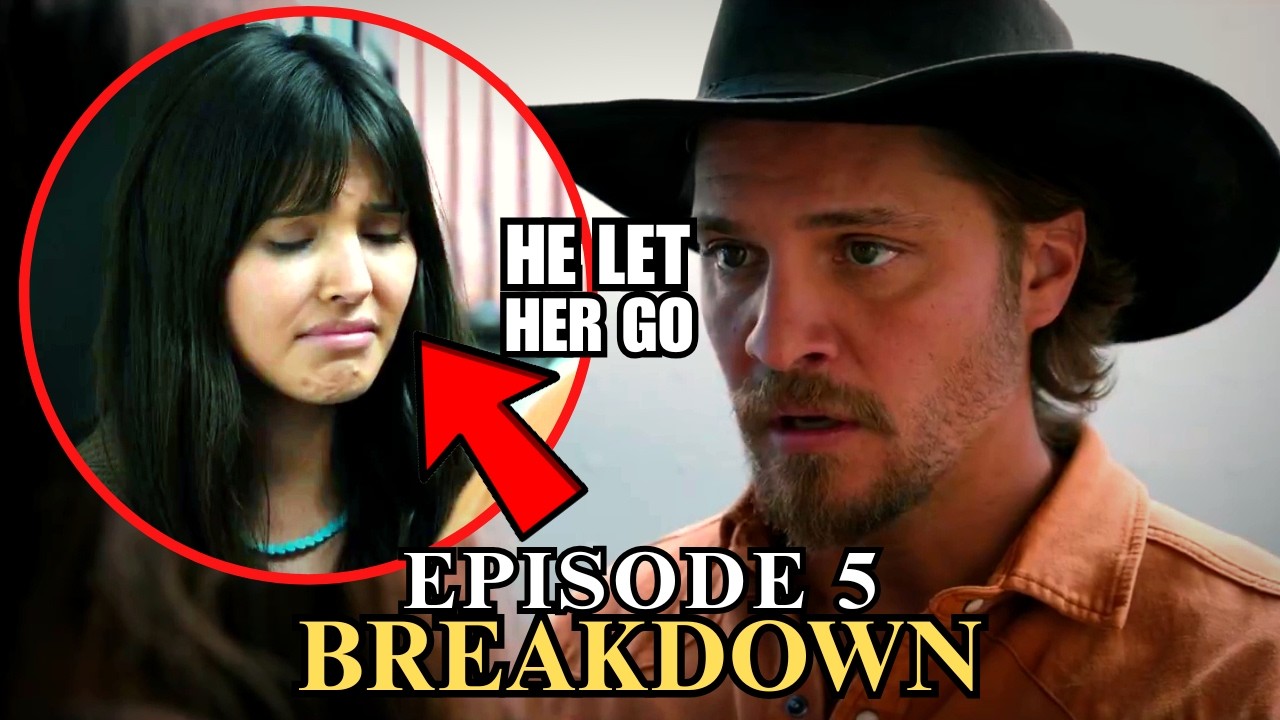
Instead, they maneuver carefully, drawing fire and eventually overtaking the camper. The guards are neutralized, and the vehicle is secured. It’s a tense, high-stakes operation that feels like it could end in rescue.
But it doesn’t.
When Casey opens the back door, it’s empty.
At some point between the last sighting and the takedown, the girls were moved. Transferred. Disappeared again.
The realization hits hard. They were close—closer than ever—and still lost them. Nine victims, gone without a trace. No leads, no location, no Bledsoe.
That’s where the episode leaves us—with failure, frustration, and a deep sense of urgency.
However, a quieter moment near the end may prove even more significant. Rainwater approaches Cal and asks for help. It’s not just a request—it’s a sacrifice. He sets aside political pride and historical grievances to bring federal marshals onto tribal land. He knows what it represents, but he does it anyway because the girls matter more.
This marks a turning point. The marshals are no longer outsiders—they’re now directly involved in the reservation’s missing persons cases. The scope of the story expands, and the stakes grow even higher.
Looking ahead, several possibilities begin to take shape.
First, Bledsoe is unlikely to be the top of the chain. The scale of the operation—multiple victims, armed guards, coordinated movement—suggests backing from a larger organization. The mention of a violent motorcycle gang hints at what’s coming next. Bledsoe may just be a middleman in a much bigger system.
Second, Miles’ past will play a crucial role. His connection to Ava’s case isn’t just backstory—it’s motivation. He’s carrying unresolved guilt, and this investigation offers a chance for redemption. Whether he succeeds or not, his personal investment will drive his actions moving forward.
Third, the subplot involving Lashance may not be as disconnected as it seems. His attempts to reconnect with criminal contacts could create new complications. It’s possible that his storyline will intersect with the trafficking operation, though that remains uncertain for now.
What makes this episode stand out is its focus. Earlier episodes established characters and tone, but Episode 5 finds its purpose. It tackles real-world issues with weight and intention, particularly the crisis of missing and exploited Indigenous women. This isn’t background detail—it’s central to the narrative.
The writing also shows restraint and depth. Moments like Casey’s conversation with Ellie, Miles’ quiet grief over Ava, and Haley’s final decision all carry emotional weight without unnecessary dramatics.
Not every storyline lands equally. Some threads feel less compelling in comparison, but the core narrative is strong enough to carry the episode.
In the end, the most powerful moment isn’t the chase or the reveal—it’s Haley walking back into that camper. It’s a choice that defines the episode and challenges the audience.
Was Casey right to let her go?
Or did he hesitate when it mattered most?
That question lingers long after the episode ends, setting the stage for what comes next.