
SHUT UP Or JAIL! Kody’s CRUEL Legal Threat To Paedon Is LEAKED
SHUT UP Or JAIL! Kody’s CRUEL Legal Threat To Paedon Is LEAKED
“I’m done staying silent. If he wants to sue me, then let him.”
Those words didn’t just land—they detonated. Before the livestream even ended, shockwaves were already spreading through the fan community. For years, viewers have watched the slow unraveling of a once tightly controlled family narrative. We saw emotional breakdowns, separations, and the quiet dismantling of relationships that had been presented as unbreakable. But this—this was something entirely different. This was no longer about fractured marriages or shifting loyalties. This was about a father and son colliding in a way that could spill into a courtroom.
What unfolded that night would quickly become one of the most talked-about moments tied to the family’s story—a deleted livestream that raised unsettling questions about money, control, and the limits of silence.
It started like so many casual broadcasts do. Paedon appeared relaxed, interacting with viewers, answering questions, joking around. There was nothing unusual about it at first. But then a single comment appeared—one that seemed to flip a switch.
“Why don’t you talk about the family money anymore?”
The tone shifted instantly.
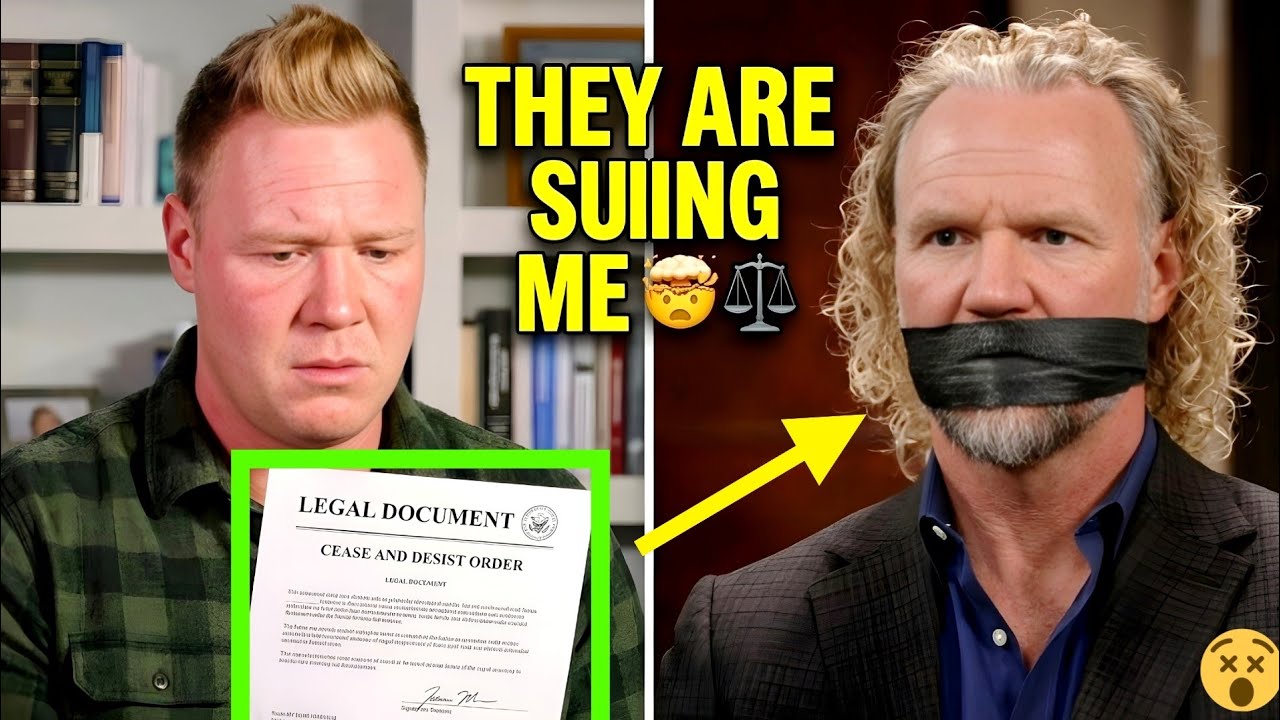
What followed wasn’t a measured response. It was emotional, reactive, and, to many watching, startlingly raw. Paedon reached off-screen and returned holding what he claimed was more than just ordinary mail. According to him, it was a formal legal warning—a cease and desist letter. He suggested it had been sent under his father’s direction, demanding that he stop discussing certain topics publicly, especially those tied to the family’s finances.
That claim alone would have been enough to ignite debate. But it didn’t stop there.
The implication was clear: silence wasn’t being requested—it was being enforced.
And that raises an uncomfortable question. For a family that built its public identity through reality television—sharing intimate details of their lives for years—why would financial matters suddenly become off-limits? Why would speaking about money cross a line so serious that legal threats entered the picture?
To understand the gravity of what was being suggested, it helps to look at what a cease and desist letter actually represents. It’s not a lawsuit, but it’s often the step just before one. It’s a formal warning, signaling that if the behavior continues, legal action may follow. In many cases, it’s used to prevent defamation or protect private information.
But there’s a critical detail: if the statements being made are true, proving defamation becomes significantly more difficult.
That’s where the situation becomes complicated.
During the livestream, Paedon hinted at financial arrangements within the family that went beyond what had ever been discussed publicly. He alluded to shared funds—money pooled together from multiple households—that may not have been distributed evenly. He suggested that resources intended for broader family support may have been redirected, possibly toward specific living arrangements or investments.
These weren’t detailed accusations with documented proof presented on screen. They were fragments—suggestions, implications, pieces of a larger picture that remained just out of reach. But even without concrete evidence, they struck a nerve.
Because for long-time viewers, questions about finances weren’t new.
Over the years, subtle hints had surfaced. Concerns about asset ownership. Worries about financial security. Moments where certain family members expressed uncertainty about what was truly theirs. Those moments, once easy to overlook, suddenly felt more significant in light of these new claims.
If there was truth behind what Paedon was suggesting, it wouldn’t just be a personal dispute—it would point to a deeper, systemic issue.
But beyond the financial speculation, there’s a more human layer to this story.
Paedon has often been seen as someone willing to speak more openly than others in the family. His perspectives haven’t always aligned with his father’s, and tensions between them have been visible at times. Differences in worldview, loyalty, and personal relationships have all contributed to a complicated dynamic.
Still, disagreement is one thing.
Legal threats are something else entirely.
For many observers, that’s where the situation becomes difficult to ignore. The idea that a parent might attempt to legally silence their own child—even if only through a warning—feels like a breaking point. It suggests not just conflict, but a collapse in trust.
Reactions from the public reflected that divide.
Some viewers expressed immediate sympathy, interpreting the situation as an attempt to suppress uncomfortable truths. Others were more skeptical, pointing out the lack of verifiable documentation. Without a confirmed letter or official statement, everything rests on a claim—one that may or may not fully reflect reality.
And yet, the absence of clarity only fuels the conversation.
There’s also a psychological dimension to consider. For someone who has long been positioned as the central authority figure within a large and complex family, losing control of the narrative can be destabilizing. When that narrative begins to fracture—especially in public—the instinct may be to regain control by any means available.
In this case, that may mean turning to legal mechanisms.
But legal pressure carries risks.
If the situation were to escalate into an actual lawsuit, it could open the door to a process known as discovery. That’s where things become potentially explosive. Financial records, contracts, communications—documents that were never meant for public view—could become part of the official record.
And once that happens, the story changes entirely.
It would no longer be about speculation or secondhand accounts. It would be about documented evidence.
For a family whose lives have already been partially exposed through television, that level of transparency could be unprecedented—and possibly damaging.
There’s also the broader context to consider. The family structure that once appeared unified has undergone significant changes in recent years. Relationships have ended. Individuals have moved on. What was once presented as a cohesive system now appears fragmented.
In that environment, financial questions take on new importance.
When partnerships dissolve, assets matter. When shared systems break down, accountability becomes a central issue. And when those concerns are voiced publicly, they can’t easily be contained.
That’s part of what makes this moment feel so significant.
It represents a shift.
For years, the narrative was controlled—edited, shaped, and presented through a specific lens. But now, that control is slipping. Voices that were once in the background are stepping forward. Stories are being told from new perspectives.
And those perspectives don’t always align.
The fact that the livestream in question was later removed only adds to the intrigue. Without a full recording, what remains are fragments—clips, summaries, and recollections from those who claim to have watched it in real time.
That lack of a complete record creates space for interpretation.
Was the situation as serious as it sounded?
Was it exaggerated in the moment?
Or was it a glimpse into something much larger?
At this stage, there are more questions than answers.
No official confirmation has been provided regarding the alleged legal warning. No documents have been publicly verified. And without that, the story exists in a kind of limbo—caught between claim and proof.
But even without confirmation, the impact is real.
Because the idea alone—that legal threats could be used within a family to control what is said publicly—changes how people view everything that came before.
It reframes past events. It casts old moments in a new light. It raises doubts about what was shown, what was hidden, and why.
And perhaps most importantly, it highlights the tension between public storytelling and private reality.
For viewers, that tension is part of what makes the situation so compelling—and so unsettling.
This isn’t just about one livestream or one claim. It’s about the unraveling of a narrative that once felt complete. It’s about the emergence of new voices challenging old structures. And it’s about the possibility that what lies beneath the surface is far more complicated than anyone realized.
So where does it go from here?
That remains uncertain.
If no further action is taken, the story may gradually fade, becoming another unresolved chapter in an already complicated history. But if it escalates—if legal steps are actually pursued—it could bring everything into sharper focus.
Until then, the situation exists in that uneasy space between silence and exposure.
A warning may have been issued. Or maybe something more.
Either way, the message—real or perceived—has already been heard.
And once something like that enters the public conversation, it doesn’t simply disappear.
It lingers.
It evolves.
And it leaves behind a question that refuses to go away:
Was this about protecting privacy—or protecting something else entirely?