Yellowstone Marshals Episode 6 Ending Explained | Casey Dutton’s Dark Truth Finally Revealed
Episode 6 of Yellowstone Marshals doesn’t just deliver a midseason climax—it quietly detonates an emotional truth that has been building since the very beginning. Beneath the surface of biker raids, trafficking rescues, and procedural tension lies something far more personal: Casey Dutton has been carrying a secret that reshapes everything we thought we knew about his grief, his choices, and his relationship with his son.
For an entire year, Casey has lied—not about a case, not about a suspect, but about something deeply intimate. After Monica’s death, he told Tate that her necklace had been lost. But the truth is, he’s had it the entire time. That small object becomes the emotional core of the episode, transforming what initially feels like a high-stakes rescue mission into something much more profound: a story about whether Casey believes he deserves to let go of grief.
From the opening moments, the episode signals its intent. Set on the one-year anniversary of Monica’s death, it frames everything through the lens of mourning and unresolved pain. The flashback of her final moments—quiet, intimate, and devastating—ends with a nurse placing the necklace in Casey’s hand. That image lingers, because it’s not just a memory; it’s a burden he’s been carrying ever since. The narrative then jumps to the present, effectively asking: what has Casey done with that grief in the time since?
What follows is not just a mission—it’s a test.
The trafficking case, which began when Tate recognized a missing girl named Haley, escalates rapidly. What starts as a search for one victim expands into a much larger operation involving a violent biker gang moving girls across borders. The stakes are brutal and systemic. Dozens of girls have disappeared, and the scale of the crime makes it clear that this is not a problem that can be solved in a single raid.
Yet the brilliance of the episode lies in how it balances that external danger with internal conflict. While the team investigates leads and tracks suspects, Casey is fighting a quieter battle within himself. Every step closer to rescuing those girls is also a step toward confronting his own unresolved grief.
This duality becomes especially clear during the stakeout scenes. As the team waits for the right moment to strike, conversations drift into personal territory. Andrea shares her experience with loss, explaining how grief consumed her until she gave it form—until she allowed herself to truly face it. While she speaks, Casey remains silent, absent in a way that feels deliberate. His hand moves unconsciously, revealing that he’s been holding Monica’s necklace all along.
That moment is subtle but crucial. It’s the emotional hinge of the episode. Andrea articulates what Casey has been avoiding: grief doesn’t disappear when ignored—it festers. And Casey, by holding onto the necklace, has been preserving his pain as a form of penance. On some level, he doesn’t believe he’s earned the right to move forward.
This idea is reinforced through the episode’s recurring theme: the difference between vengeance and closure. Thomas Rainwater delivers one of the most important lines when he suggests that only one of those paths leads to peace. Casey initially leans toward vengeance—his actions throughout the series have often been fueled by anger and guilt—but Episode 6 quietly redirects him.
Instead of seeking destruction, he chooses to do the job right.
The raid itself, while imperfect in its execution, serves its purpose emotionally. The team infiltrates the biker gang, confronts the traffickers, and ultimately locates the missing girls. The visual of the victims—hidden, dehumanized, and terrified—is intentionally harrowing. But the real payoff comes not from the action, but from what it represents.
When Casey reassures Haley that her bravery led them there, it’s more than a tactical acknowledgment. It’s a moment of recognition—of agency, of survival, of meaning. The girls are saved. The immediate mission is complete. And for the first time, Casey has done something that feels like it balances the scales, even if only slightly.
That’s the turning point. 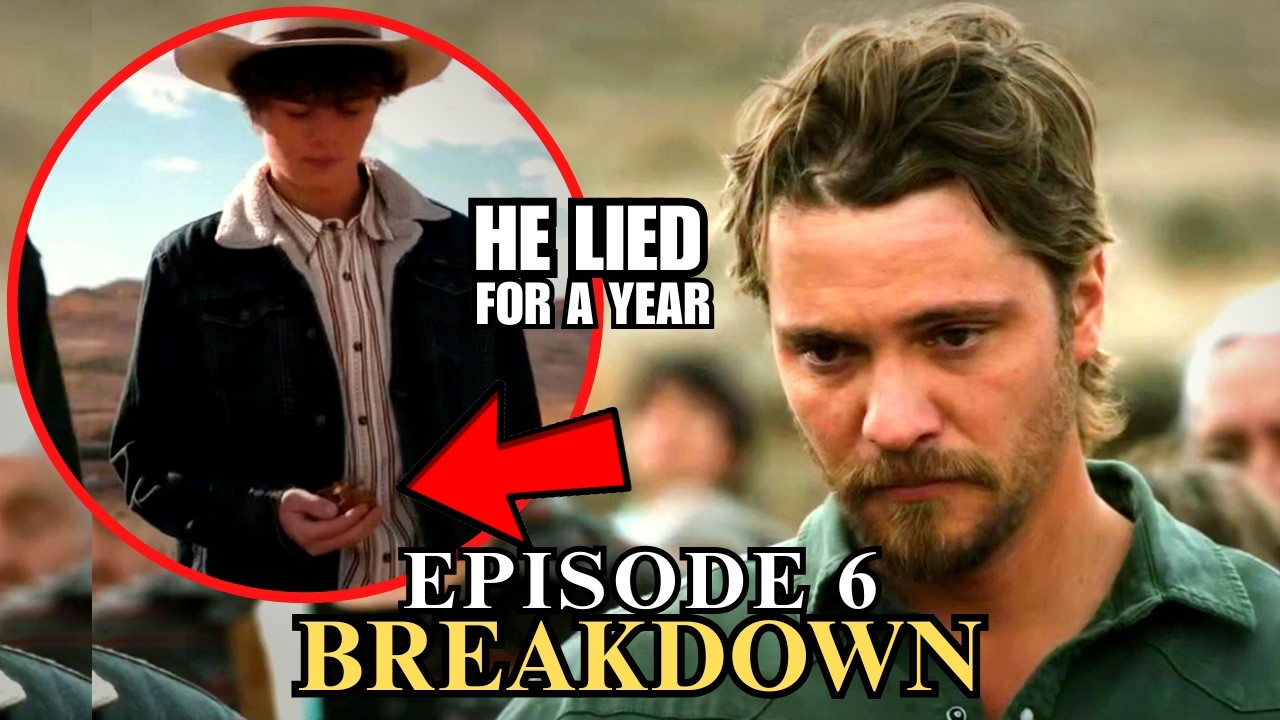
Because the rescue isn’t just about justice—it’s about permission. By ensuring those girls are safe, Casey begins to feel that he’s finally earned the right to release the weight he’s been carrying. The necklace, which once symbolized his refusal to move on, now becomes something he can return.
The final ceremony brings everything together. It’s a quiet, emotional sequence that contrasts sharply with the chaos of the earlier raid. Here, the focus shifts entirely to character and connection. Casey hands the necklace to Tate, admitting that he’s been holding onto it since Monica’s death.
Tate’s response is what makes the moment truly devastating.
Instead of shock, there’s a sense of understanding—almost as if he already knew. When he asks, “You found it?” the line carries layers of meaning. On the surface, it’s a simple question. But underneath, it feels like something more: a recognition of his father’s struggle, and perhaps even a silent acknowledgment that he’s been waiting for this moment.
This interaction reframes their entire relationship. Tate hasn’t just been a grieving son—he’s been a quiet guide, pushing Casey toward healing in subtle ways. His insistence on finding Haley, his encouragement to participate in the ceremony, his emotional awareness—all of it suggests that he may have understood more than he let on.
If that’s true, then the necklace scene becomes even more powerful. It’s not just about Casey letting go—it’s about Tate helping him get there.
Beyond the emotional resolution, the episode also plants seeds for what’s to come. Two key threads remain unresolved, hinting at deeper complexities in the narrative.
The first is the scope of the trafficking operation. While the team successfully rescues a group of victims, the final shots of the investigation board reveal a much larger problem. Many faces remain unaccounted for, emphasizing that this is not a closed chapter. The case may be resolved on a surface level, but the underlying issue persists.
The second thread involves Belle. A seemingly minor exchange about a prior casino sighting raises significant questions about her past. Her reaction—quick, evasive, and defensive—suggests that she’s hiding something. Combined with hints that she may have been involved with the biker gang before this case, it points to a deeper storyline that has yet to be explored.
These elements ensure that the episode’s impact extends beyond its immediate resolution. While Casey’s emotional arc reaches a turning point, the world around him remains unstable, full of unanswered questions and looming threats.
There’s also an important thematic takeaway embedded in the episode’s structure. By resolving such a major emotional arc at the midpoint of the season, the show signals that it’s not interested in dragging out grief for the sake of drama. Instead, it uses this moment as a foundation for what comes next. Casey’s journey isn’t over—it’s evolving.
However, the episode isn’t without its flaws. The logistics of the raid, for instance, stretch believability. The ease with which the team navigates a dangerous environment undermines some of the tension. But these shortcomings are largely overshadowed by the strength of the emotional storytelling.
Ultimately, Episode 6 succeeds because it understands what it’s really about. It’s not just a crime drama or an action series—it’s a story about loss, responsibility, and the difficult process of healing.
Casey’s decision to return the necklace marks a quiet but significant transformation. He hasn’t forgotten Monica, and he hasn’t escaped his grief. But he’s taken a step forward, choosing to carry her memory differently—not as a weight that holds him back, but as something that can coexist with his purpose.
And that’s what makes the ending so powerful.
It’s not loud or dramatic. It doesn’t rely on spectacle. Instead, it delivers something far more meaningful: a moment of emotional clarity that redefines the character and sets the stage for everything that follows.
As the season moves into its second half, the question is no longer whether Casey can survive his grief—but what he’ll do now that he’s begun to move beyond it.