Willow, With Her Last Shred Of Conscience, Tells Sonny The Secret About Nathan. GH Spoilers
I’ve been trying to simplify these latest General Hospital spoilers, telling myself it should be easy to boil everything down into a clean, straightforward summary. But the more I sit with it, the more I realize that this storyline refuses to stay simple. It’s heavy, layered, and tangled in a way that makes any attempt at neat explanation feel almost dishonest. On paper, it might look like a classic revenge arc—a grieving father seeking justice for his son. That’s familiar territory in soaps. But something about this situation feels more complicated, more emotionally charged, and far less predictable than the usual formula.
At the center of it all is Sidwell, a man completely shattered by the loss of his son, Marco. Grief like that doesn’t just hurt—it distorts. It warps judgment, twists priorities, and sometimes pushes people into places they never imagined they’d go. It’s easy, at least initially, to feel a flicker of sympathy for him. Losing a child is the kind of devastation that changes a person permanently. But there’s a line between understanding someone’s pain and excusing their actions, and Sidwell has clearly crossed that line.
Instead of searching for truth, he latches onto revenge with alarming speed. There’s no investigation in the real sense, no attempt to uncover what actually happened to Marco. Sidwell doesn’t want answers—he wants retribution. And almost immediately, his focus lands on Sonny Corinthos. That choice feels less like a conclusion and more like a reflex. Sonny’s reputation makes him an easy target, the kind of figure people assume is guilty when anything dark happens in Port Charles. But what’s troubling is how little Sidwell seems to care whether Sonny is truly responsible. The truth becomes irrelevant, and once that happens, the situation shifts into dangerous territory.
Because when truth no longer matters, everything becomes about power and impulse. Sidwell isn’t trying to solve anything—he’s lashing out. And he has the resources and influence to make that lashing out extremely destructive.
Then there’s Nathan, and he adds an entirely different layer of unease to the situation. Unlike Sidwell, Nathan isn’t driven by visible emotion. He’s controlled, calculated, and disturbingly calm. As a cop, he’s supposed to represent order, justice, and integrity. But behind the scenes, he’s been operating in direct opposition to those ideals. His quiet allegiance to Sidwell reveals a long-standing corruption that doesn’t feel impulsive—it feels ingrained.
What’s most unsettling about Nathan isn’t just that he’s compromised, but how comfortable he seems with it. There’s no visible struggle, no hesitation when Sidwell pulls him deeper into this revenge plot. When contacted, he doesn’t question, doesn’t resist, doesn’t even slow things down to assess the situation. His silence speaks volumes. It suggests that crossing moral lines is no longer a conflict for him—it’s routine.
And that’s where things begin to spiral.
Sidwell’s grief-fueled anger escalates quickly. What might have initially been framed as an aggressive investigation transforms into something much darker. The goal shifts from uncovering the truth to eliminating a perceived enemy. The intent becomes unmistakable: Sonny must be taken out. No evidence. No due process. Just a clean, decisive end.
That moment marks a critical turning point. This is no longer morally ambiguous or emotionally complex—it’s outright dangerous. There’s nothing justifiable about ordering someone’s death based purely on assumption and anger. And yet, Sidwell doesn’t hesitate. That lack of hesitation is what makes the situation so chilling.
But in his urgency and confidence, Sidwell makes a crucial mistake—he becomes careless.
Secrecy is the foundation of everything he’s built with Nathan. The entire operation depends on their connection remaining hidden. Nathan’s position as a corrupt cop only works as long as no one uncovers the truth. Especially someone like Willow Tate.
And yet, somehow, she does.
What makes this revelation particularly compelling is how it happens. It’s not the result of a calculated investigation or a deliberate search for answers. Instead, it comes by accident—an overheard conversation, a glimpse of a message, a moment she was never meant to witness. That kind of discovery feels raw and authentic. One second, everything is normal. The next, everything changes.
Now Willow is at the center of it all.
Her role in this situation is far from simple. She isn’t an innocent bystander who just stumbled onto something shocking. She’s already been entangled with Sidwell, working with him in ways that raise serious moral questions. That connection complicates everything. When she uncovers the truth about Nathan and Sidwell’s plan to kill Sonny, she isn’t observing from a distance—she’s part of the web.
And that realization hits hard.
Because now the situation becomes personal in a way she can’t ignore. This isn’t a theoretical ethical dilemma. A man’s life is at stake, and the people orchestrating his death are people she’s been aligned with. That forces her into a moment of reckoning: what exactly has she been a part of?
It’s easy to imagine her initial reaction being disbelief. That instinct to rationalize, to search for another explanation, is deeply human. People don’t want to accept that they’ve been connected to something truly terrible. But eventually, the truth becomes unavoidable. Sidwell has crossed a line, and now Willow has to decide whether she will cross it with him.
Emotionally, the situation is even more complicated by her history with the Corinthos family. There’s unresolved tension, especially from past conflicts involving Michael and Carly. Those experiences have likely left scars—resentment, frustration, maybe even lingering anger. But Sonny himself isn’t directly tied to those personal battles. And that distinction matters.
Because it removes any illusion of justification.
This isn’t revenge. This isn’t settling a score. It’s simply wrong.
And somewhere within Willow, that realization begins to take hold.
This is where her character faces its most defining moment. She has a choice: stay silent and remain complicit, or speak out and disrupt everything. It’s not an easy decision. Speaking up won’t fix her past actions or erase her involvement. In fact, it will likely make things worse in the short term. It will expose secrets, ignite conflict, and trigger consequences she can’t control.
But it’s also her chance to prove that she isn’t beyond redemption.
Choosing to warn Sonny isn’t about being a hero. It’s about refusing to become something worse.
Of course, that choice comes with massive repercussions. Telling Sonny means exposing Nathan. And once that truth is out, there’s no going back. Sonny isn’t someone who ignores threats to his life, especially when they involve betrayal from someone in law enforcement. His response will be swift and decisive.
And in this case, it’s hard to blame him.
Sonny may not be a perfect character—far from it—but here, he’s the target of a plot he didn’t initiate. If he moves to defend himself, to uncover the full scope of Sidwell’s operation, and to bring Nathan’s corruption to light, it feels justified.
Ironically, Sidwell’s greatest miscalculation might be underestimating Sonny.
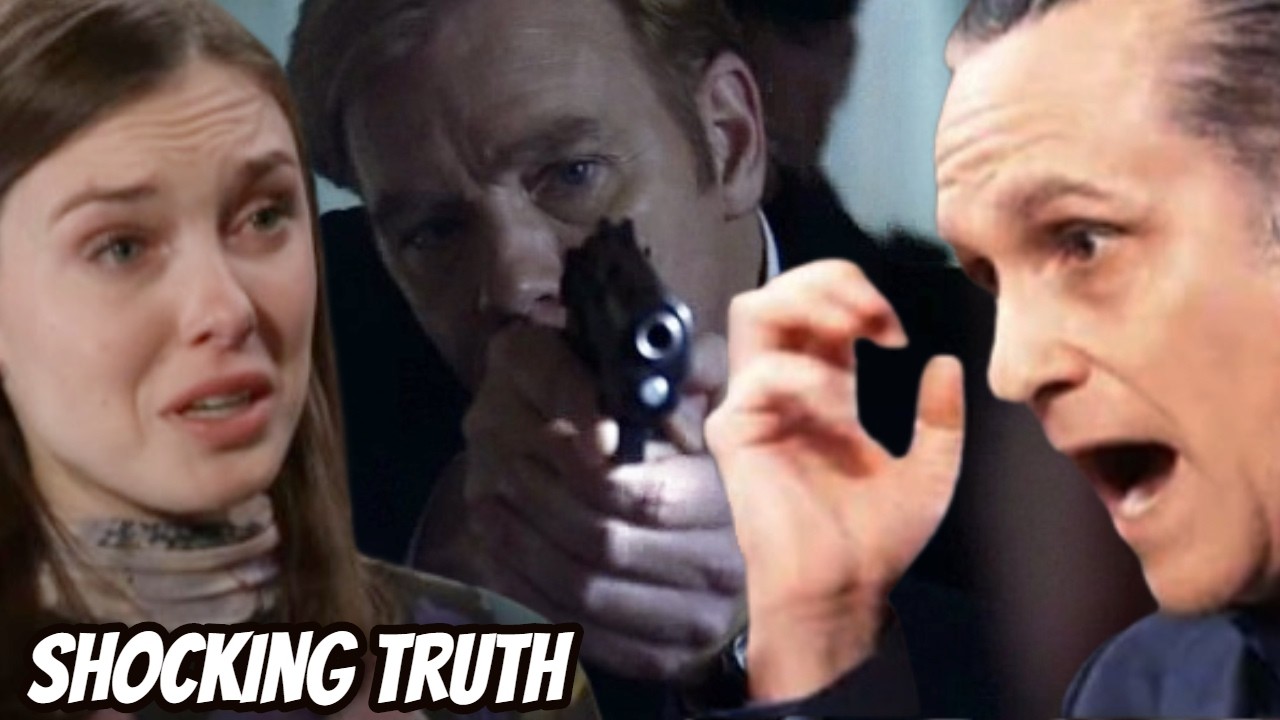
Blinded by grief and rage, he overlooks the fact that Sonny has survived countless threats over the years. He’s not just reactive—he’s strategic. He knows how to anticipate moves, how to counterattack, how to turn the tables when backed into a corner.
So instead of securing revenge, Sidwell may have set himself up for collapse.
His network, his influence, even his freedom could all be at risk once the truth starts unraveling. And Nathan? His position looks even more precarious. Exposure would mean not just professional ruin, but potentially severe legal consequences.
Still, through all of this, Willow remains the key figure.
Everything hinges on her decision.
If she says nothing, Sonny’s life hangs in the balance. If she speaks, the entire situation explodes. That’s the weight of real power—not authority or status, but the ability to choose a path that changes everything.
And while it’s tempting to view her potential decision as a turning point toward redemption, it shouldn’t come without consequences. She was involved, even if not at the deepest level. That involvement matters. If she steps forward, she should still have to face the fallout—the guilt, the fear, the broken trust.
Because that’s where genuine growth happens.
Not in the moment of choice itself, but in everything that follows.
What makes this storyline so compelling is its refusal to be clean or straightforward. It’s not about clear heroes and villains. It’s about flawed people making difficult decisions under pressure. Sidwell choosing vengeance over truth. Nathan choosing loyalty over integrity. Willow choosing conscience over silence. And Sonny choosing survival, as he always does.
It’s messy, unpredictable, and emotionally complex in a way that feels deeply engaging.
And if Willow does decide to warn Sonny, it won’t be a quiet shift. It will be immediate, explosive, and impossible to contain.
Everything will change.
And honestly, that chaos might be exactly what this story needs.