Why Beth & Rip REALLY Fled Montana for Texas
In Yellowstone, the relationship between Beth Dutton and Rip Wheeler has always stood as one of the most intense and unbreakable bonds in the series. Their connection is forged through loyalty, violence, trauma, and an almost mythic devotion to the land and to each other. So when they ultimately leave Montana behind and head for Texas, it doesn’t feel like a simple relocation—it feels like something far more deliberate, layered, and ominous.
At first glance, their departure might seem abrupt. After all, these are not characters who run. Beth thrives in confrontation, and Rip has spent his entire life standing his ground, no matter the cost. But when you start peeling back the layers of what was happening around the Dutton ranch in its final days, the move begins to look less like a retreat—and more like a calculated decision made under immense pressure.
The Yellowstone ranch was never just land. It was a battlefield. For generations, the Dutton family fought relentlessly to hold onto it, fending off threats from wealthy developers, political opportunists, rival ranchers, and even internal betrayals. Over time, however, the nature of those threats began to shift. It wasn’t just about land anymore—it became about survival.
One major reason behind Beth and Rip’s exit lies in the sheer number of enemies the Duttons accumulated. Power, especially the kind the Dutton family wielded in Montana, inevitably attracts opposition. And Beth, with her sharp corporate instincts, understood something others often ignored: enemies don’t disappear. They wait. They adapt. They strike when the moment is right.
By the end, the ranch itself may have no longer been the primary target. Instead, the people protecting it—people like Beth and Rip—were becoming vulnerable. Leaving Montana could have been their way of stepping off the board before the next move was made against them. Not surrendering, but surviving long enough to protect whatever remained of their legacy.
Another darker possibility involves the legal shadows trailing behind the Dutton empire. The ranch didn’t survive for generations by playing clean. There were secrets buried in that soil—some metaphorical, others very literal. Violence, cover-ups, and morally gray decisions defined much of the family’s history.
Beth and Rip were often at the center of those decisions. They did what needed to be done, but actions like that leave traces. Over time, it’s possible that investigations, records, or long-forgotten evidence began resurfacing. If the walls were closing in legally, Montana could have become a trap rather than a home.
Texas, in contrast, offered distance. Not just physical miles, but a buffer from the past. A place where old ghosts might struggle to follow. If there were cases building quietly against the Duttons, leaving could have been the only way to stay free.
Then there’s the issue of ownership—the question that has always sat at the heart of Yellowstone: who ultimately controls the land? Beth and Rip were fiercely loyal defenders of the ranch, but they were never its traditional heirs. Their connection was emotional, not legal.
As outside forces pushed harder to break apart or acquire the property, the future of the ranch became increasingly uncertain. There’s a strong possibility that Beth saw what was coming—that the land would eventually be divided, sold, or lost altogether. Staying behind might have meant watching everything they fought for crumble in real time.
Walking away, in that context, becomes something else entirely. Not abandonment, but refusal. A decision to leave before witnessing the final collapse.
But not all explanations are rooted in strategy or danger. Some are far more personal—especially when it comes to Beth herself.
Beth Dutton is a character shaped by trauma. Her life has been defined by pain, revenge, and a constant need to fight. Montana, and particularly the ranch, holds every memory that made her who she is. It’s both her identity and her prison.
Leaving could represent something she has never truly allowed herself before: the chance to breathe. To exist somewhere that isn’t soaked in the past. Texas, in this sense, isn’t just a new location—it’s a psychological escape.
Rip’s role in this is crucial. His loyalty to Beth has always been absolute. If she needed to leave to survive emotionally, he would follow without hesitation. For perhaps the first time, their decision might not have been about protecting the ranch—but about protecting each other.
There’s also a more hopeful interpretation of their move. Instead of viewing it as an ending, it could be seen as a beginning.
Texas is deeply rooted in ranching culture, much like Montana, but it represents new ground—both literally and figuratively. Beth and Rip may have chosen to build something of their own, free from the weight of the Dutton legacy.
For years, they lived under the shadow of that legacy, fighting battles that weren’t originally theirs. Starting over gives them the opportunity to create a future that belongs solely to them. Not inherited. Not defended. Built.
In that light, their departure becomes transformative rather than tragic. 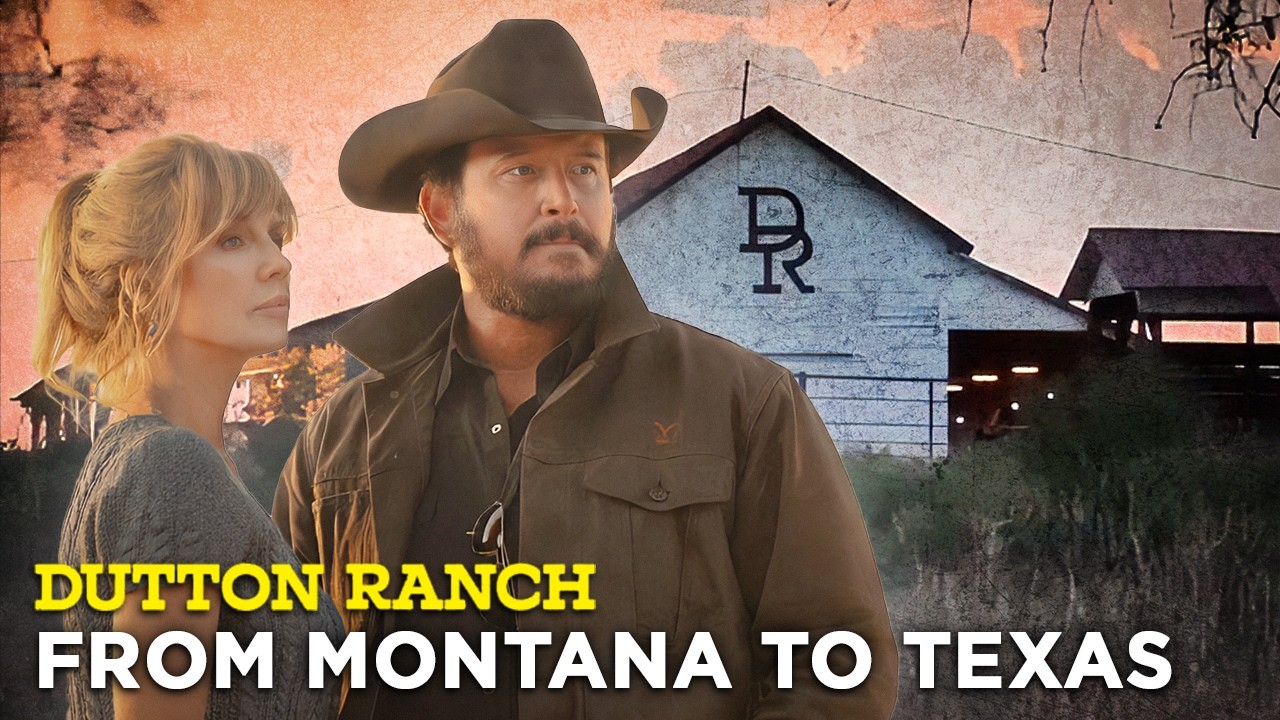
Of course, not every theory is optimistic. Some suggest that Beth uncovered something far worse—something inevitable.
The Yellowstone ranch faced countless threats over the years, each one leaving cracks in its foundation. It’s possible that Beth realized the truth: that no matter how hard they fought, the ranch would eventually fall.
If that realization set in, then leaving becomes an act of acceptance. Rip, who dedicated his life to protecting the ranch, may have come to the same conclusion. Some battles cannot be won—not because of weakness, but because the world changes.
Walking away under those circumstances isn’t cowardice. It’s clarity.
There’s also a broader storytelling angle to consider. The world of Yellowstone has expanded beyond a single ranch, evolving into a larger universe of interconnected stories. Moving Beth and Rip to Texas opens the door to new narratives, new conflicts, and new dynamics.
It allows their story to continue without being confined to the same patterns that defined Montana. They carry the spirit of the ranch with them, even if the land itself remains behind.
Finally, there’s perhaps the most unsettling possibility of all: that they didn’t leave entirely by choice.
The Dutton family’s grip on power was always fragile, even when it seemed absolute. If the balance shifted—if stronger forces finally gained the upper hand—Beth and Rip may have been pushed out.
Not through a dramatic showdown, but through quiet inevitability. A loss that doesn’t explode, but settles in.
In that scenario, their departure becomes the final move in a long war—one that ends not with victory, but with survival.
No matter which explanation feels closest to the truth, one thing remains clear: Beth and Rip’s decision to leave Montana is one of the most pivotal moments in the entire story.
Their loyalty never wavered. Their connection to the land never faded. But the world around them changed in ways even they couldn’t control.
Whether their move protects the Dutton legacy or marks the beginning of its end is still uncertain. But what it undeniably represents is this: even the strongest people, the fiercest defenders, and the deepest loyalties have limits.
And sometimes, the only way to preserve what matters most… is to walk away.