Cullum Is Mentally Ill, And The Identity Of The Person Responsible Has Been Revealed. GH Spoilers
What’s unfolding lately on General Hospital feels like one of those storylines that shouldn’t quite work—but somehow does. It’s tangled, uncomfortable, and emotionally messy in a way that refuses to settle into a neat, predictable narrative. And strangely, that’s exactly what makes it compelling. The deeper you think about the situation involving Cullum, Marco, Lucas, Britt, and even Jocelyn, the clearer it becomes that this isn’t a simple clash of right and wrong. It’s something far more layered, driven by conflicting motives, emotional damage, and choices that blur every moral boundary.
At first glance, Cullum appears to be the obvious victim. He’s lying unconscious in a hospital bed, surrounded by machines, the sterile lighting casting a cold tone over the room. The rhythmic beeping of medical equipment reinforces the sense of fragility, almost urging viewers to sympathize with him. And yes, in that state, anyone would seem vulnerable. But the situation becomes far more complicated when you remember what led to this moment. Before Cullum became the one fighting for his life, he was the aggressor—the one who attacked Marco in a brutal and potentially fatal encounter. This wasn’t a minor mistake or an accident that got out of hand. The damage was severe enough that Marco’s survival remains uncertain.
That context shifts everything. It’s difficult to fully embrace Cullum as a victim when his own actions set this chain of events in motion. The writing deliberately places him in a morally gray space, where sympathy and judgment exist side by side. He’s not entirely irredeemable, but he’s far from innocent. And characters like that are often the most unpredictable, because their stories don’t follow clear emotional rules. They can evolve in unexpected directions, and their fates rarely feel straightforward.
Then comes the moment that changes the tone of the entire storyline. Cullum regains consciousness—briefly. It’s not dramatic or triumphant. Instead, it’s fragile, almost uncertain. His breathing is uneven, his vision likely blurred, and the return to awareness feels incomplete. Jocelyn is there when it happens, a familiar presence that could either ground him or unintentionally trigger something deeper. But just as quickly as he wakes, Cullum slips back into unconsciousness. This detail is crucial. It signals that his recovery is unstable, possibly temporary, and leaves him in a dangerously exposed state.
That vulnerability opens the door to a chilling possibility: a second attack. When someone is unable to defend themselves, speak, or even fully comprehend their surroundings, they become an easy target. And in this case, there are clear suspects—individuals with both motive and opportunity. Two names rise above the rest: Britt and Lucas.
Britt’s position in this situation is uniquely powerful. She knows the truth about what happened—Cullum’s attack on Marco—and that knowledge gives her leverage. She’s not someone who acts impulsively. She’s intelligent, calculating, and often willing to make difficult decisions if she believes they’re justified. If she chose to reveal what she knows to Sidwell, Marco’s father, the consequences could be immediate and severe. Sidwell doesn’t come across as someone who would respond calmly to news like that. Losing a son—or even facing the possibility of it—combined with learning who is responsible, could push him into a state of uncontrollable rage.
It’s easy to imagine him storming into the hospital, driven purely by emotion, with little regard for the consequences. Such a reaction wouldn’t be subtle. It would be explosive, public, and potentially devastating. But Britt is likely aware of that risk. There’s also the question of credibility. Without solid proof, her claims could be dismissed or misunderstood. If Sidwell doubts her, the situation could backfire, putting her in a dangerous position. So instead of acting immediately, she might choose to wait—holding onto the information, observing how things unfold. And that hesitation could create space for something far more insidious to happen.
That brings the focus to Lucas, who may be the most unsettling figure in this entire scenario. On the surface, he represents compassion and healing. As a doctor, his role is to save lives, to remain objective, and to treat patients regardless of personal feelings. But beneath that professional identity lies something deeply human. Lucas loves Marco—not in a casual or superficial way, but with genuine emotional depth. The potential loss of Marco isn’t just heartbreaking; it threatens to dismantle his sense of stability and future.
When someone experiences that level of emotional devastation, their response isn’t always explosive. Sometimes it manifests as something quieter, more controlled—and ultimately more dangerous. Lucas doesn’t strike as someone who would lash out impulsively. Instead, his grief could drive him toward a more calculated form of revenge. Not a quick or obvious act, but something subtle, deliberate, and far more unsettling.
Rather than ending Cullum’s life outright, Lucas might choose a different path—one that ensures Cullum continues to exist, but in a diminished, broken state. It’s a disturbing possibility, but one that aligns with the psychological complexity of the storyline. Lucas has the knowledge, access, and precision to alter Cullum’s condition without making it immediately obvious. He understands the human body well enough to cause lasting damage without crossing the line into outright murder.
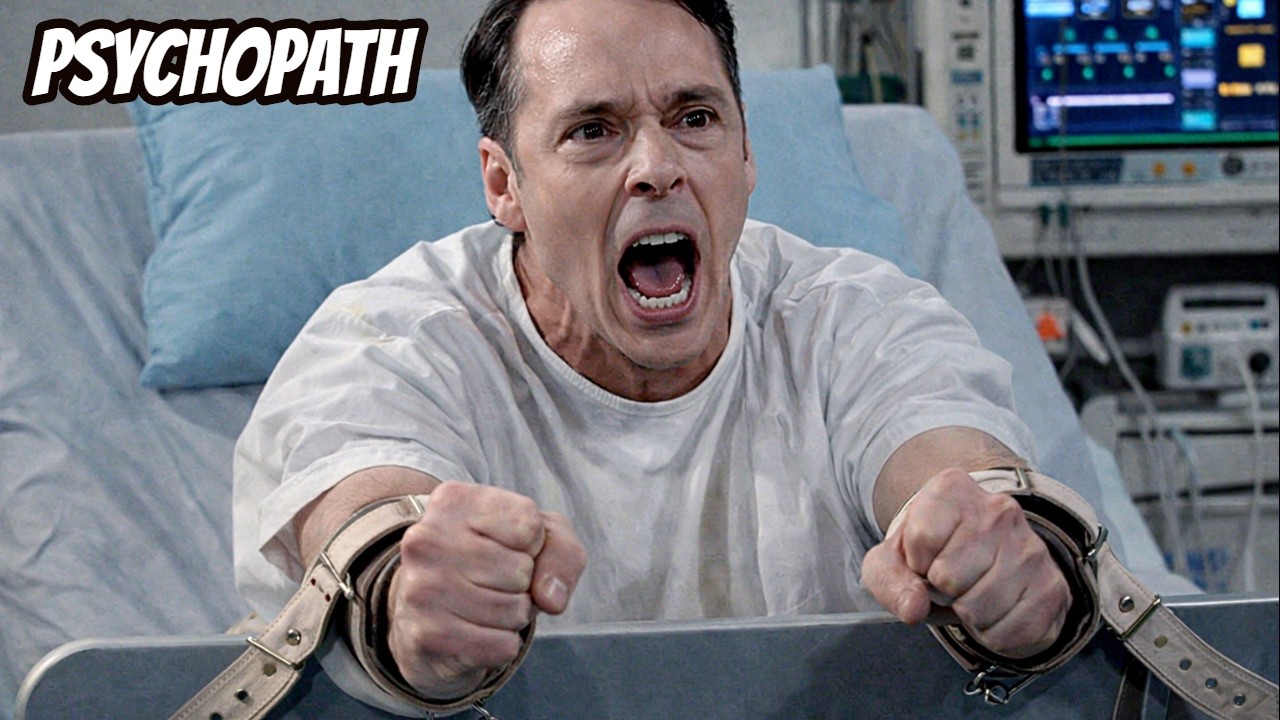
The result could be something far worse than death. Cullum might regain consciousness, but not fully. His mind could be fractured, his behavior unstable, his awareness inconsistent. He could drift in and out of clarity, unable to function as he once did. In that state, he wouldn’t truly be living—just existing in a compromised, incomplete way. It’s a form of punishment that goes beyond revenge and enters the realm of psychological destruction.
Legally, such an act would be complex. It wouldn’t be classified as murder, but it would still carry serious consequences—intentional harm, medical misconduct, possibly poisoning or inducing long-term cognitive damage. From a narrative perspective, however, this approach allows Lucas to remain part of the story. He wouldn’t simply disappear after committing an irreversible act. Instead, he would continue living his life, carrying the weight of what he’s done.
That internal conflict is where the storyline becomes truly compelling. Imagine Lucas returning to his daily routine, treating patients, maintaining a sense of normalcy. But beneath that surface, there’s a constant tension—a quiet awareness of his actions. Moments of hesitation, flashes of memory, subtle signs that he’s struggling to reconcile who he was with what he’s become. That psychological burden doesn’t fade easily. It lingers, shaping his character in ways that could influence future decisions.
As for Cullum, his transformation into a tragic figure would be complete. He began as the aggressor, became a victim, and could ultimately end up in a state that’s worse than either. If his mental state is permanently altered, he becomes a living reminder of the consequences of violence and revenge. And perhaps most hauntingly, the full truth of what happened to him might never be fully understood by those around him.
Naturally, this kind of storyline would divide viewers. Some would argue that Lucas’s actions are justified, that Cullum is simply facing the consequences of his own choices. Others would see it as a line that should never be crossed, regardless of the circumstances. That tension—between understanding and condemnation—is what makes the narrative so engaging. It forces the audience to confront difficult questions about justice, morality, and the limits of empathy.
Britt’s role remains equally complex. If she stays silent, she indirectly allows events to unfold unchecked. If she speaks up, she risks triggering something even more destructive. There’s no clear right choice, only different outcomes with their own consequences. That sense of inevitability adds another layer of tension to the story.
And then there’s Jocelyn. Her presence during Cullum’s brief awakening feels intentional. She could become the one who notices something others overlook—a small detail, a behavioral inconsistency, a clue that doesn’t quite fit. If she begins to suspect Lucas, the storyline could shift into an investigative direction, introducing yet another dimension of suspense.
Ultimately, this arc has the potential to go in multiple directions. The writers could choose a safer path, allowing Cullum to recover and face legal consequences in a more traditional resolution. But if they lean into the darker elements, they could create something far more memorable—an exploration of grief, revenge, and the fragile boundaries between right and wrong.
The most intriguing possibility is one where nothing is neatly resolved. Where characters are forced to live with their choices, where consequences unfold gradually, and where the emotional impact lingers long after the immediate conflict ends. That kind of storytelling doesn’t just entertain—it stays with you.
If things do unfold in this darker direction, it’s entirely plausible that Cullum becomes the victim of a second, more subtle attack. Not by someone acting in a burst of rage, but by someone operating quietly, methodically. Not to end his life, but to change it permanently. And if that happens, it could mark one of the most psychologically intense storylines the show has explored in a long time.
For now, all that remains is the anticipation. The uncertainty is part of the experience—wondering how far the story will go, and which characters will emerge changed. It’s not about waiting for a happy ending. It’s about seeing how deeply the narrative is willing to explore the consequences of human emotion when pushed to its limits.