For lovers of sprawling family drama, rugged landscapes, and cowboys who swear like outlaws but love like poets, the Yellowstone universe has become a Western myth for the streaming era. What began as Kevin Costner’s brooding ranch patriarch in the acclaimed neo‑Western series Yellowstone (2018–2024) has mutated into an entertainment empire — surprising fans with spin‑offs, network rebounds, and creative reinventions that some call genius…and others, sheer overload.
And yet the question on everyone’s lips in Hollywood and fan circles alike is: Is this sprawling franchise evolving — or exploding?
FROM RANCH TO MARSHALS: KAYCE DUTTON’S RADICAL TURN
The most explosive shift in the Yellowstone universe isn’t just narrative — it’s branding.
The highly anticipated Yellowstone spinoff centered on Luke Grimes’ Kayce Dutton, originally slated as Y: Marshals, has officially dropped the “Y” from its title and will simply be known as Marshals when it airs on CBS.
This subtle title shift signals something seismic: this isn’t just another cousin of Yellowstone — it’s a network television western procedural that merges classic cowboy ethos with hard‑edged law drama. Kayce, once heir to the sprawling Dutton Ranch, now trades cattle brands for a badge and a U.S. Marshals badge — and the psychological cost of violence that comes with it.
In Marshals, Tate Dutton — grown up — rides alongside his father into a version of the West where justice doesn’t come from grit alone but tactical precision and federal authority.
But not all fans are convinced: early critical reviews paint Marshals as a show that “feels like Yellowstone gun fights with its volume turned up… but none of the original’s soul.”
THE RETURN OF RIP & BETH — AND A NEW RANCH LEGEND
If Marshals feels like one frontier, then Dutton Ranch feels like another battlefield entirely.
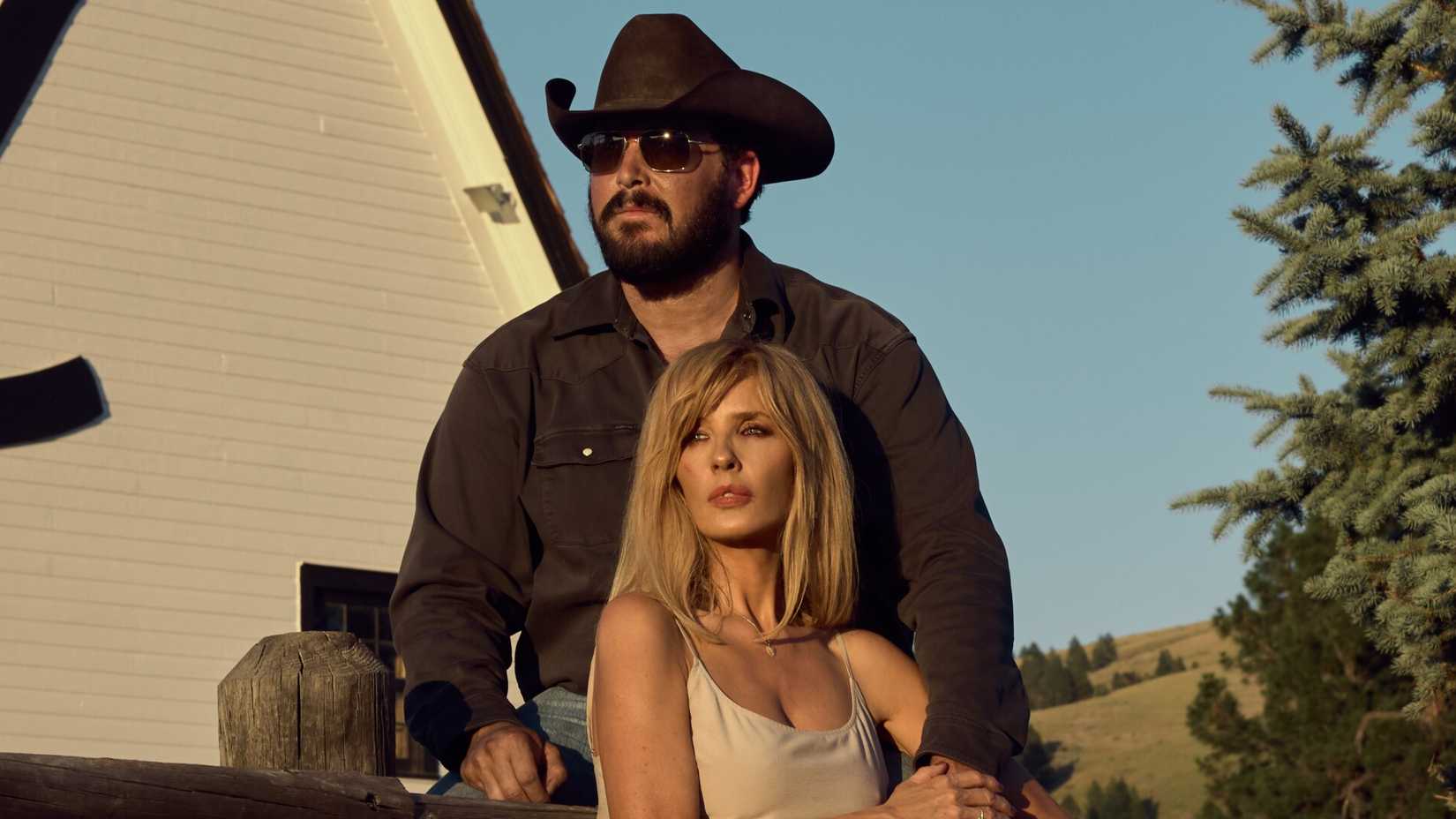
The franchise’s next big chapter moves iconic characters Beth Dutton (Kelly Reilly) and Rip Wheeler (Cole Hauser) into Texas territory, marking a bold geographic and emotional shift.
The first Dutton Ranch teaser trailer drops us into Lone Star chaos, where the couple’s trademark volatility meets sprawling cattle lands and new enemies. Paramount+ has set the series premiere for May 15, 2026, positioning it as the narrative successor fans hoped Yellowstone Season 6 might have been.
The big gamble here? Turning the show’s fiercest lovers and fighters — whose chemistry drove the heart of the original series — into ranch legends with an almost mythic Texas twist. And judging from fan buzz, it’s either closure or franchise saturation.
A WORLD OF SPIN‑OFFS — AND SURPRISES BEYOND THE RANCH
The Yellowstone saga isn’t stopping with Marshals and Dutton Ranch.
Creator Taylor Sheridan has quietly overseen an explosion of related projects — some connected, many branching out into their own stories — from the prequels 1883 and 1923 to curious newcomers like 1944 and even the heartfelt family drama The Madison.
The Madison, starring Michelle Pfeiffer and Kurt Russell, debuted earlier this year and was initially rumored to be tied to the Yellowstone universe. But insiders now confirm it stands on its own, a personal exploration of grief and resilience in the Montana River Valley, detached from the Dutton lineage despite shared creative DNA.
Meanwhile, other planned spin‑offs — like 6666 — appear stuck in development limbo, raising eyebrows about just how much franchise mileage audiences can stomach.
THE DUTTON LEGACY — EVOLVING OR EXPLOITED?
Beyond screens, Yellowstone’s cultural footprint continues to ripple. From deep dive fan analyses dissecting why beloved characters like Monica Dutton were written out, to Reddit war rooms theorizing alternate casting decisions and narrative turns, it’s safe to say the fandom refuses to let the series quietly fade.
But there’s another layer: Sheridan’s storytelling dominance — with multiple Sheridan shows charting simultaneously — reflects a broader industry recognition that Yellowstone isn’t just a show, it’s a content ecosystem.
And as long as audiences crave mud‑stained boots, fractured family loyalties, and the brutal beauty of the modern West, Hollywood will keep building new pastures for these characters to roam.
THE FINAL WORD?
The Yellowstone universe has become less of a singular narrative and more of an ever‑expanding frontier — dotted with spin‑offs, creative detours, and storytelling risks that keep fans debating late into the night.
Some see franchise growth as a bold mythmaking renaissance. Others warn it’s a sign of overreach. But one thing is undeniable: this saga isn’t done rewriting the rules of Western storytelling — on screen or off.