The “Bullsh*t” Moment: How David Woolley Destroyed Kody’s Ego and Saved Christine
Everything viewers thought they understood about the power structure inside the Brown family shifted the instant David Woolley stepped into the spotlight on Sister Wives. What appeared, on the surface, to be a polite introduction between an ex-husband and a new fiancé quickly unraveled into something far more revealing. The meeting in Moab was not just a courtesy call. It became a televised psychological reckoning—one that exposed long-standing cracks in Kody Brown’s carefully curated authority.
For seasons, Kody had framed himself as the seasoned patriarch of a plural marriage empire. Even as relationships collapsed around him—most notably his split from Christine Brown—he continued presenting himself as the misunderstood leader holding a complicated family together. Leading into this encounter, viewers noticed a tonal shift. In confessionals, he spoke more softly. He used words like “growth,” “forgiveness,” and “accountability.” Some fans interpreted it as genuine introspection. Others suspected a strategic rebrand—an effort to soften his image after becoming one of reality television’s most criticized husbands.
Either way, Moab was supposed to be his redemption moment.
Instead, it became his undoing.
Kody arrived carrying the energy of a man who still believed he was walking into his own kingdom. He seemed convinced he would set the tone, offer guidance, perhaps even intimidate the newcomer stepping into his former marriage. In his mind, he was the experienced elder evaluating an outsider who “didn’t understand” the complexity of plural marriage or the Brown family’s history.
But what Kody underestimated was that David was not playing by his script.
By choosing Moab—a place that symbolized stability and happiness for him—David subtly controlled the environment. It was neutral territory on paper, but emotionally it was David’s ground. The setting was calm, expansive, and peaceful. It required nothing dramatic. The unspoken challenge was simple: could Kody match that calm? Could he show up as a supportive ex-husband for one afternoon?
The answer came quickly.
While David appeared steady and composed, Kody’s body language betrayed agitation. He paced. His speech patterns jumped. His tone oscillated between forced friendliness and defensive posturing. It wasn’t explosive, but it was telling. The contrast between the two men was stark: one grounded, one scrambling.
Kody attempted to assert authority by implying that David lacked knowledge. He positioned himself as the sole keeper of family truths, the only one who could truly explain what had happened in his marriage to Christine. The implication was clear—David was naïve.
But that argument collapsed under its own weight. David had spent months building a relationship with Christine. They talked. They processed. He had watched the show. He understood the history—perhaps more clearly than Kody did, because he heard it directly from the woman who lived it. When Kody began re-explaining events, subtly reframing the past to soften his own role, it felt less like wisdom and more like revision.
David didn’t interrupt with hostility. He didn’t escalate. He listened.
And that quiet listening created the first fracture in Kody’s performance.
If Kody’s public “apology tour” had been sincere, Moab would have been an opportunity to prove it. A man who has truly accepted the end of a marriage would greet the new partner with respect. He might even express gratitude that someone else is stepping up to love and protect his former spouse and children.
Instead, territorial undertones seeped into the conversation.
The pivotal moment—the one that instantly reframed the entire meeting—came when Kody looked at Christine and declared, “I did love you.”
On its face, it sounded like closure. But longtime viewers knew the contradiction. For years, Kody had publicly insisted he never loved Christine. He claimed he felt pressured into marriage. He stated he lacked attraction. Those words had been used to justify emotional distance and neglect.
So why the sudden rewrite?
The timing made the motive obvious. The declaration did not emerge from remorse. It surfaced the moment another man visibly valued Christine. It wasn’t about validating her feelings—it was about reclaiming ownership. The subtext was unmistakable: she was mine first.
The statement hung in the air awkwardly, violating unspoken boundaries. It wasn’t romantic. It wasn’t healing. It was competitive.
And this is where the “bullsh*t” moment crystallized.
David didn’t react with jealousy or insecurity. He didn’t bristle. Instead, he calmly called out the inconsistency. Without raising his voice, he exposed the contradiction between Kody’s past claims and his present statement. It wasn’t dramatic—but it was devastating. In six words later summarized by viewers—“It’s all about what he wants”—David distilled Kody’s pattern into a single, cutting observation.
That was the knockout blow.
Because Kody’s authority relies on others accepting his version of reality. It depends on politeness. On people nodding instead of challenging. On maintaining a social pact where male egos are protected at all costs.
David declined the pact.
By refusing to validate the territorial rewrite, he shattered the illusion that Kody still held emotional power over Christine. The cameras captured something subtle but irreversible: Kody had no leverage here. He couldn’t intimidate. He couldn’t out-argue. He couldn’t manipulate the narrative in real time.
Complicating matters further were the financial undertones shadowing the season. As multiple wives left, the shared family structure—and the pooled income it represented—fractured. Viewers had long speculated about the family’s investments, particularly undeveloped property and shifting assets. Whether exaggerated or not, the perception lingered that Kody’s financial footing was less stable than it once appeared.
In contrast, David entered as a self-made businessman, grounded outside the show’s ecosystem. He didn’t need the series for income. He didn’t need approval from the Brown family hierarchy. That independence stripped Kody of two traditional tools: economic authority and television status.
Moab revealed something uncomfortable. Outside the framework of plural marriage and the deference it required, Kody’s influence diminished dramatically.
When he later complained in confessionals that David had breached some unspoken “code” by speaking freely with other family members—including his remaining wife, Robyn Brown—the insecurity became even more transparent. David had simply behaved like a normal adult making conversation. Kody interpreted it as disrespect because he expected deference.
The pattern repeated: expectation of loyalty, absence of reciprocal respect.
As the afternoon wore on, the imbalance became increasingly visible. Kody’s gestures tightened—crossed arms, restless shifting, darting glances. David maintained neutral posture. He neither invaded space nor retreated. He simply held steady.
That steadiness functioned like a mirror.
And mirrors are unforgiving.
For decades within his family system, Kody operated as the sun around which everyone revolved. In Moab, he encountered someone who did not orbit him. David stood rooted in his own identity. He did not seek validation. He did not flinch under posturing. He did not play subordinate.
The power dynamic flipped not through aggression, but through indifference.
That indifference proved lethal to Kody’s ego. Anger he can counter. Defiance he can escalate against. But calm refusal to engage in the hierarchy? That leaves no battlefield.
By the time the cameras wrapped, the symbolic transition was undeniable. The patriarchal image Kody had projected for years felt diminished. Christine appeared secure—emotionally supported and financially independent. David appeared protective but not possessive. And Kody appeared, for the first time, peripheral. 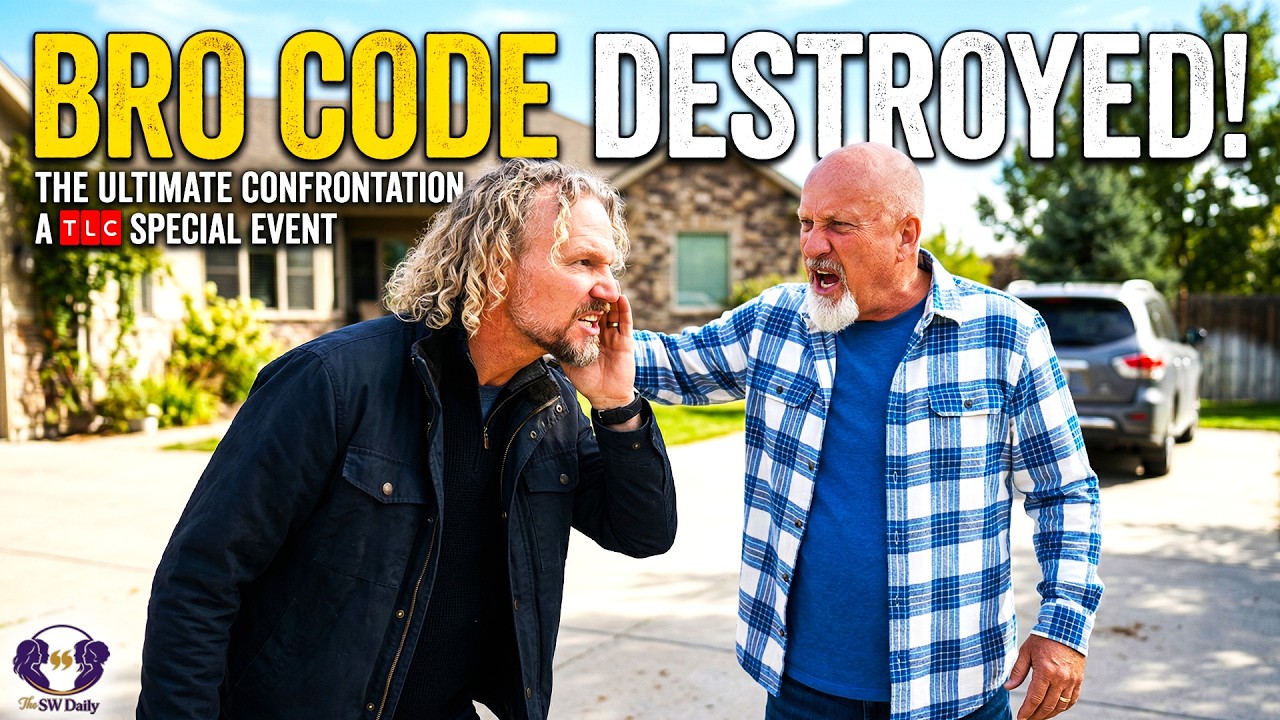
The fallout extended beyond one awkward meeting. It punctured the fantasy that Kody could rewrite his legacy through selective confessionals. Viewers watched the contradictions unfold in real time. They saw the gap between rhetoric and behavior.
The Moab encounter marked a turning point not because of shouting or spectacle, but because of exposure. Exposure of insecurity masquerading as dominance. Exposure of narrative control slipping away. Exposure of a man discovering he no longer commanded the room.
In the end, David didn’t “defeat” Kody through strategy or scheming. He didn’t need to. He simply refused to validate the old hierarchy. He treated Christine as a partner, not property. He treated others as equals. He responded to revisionism with quiet clarity.
And that was enough.
Kody walked in expecting to teach a lesson. He walked out having learned one—though whether he internalized it remains uncertain. What Moab proved, however, was unmistakable: authority built on control collapses when confronted with someone who cannot be controlled.
For Christine, it was a visible affirmation that her new life stood on firmer ground. For viewers, it was the moment the narrative shifted permanently. And for Kody, it was the day the crown slipped—broadcast for everyone to see.
The era of unquestioned patriarchal dominance on Sister Wives did not end with a scream. It ended with a calm rebuttal and a refusal to play along.
Sometimes, the most powerful move in psychological warfare isn’t attack.
It’s indifference.