A devastating new chapter is about to unfold on Coronation Street, and this time the fallout will leave Weatherfield shaken to its core. Just weeks after the explosive murder of Billy Mayhew, the cobbles are once again stained by tragedy—only this time, the victim is none other than Theo Silverton. And his end is as brutal as it is heartbreaking.
The shock begins with a flashforward that immediately sets the tone. A trembling Betsy Swain is hauled in for questioning after discovering a lifeless body. Police circle, sirens fade, and the camera refuses to reveal the victim’s identity. Instead, viewers are thrust into a mystery that promises death, betrayal, and consequences that will ripple across the Street. Five residents are subtly placed under suspicion. One of them won’t survive the spring.
As timelines shift between present-day tension and future devastation, suspicion grows around volatile figures—including Theo himself and Carl Webster. Theo, already stained by his involvement in Billy’s death and his manipulative hold over Todd Grimshaw, has made powerful enemies. Meanwhile, Carl’s reckless choices—particularly forcing his own mother, Debbie Webster, to take the blame for his crimes—have left the Webster family fractured and furious. Motives are everywhere. Trust is nowhere.
But when the truth finally lands, it lands hard.
Theo’s downfall begins with a confrontation that spirals out of control. Words sharpen into threats. Old grudges resurface. Pride overrides reason. What starts as a heated clash becomes something far darker—a violent altercation that leaves Theo brutally injured on the cold pavement. By the time paramedics arrive, the flashing blue lights reflect off shop windows like fractured pieces of hope. Weatherfield watches in stunned silence as he’s rushed to hospital, clinging to life.
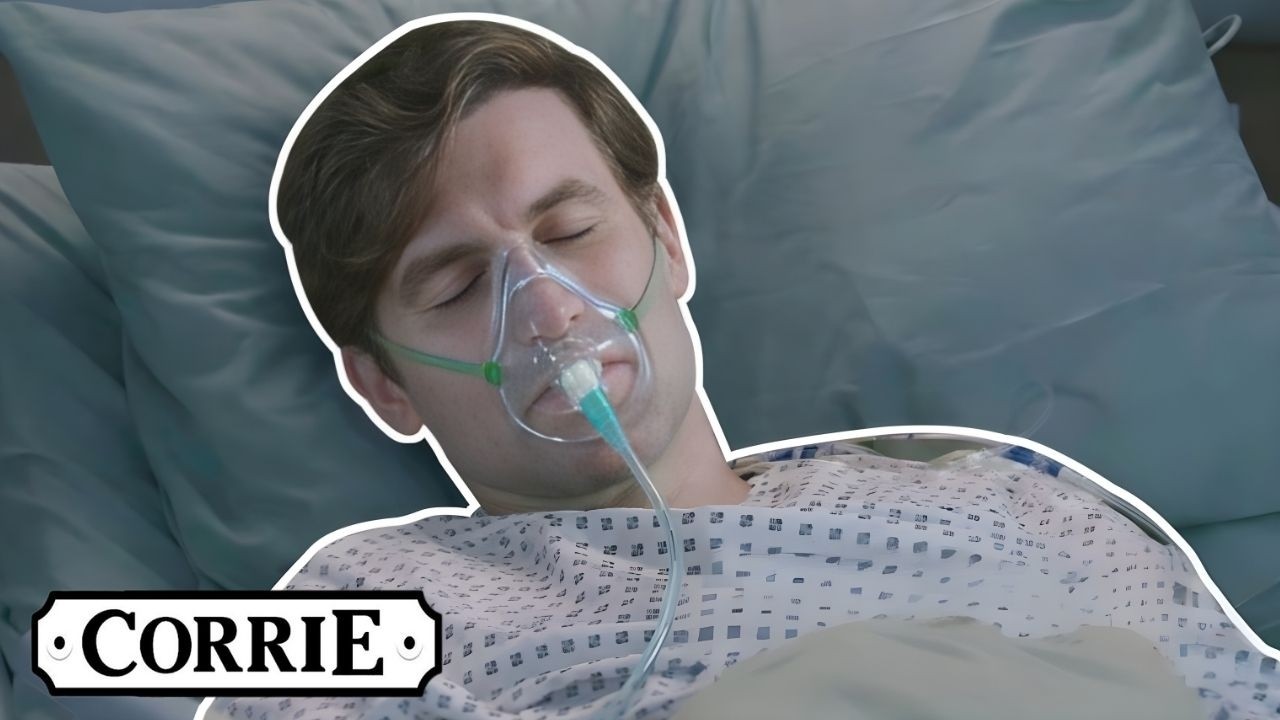
Inside the sterile white corridors, the tone shifts from rage to dread. Machines breathe for him. Monitors beep in hollow rhythm. Theo lies unconscious, battered not only by fists but by the weight of his past catching up with him. Around his hospital bed gather those who once loved him, those who feared him, and those who never forgave him.
And in that clinical stillness, the real drama unfolds.
Unlike a clear-cut villain, Theo has always existed in a murky space between redemption and relapse. When he first arrived on the Street, he carried volatility like armor. Yet beneath it, there were glimpses of sincerity—small acts of kindness, awkward attempts at change, fragile promises whispered to those willing to believe him. Some residents began to see a man trying, however imperfectly, to outrun his demons.
Now, as doctors deliver guarded updates filled with clinical caution, those same believers are forced to confront a painful question: was his redemption real—or just temporary?
Back on the cobbles, arguments ignite. Blame ricochets between households. In kitchens and behind bar counters, neighbors dissect the fight that led to this catastrophe. Who threw the first punch? Who escalated it? Who could have walked away—and didn’t?
Meanwhile, hospital scenes intercut with raw, intimate close-ups. A hand gripping bedrails. A tear falling unchecked. A whispered apology from someone terrified their final words may never be heard. The emotional weight is suffocating. Hope hangs by a thread.
Then comes the turn.
Without melodrama, without swelling music, a sudden complication strikes. Alarms blare. Nurses rush. Doctors bark urgent commands. The fragile illusion that Theo might recover shatters in seconds. Loved ones are pushed back as medical staff fight to stabilize him. The corridor outside becomes a place of suspended breath and silent prayers.
Inside the room, chaos crescendos into the most chilling sound of all: the long, unbroken flatline.
Theo Silverton is pronounced dead.
The brutality of his death lies not in spectacle but in its stark realism. The frantic compressions. The shouted instructions. The desperate voice refusing to let go of his hand. And then, nothing. Just the echo of a life abruptly extinguished under fluorescent lights.
Weatherfield doesn’t explode into theatrical grief. Instead, it fractures quietly.
Candles flicker along brick walls. Bouquets pile up beside handwritten notes. Conversations falter when his name nearly slips out. At the Rovers, his usual seat sits empty—a silent monument to absence.
But Theo’s death doesn’t offer easy closure. In fact, it opens wounds that cut deeper than before.
Because his passing isn’t isolated—it’s a catalyst.
Police investigations intensify, scrutinizing every second of the altercation that led to his injuries. Statements clash. Loyalties are tested. Some insist it was a tragic accident born of anger. Others argue Theo’s history of volatility made this ending inevitable. Responsibility proves impossible to pin on a single person. Instead, it disperses across multiple shoulders—each carrying their own share of guilt.
For those who believed in him most fiercely, grief comes laced with defensiveness. They defend his attempts to change. They highlight his progress. They insist he was different in the end.
Yet others remember the damage he caused—the manipulation, the aggression, the chaos. In death, Theo remains complicated. Neither saint nor monster. Just painfully human.
And that complexity is what makes his exit so devastating.
His belongings become emotional landmines. A jacket draped over a chair. Tools arranged neatly as if waiting for their owner’s return. A half-finished note hinting at plans never realized. These ordinary objects carry extraordinary weight, symbolizing a future that will never materialize.
Even younger residents feel the tremor of mortality for the first time. Their bravado falters. Older characters, hardened by decades of loss, recognize the familiar sting—but that familiarity doesn’t dull the pain. Instead, it reinforces the Street’s harsh truth: no one is immune.
A memorial gathering intended to unify the community becomes another battleground. Speeches praising Theo’s efforts to rebuild his life clash with murmurs from those who suffered during his darker days. The camera lingers not on words but on faces—grief, resentment, confusion—all coexisting in uncomfortable harmony.
Redemption, the show suggests, is never guaranteed. It’s fragile. It’s incomplete. And sometimes, it’s cut short before it can fully take root.
As weeks pass, life on the Street resumes in cautious increments. Shops reopen. Pints are poured. School runs continue. Yet everything feels slightly altered, as though grief has settled into the mortar between bricks. Theo’s absence becomes a presence of its own—subtle but persistent.
Those who were at his bedside struggle with lingering trauma. The memory of the flatline replays in quiet moments. Sleepless nights are punctuated by phantom echoes of hospital alarms. The emotional aftershocks prove just as brutal as the physical violence that caused them.
Legal proceedings loom, promising accountability but offering little comfort. Each revelation peels back another layer of pride, miscommunication, and simmering resentment that led to that fatal night. The tragedy is revealed not as a single catastrophic act—but as a chain reaction of poor choices, unchecked anger, and wounded egos.
In true Coronation Street fashion, the storyline refuses sensationalism. Instead, it leans into uncomfortable stillness. It examines how grief seeps into daily rituals—how laughter sounds hollow for a while, how tempers flare unexpectedly, how guilt lingers long after condolences fade.
Theo’s story ends not with heroic redemption or villainous justice, but with something far more unsettling: ambiguity.
Did he deserve another chance? Was he finally changing? Could someone have stopped the fight before it spiraled?
Those questions haunt Weatherfield long after his funeral flowers wilt.
And as the cobbles absorb yet another loss, one thing becomes painfully clear: Theo Silverton’s brutal hospital death will leave scars that no amount of time can fully erase.
The Street survives—but it is forever altered.